One listing here says its brush-and-floss-at-once mode is the one that really shines. Five bullets later, the same listing says brushing and flossing with water at the same time may dilute the toothpaste and reduce its effectiveness, and recommends you floss first and brush afterwards. That is a seller talking itself out of the feature the whole category is built on, and it is the most useful sentence on this page.




At a glance
| Product | What it publishes | Price tier | Link |
|---|---|---|---|
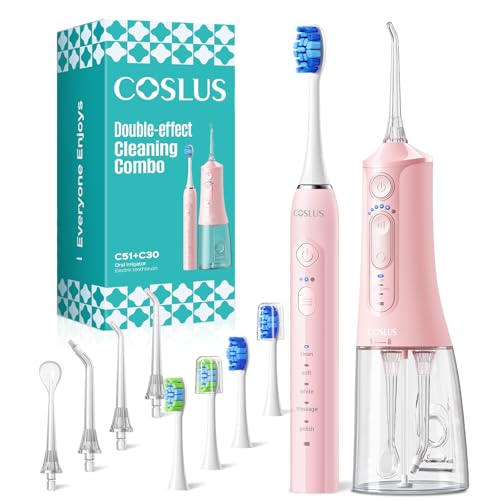
| COSLUS C51C30 | 30 to 140 PSI. The widest pressure range here | Budget | |
| Bitvae Combo | 50 to 120 PSI, 40 days of battery, 40,000 strokes | Budget | |
| Benhip 2-in-1 | Tells you to floss first, then brush. And why | Budget | |
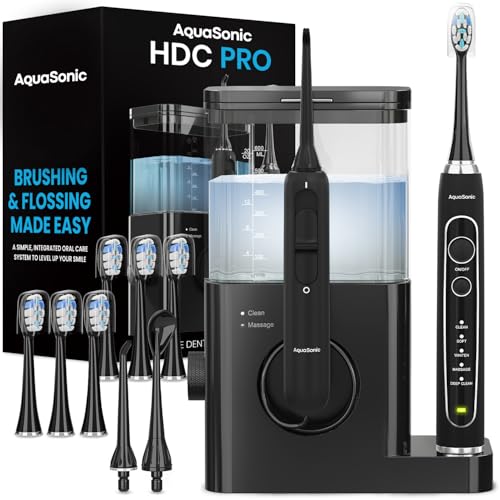
| AquaSonic HDC Pro | 600ml, the biggest tank. And 50,000 vibrations | Mid-range | |
| OILSAO 3-in-1 | 500ml, 100 PSI, 40,000 VPM, 5 brush modes | Mid-range | |
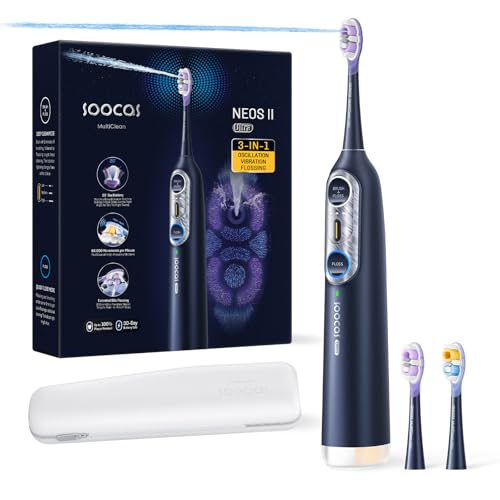
| Soocas NEOS II Ultra | Vibrates and oscillates. Claims 100 percent of plaque | Premium | |
| Waterpik Sonic-Fusion 2.0 | The only dental seal here, and it qualifies its figures | Premium | |
How to choose
The combined mode may be the worst way to use it
Three products here sell a mode that brushes and water-flosses at the same time, and it is the reason the category exists. One of those three then tells you, in its own final bullet, to use the water flosser first to clear the debris and brush afterwards, so the fluoride in your toothpaste stays on your teeth and does its job. It adds that doing both at once may dilute the toothpaste and reduce its effectiveness. That is a seller arguing against its own headline feature, and it is worth taking seriously precisely because it costs them the sale.
Vibrations, strokes and movements are not the same unit
Seven products here quote a speed and between them they use five different words: micro-vibrations, VPM, vibrations per minute, strokes per minute and sonic movements per minute. Nobody defines any of them. A vibration is a full cycle out and back, which is two strokes, so a 40,000 stroke brush and a 40,000 vibration brush may differ by half. The highest number on this page, 66,000, uses the vaguest word of the lot.
The brand with a seal does not quote a speed at all
Notice what the products with the dental association’s Seal of Acceptance publish instead: outcomes, not vibrations. Up to twice as effective as traditional brushing and flossing. Up to three times as effective for gum health. No VPM figure appears anywhere in either listing. The brands racing each other to 66,000 of something are competing on a number the one credentialed brand does not think is worth printing.
Ninety-nine point nine percent, from sealed areas
One listing claims to remove up to 99.9 percent of plaque bacteria and adds three words that change everything: from sealed areas. A water flosser only cleans where you point it, and that qualifier is the real acknowledgement. On the same page, another product claims to remove up to 100 percent of plaque, full stop, with no qualifier at all. The bigger number is the one with less behind it.
Two hundred milliliters is not a flossing session
Tank sizes here run from 200ml to 600, which is a threefold spread, and the small ones are the cordless models. A proper pass round your whole mouth uses most of a large tank, so a 200ml cordless means stopping halfway to refill at the sink. The countertop units publish their floss time plainly at 60 and 90 seconds. If you want cordless, you are choosing portability over one uninterrupted session.
PSI is the number; settings is the marketing
Three listings publish an actual pressure in pounds per square inch: 30 to 140, 50 to 120, and up to 100. Two others quote ten settings without saying ten settings of what. A range starting at 30 matters if your gums are sensitive, and one that tops out at 140 matters if they are not. Ten unnumbered settings tell you how many buttons there are.
A charging port in a bathroom is a mold trap
Two products here charge without a socket and only one explains why that is worth anything. One calls wireless charging fast and dismisses USB as outdated. The other says its port-free design eliminates water building up at the base and avoids mold and grime, which is the actual reason, and anyone who has looked closely at the bottom of an old toothbrush knows it.
COSLUS C51C30
The cheapest combo here and the one publishing the widest real pressure range: 30 to 140 PSI, where rivals quote unnumbered settings or stop at 100. That 30 is the interesting end, because it is gentle enough for sore gums, and 140 is there when they are not. It ships four brush heads and four nozzles, so a household can share it, stores the nozzles inside the water tank so they stay dry and findable, and gives the toothbrush its own caps rather than a case. IPX7, 41,000 VPM, 5 brush modes and 3 flosser modes.
Pros:
- 30 to 140 PSI; the widest published range here
- Four brush heads and four nozzles for a household
- Nozzles store inside the tank, dry and organized
- IPX7; the lowest price on this page
Cons:
- Cordless, so no tank size published
- Quotes VPM against rivals quoting strokes; not comparable
- Claims brighter teeth in two weeks with no source
Best for: a family, at the lowest price, with a real pressure range.
Bitvae Combo
Forty days of battery across both devices, which is the longest here and the figure that decides whether a cordless set survives two weeks away. It publishes 50 to 120 PSI on the flosser with three modes and five intensities, runs the brush at 40,000 strokes a minute across five modes, and includes four replacement heads and four nozzles. It also reminds you to change the brush head every three months, which nothing else on this page bothers to say and which is the thing everybody forgets.
Pros:
- 40 days of battery; the longest on this page
- 50 to 120 PSI published, with five intensities
- Four heads and four nozzles included
- Reminds you to replace heads every three months
Cons:
- No tank size published at all
- Claims 7X more stains removed with no baseline
- Quotes strokes where rivals quote vibrations
Best for: going away for a month without a charger.
Benhip 2-in-1
Its last bullet is worth the price on its own. Use the water flosser first to clear debris, then brush, so the fluoride stays on your teeth and works, because doing both at once may dilute the toothpaste. That is the correct order, explained, by a company selling the do-both mode in its first bullet. Around that clarity: 32,000 strokes across three modes, a two-minute timer buzzing every thirty seconds, IPX7, twenty days a charge, a suction docking station, and a travel case with a travel water hose so the flosser works away from home.
Pros:
- Tells you the right order, and why: floss first, then brush
- Warns that doing both at once dilutes toothpaste
- Travel case includes a travel hose for the flosser
- Suction docking base; IPX7; 20 days a charge
Cons:
- Its first bullet says the combined mode really shines
- 32,000 strokes; the lowest figure here
- No PSI or tank size published
Best for: instructions that argue against the sale.
AquaSonic HDC Pro
A 600ml tank, which is three times the smallest here and enough for a full unhurried pass without a trip back to the tap, on a countertop unit measuring only 6 inches by 3. Ten pressure levels on a dial, deep clean and massage modes, 50,000 vibrations a minute on the brush, wireless charging and five brushing modes. Six brush heads, two jet tips and a tongue scraper come in the box, which is generous. It claims to cut flossing time by 90 percent, against nothing stated, and dismisses USB charging as outdated.
Pros:
- 600ml tank; the largest here by a distance
- Only 6 by 3 inches of countertop
- Six brush heads, two tips and a tongue scraper included
- Ten-level pressure dial; wireless charging
Cons:
- Claims 90 percent less flossing time, against nothing
- Ten levels with no PSI figure attached
- Mains only; the tank must sit on the base to work
Best for: a full session without refilling.
OILSAO 3-in-1
The most complete specification at the middle of this page: a 500ml reservoir, up to 100 PSI across three floss speeds, 40,000 VPM across five named brush modes, and a two-minute timer with a thirty-second quadrant reminder. It is clear about the architecture too, explaining that the handle detaches for travel brushing while water flossing only works connected to the reservoir base, which is the compromise every countertop combo makes and few admit. Three replacement heads and a storage box included.
Pros:
- 500ml tank and up to 100 PSI, both published
- Five named brush modes and three floss speeds
- Real that flossing needs the base; brushing travels
- Three heads and a storage box included
Cons:
- 100 PSI; below two cheaper rivals here
- Sells a brush and floss together mode
- No battery life published
Best for: a countertop set that explains its own limits.
Soocas NEOS II Ultra
The only brush here that does two things at once mechanically: 66,000 sonic movements a minute plus a 20 degree sweeping oscillation, which are the two rival brush technologies combined rather than chosen between. It also gives the best explanation on this page for a small design decision, saying its port-free magnetic charger eliminates water building up at the base and avoids mold, which is the real reason and not the one its rival gives. Thirty days of battery, an 80-second floss cycle, a cushioned soft head and a travel case.
Pros:
- Vibration and 20 degree oscillation together
- Explains why port-free charging avoids mold
- 30-day battery; 80-second floss cycle; travel case
- Cushioned soft head for sensitive gums
Cons:
- Claims to remove up to 100 percent of plaque, unqualified
- 66,000 sonic movements is the vaguest unit here
- Charging adapter not included
Best for: two brush mechanisms and a base that stays dry.
Waterpik Sonic-Fusion 2.0
The only product family on this page carrying the American Dental Association’s Seal of Acceptance, named correctly and in full, and the only brand here that publishes outcomes rather than a vibration count: clinically proven up to twice as effective as traditional brushing and flossing. Its sibling’s plaque figure carries the qualifier that matters, from sealed areas, which is the real thing to say about a jet of water. Three modes, a 16oz removable reservoir, 10 pressure settings, 60 seconds of floss time, a two-minute timer with a thirty-second pacer, and a three-year warranty.
Pros:
- The only dental association seal on this page
- Publishes outcomes rather than a vibration count
- Removable 16oz reservoir; 10 pressure settings
- Three-year warranty; global voltage; travel case
Cons:
- The highest price here
- Two brush speeds where rivals offer five modes
- 60 seconds of floss time; less than its own sibling
Best for: a credential rather than a number.
The verdict
The feature this category is sold on is the one its own seller warns you off: brushing and water-flossing at once may dilute your toothpaste, and the right order is floss then brush. Then the speed race is unusable, because five products use five different words for the number, and the brand with the actual dental seal does not quote one at all.
Best overall: Waterpik Sonic-Fusion 2.0. It is the only product on this page with the American Dental Association’s Seal of Acceptance, and the only brand here that answers with outcomes instead of a vibration count nobody can compare. Its plaque claim carries the qualifier that makes it true, from sealed areas, where a rival simply says 100 percent. A removable 16oz reservoir, ten pressure settings, a proper timer with a quadrant pacer, and three years of warranty.
Best value: Benhip 2-in-1. Buy it for its last bullet, which tells you to water floss first and brush afterwards so the fluoride stays where it is useful, and warns that doing both at once dilutes the toothpaste. That is a company arguing against its own feature, which is the rarest thing on this page and probably the most valuable. Around it, a sensible set: IPX7, a proper quadrant timer, twenty days a charge, and a travel case that includes the hose so the flosser travels too.
Best premium: Soocas NEOS II Ultra. The only brush here that vibrates and oscillates rather than picking one, which combines the two rival technologies in a single head, and the only listing that gives the real reason for a port-free charger: water pools at the base of a bathroom device and grows mold. Thirty days of battery and a cushioned soft head for sensitive gums. Ignore its claim to remove 100 percent of plaque, which nothing does.
FAQ
Should I brush and water floss at the same time?
One seller of that exact feature says no. Its final bullet recommends flossing first and brushing after, so the fluoride in your toothpaste stays on your teeth, and warns that doing both at once may dilute it and reduce its effectiveness.
Is a higher vibration number better?
You cannot tell, because nobody uses the same unit. Seven products here quote micro-vibrations, VPM, vibrations, strokes and sonic movements, all undefined, and a vibration is two strokes. The brand with the dental seal publishes no speed figure at all.
What water pressure do I need?
Look for PSI, which three listings publish: 30 to 140, 50 to 120, and up to 100. A low end around 30 matters for sensitive gums. Two others quote ten settings without saying ten settings of what.
How big should the tank be?
Bigger than 200ml if you want one pass. Tanks here run 200 to 600, and the small ones are the cordless models, so portability costs you a mid-session refill. The countertop units quote 60 and 90 seconds of floss time.
Do these really remove 99.9 percent of plaque?
From sealed areas, says the listing that claims it, and those three words are the real part: a water jet only cleans where you aim it. Another product on this page claims 100 percent with no qualifier at all.
This article may contain affiliate links; see our Affiliate Disclosure.