Open a window on a sticky August afternoon and you invite the whole outdoors in: heat, damp air, and the mugginess your air conditioner has been fighting all day. A balanced ventilation system does the opposite job, swapping stale indoor air for fresh outdoor air while holding on to the comfort you already paid to create. In a humid climate, the difference between an ERV and an HRV, plus the small parts that finish the install, decides how much of that summer moisture ends up inside.


This is a researched buyer’s guide, not a full system shootout. The pieces below cover the three layers of a real humid-climate ventilation setup: the complete heat-recovery unit that moves the air, the filter that keeps it clean, and the exterior vent cover that terminates it. First, the part everyone gets stuck on, ERV versus HRV, explained in plain terms so you can spec the right unit for your region.
ERV vs HRV at a glance
| Product | Role in the system | Price tier | Link |
|---|---|---|---|
| VENTS-US Micra 100 FreshBox HRV WiFi Kit | Complete ductless heat-recovery unit, app control, dual filters | Premium | |
| FreshVent Fresh Air Intake Vent Cover | Weather-resistant intake or exhaust termination with magnetic closure | Mid-range | |
| VENTS-US MERV 8 Supply and Extract Filter | Replacement filtration for FreshBox-style ERV and HRV fans | Budget | |
How to choose ventilation for a humid climate
Both an ERV (energy recovery ventilator) and an HRV (heat recovery ventilator) do the same core job: they pull fresh air in and push stale air out at the same time, passing the two streams through a core that recovers most of the energy that would otherwise be thrown away. The one difference decides everything for a damp region.
Heat only, or heat and moisture
An HRV core transfers heat between the outgoing and incoming air, and nothing else. An ERV core transfers heat and a share of the moisture. That moisture transfer is the headline for humid areas. In summer, an ERV lets the drier, conditioned exhaust air strip some humidity out of the muggy incoming air before it reaches your rooms, so your air conditioner has less water to deal with. An HRV makes no attempt to do that, so it can carry more raw outdoor humidity indoors during the wet months.
Where each one earns its keep
For hot, sticky climates, an ERV is usually the better default because it limits the humidity load coming in with the fresh air. An HRV still has a place: in a tightly sealed home that runs cooling almost year round, or where indoor moisture from cooking, showers, and people is the main problem, an HRV vents that damp inside air out efficiently. The real caveat is that neither device is a dehumidifier. On the very worst days, a whole-home or portable dehumidifier does the heavy lifting, and the ventilator simply keeps the fresh-air supply from making things worse.
Filtration you can live with
Fresh air is only as good as what you filter out of it. MERV 8 is the everyday sweet spot for most homes, catching dust, pollen, and pet dander without choking airflow. Step up to MERV 13 or 14 if someone in the household is sensitive to fine particles, and accept the small trade-off in flow. Whatever the unit ships with, plan on a replacement or wash on a schedule, because a clogged filter quietly wrecks both airflow and efficiency.
Ducted, ductless, and the parts that finish the job
Ductless single-room units mount through one exterior wall and suit an apartment, an addition, or a problem room. Ducted systems tie into the whole house but ask for more planning and, usually, a pro. Either way, the outdoor termination matters more than people expect: a good intake or exhaust cover keeps rain, pests, and back-drafts out, and a dampered cover with a positive closure stops humid air sneaking in when the fan is off. Smart control (scheduling, boost, standby) turns a set-and-forget box into something you actually tune to the weather.
Sizing airflow to the room
A ventilator that is too small never clears the air, and one that is oversized wastes energy and can overdry or overcool a space. For a single room, match the unit’s rated airflow to the volume you want turned over a few times an hour, and give yourself a boost mode for the times a bathroom or kitchen suddenly loads the air with moisture. Mounting height and the length of the through-wall run matter too, since long or twisting ducts cut real-world flow well below the number on the box. If you are ventilating a whole house rather than one room, that is where a ducted system and a professional airflow calculation earn their cost.
Running costs and upkeep
The appeal of heat recovery is that it recycles most of the energy in the air it throws out, so the fresh-air habit does not wreck your cooling bill. Efficient EC motors sip power, and a scheduled or boost-driven run pattern keeps the unit from working harder than the weather demands. The recurring cost is filtration. A washable filter you rinse a couple of times a year costs almost nothing to keep, while disposable high-grade filters add up. Whichever you run, put the swap or wash on a calendar, because a blocked filter is the single most common reason a good system starts feeling weak.
Building a humid-climate setup
Think of ventilation as a short stack rather than a single purchase. The unit moves and recovers the air, the filter keeps that air clean and protects the fan, and the outdoor cover seals the opening so damp air and pests stay out when the fan rests. Skip any one layer and the others underperform: a great unit with a leaky termination invites the humidity you were trying to keep out, and a sealed, filtered system with a tired filter simply stops moving enough air. Spec the unit for your climate first (ERV as the humid-region default, HRV where indoor moisture is the bigger problem), then finish the job with filtration and a sealing termination you will not have to think about again.
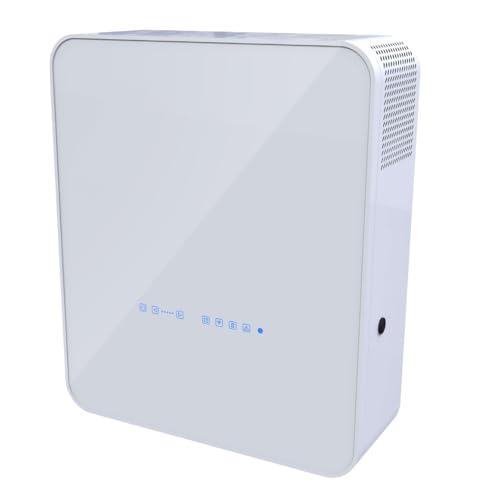
VENTS-US Micra 100 FreshBox HRV WiFi Kit
This is the only complete, air-moving system in the group, and it is built for exactly the wall-mounted, single-room job most homeowners tackle first. It is a ductless heat-recovery unit with two built-in filters (MERV 8 and MERV 14), quiet energy-efficient EC motors, and automatic supply and exhaust dampers that shut against drafts when it idles. The WiFi app handles timers, boost, standby, and schedules, so you can lean on ventilation harder after a steamy shower and ease off overnight. As an HRV, its strength is recovering heat while venting stale indoor air, so in a humid climate it pairs best with cooling and, on the dampest days, a dehumidifier.
Pros
- Full ductless system with everything needed for a single-wall install
- Two-stage filtration built in, MERV 8 plus MERV 14
- WiFi scheduling, boost, and standby from a phone
- Automatic dampers avoid drafts and back-flow when off
Cons
- Premium price for a single-room unit
- HRV core does not transfer moisture, so it is not the humidity-limiting ERV some buyers expect
- Covers one room, not the whole house
Best for: a problem room, addition, or tight apartment where you want fresh, filtered air with smart control and minimal ductwork.
FreshVent Fresh Air Intake Vent Cover
Every ventilation system has to terminate outdoors, and a cheap plastic hood is where good installs quietly go wrong. This is the most-bought item in the group, and it is easy to see why: a low-profile, powder-coated Galvalume steel cover sized for a 6-inch duct, built to shrug off weather and blend into the exterior rather than announce itself. Integrated magnets hold it in the closed position on dampered systems, which is the detail that matters in a humid climate, because a termination that seals when the fan is off is one less path for damp outside air to drift in. It handles intake or exhaust duty on ERV, HRV, and make-up air runs.
Pros
- Durable powder-coated Galvalume steel, weather-resistant
- Magnetic closure seals against back-flow on dampered systems
- Low-profile look that blends into the wall
- Works as intake or exhaust on ERV, HRV, and make-up air
Cons
- Sized for 6-inch duct, so confirm your run before buying
- A termination part, not a system on its own
Best for: finishing an ERV or HRV install cleanly with a sealing, good-looking outdoor termination.
VENTS-US MERV 8 Supply and Extract Filter
Fresh-air systems only keep working if you keep them clean, and this is the maintenance piece that gets forgotten until airflow drops off. It is a MERV 8 supply and extract filter for FreshBox-style ERV and HRV fans, sized to keep air moving without straining the unit or its motor. MERV 8 is the general residential grade that copes well with dust, pollen, and homes that mix people and pets. These particular filters are washable, with a recommended clean roughly every six months, which softens the running cost over a year. Buy a spare and you can swap-and-wash rather than run a tired filter.
Pros
- Sized to preserve airflow without straining the fan
- MERV 8 suits general residential and pet households
- Washable, with roughly six-month cleaning intervals
- Low cost keeps yearly upkeep affordable
Cons
- MERV 8 is not the finest filtration; sensitive users may want a higher grade
- Fits specific FreshBox-style units, so match the model
Best for: keeping a compatible ERV or HRV breathing freely with an inexpensive, reusable filter.
The verdict
These three products are layers of one setup, not rivals, so the picks below reflect the job each does best rather than a single winner.
Best overall (most popular upgrade): the FreshVent intake vent cover is the group’s best seller for a reason. It is the low-cost, high-impact part that seals a termination against humid back-flow and finishes any ERV or HRV install cleanly.
Best value: the VENTS-US MERV 8 filter is the cheapest way to protect performance over time, and being washable it keeps paying you back season after season.
Best complete system: the VENTS-US Micra 100 FreshBox is the only full unit here, giving you fresh, filtered air and smart control from a single wall opening. Just remember it is an HRV, so in a very humid region run it alongside cooling and, on the worst days, a dehumidifier.
FAQ
Is an ERV or an HRV better for a humid climate?
For hot, sticky regions an ERV is usually the better default, because its core transfers some moisture and limits how much outdoor humidity rides in with the fresh air. An HRV recovers heat only and can bring in more raw humidity in summer.
Will an ERV or HRV replace my dehumidifier?
No. Neither is a dehumidifier. They recover energy while swapping stale air for fresh, and an ERV softens the incoming humidity load, but on the dampest days a dedicated dehumidifier still does the real drying.
What MERV rating should I run?
MERV 8 is the everyday choice for dust, pollen, and pet homes. Move up to MERV 13 or 14 if someone is sensitive to fine particles, and accept slightly reduced airflow in exchange.
Do I really need a sealing vent cover?
In a humid climate, yes. A dampered cover with a positive or magnetic closure stops damp outside air and pests from drifting in when the fan is off, which protects both comfort and the system.
Can I install a ductless unit myself?
Many single-room ductless units are designed for a wall-mount install with a template and mounting kit included. Check your wall type and local electrical rules; anything ducted or hardwired is better left to a professional.
Will ventilation help with condensation and stuffiness?
Yes, indirectly. Constantly swapping stale, moisture-laden indoor air for fresh air lowers the everyday humidity that fogs windows and leaves rooms feeling close. In a humid climate an ERV does this without dragging in as much outdoor moisture, while cooling and, when needed, a dehumidifier handle the peaks.
How often does the air need to turn over?
Most homes aim to exchange the indoor air a fraction of its volume every hour, with a boost when cooking or showering spikes the moisture. A scheduling app makes this easy: a steady baseline through the day and a short burst when a room suddenly loads up.
What duct size do these terminations fit?
Match the cover to your run. The FreshVent cover here is sized for a 6-inch duct, which is a common residential size, but always confirm your ducting before ordering so the fit seals properly.
This article may contain affiliate links; see our Affiliate Disclosure.