The second day after a hard workout is the honest one — stairs become negotiations and sitting down is a controlled fall. A few minutes on a foam roller, before and after training, is the cheapest intervention that reliably shortens that misery, and the roller you pick decides whether you actually do it.




Foam rollers vary along three axes that matter: density (how deep the pressure goes), texture (smooth glide versus massage-thumb ridges), and length (full-back stability versus travel-bag portability). The lineup below spans all three, anchored by the most-bought rollers in the category, so you can match the tool to how sore you actually get.
| Roller | Standout features | Price | Link |
|---|---|---|---|
| Amazon Basics 18" | Firm polypropylene, molded edges, the category’s best seller | Budget | |
| TriggerPoint Grid 1.0 | Multi-density surface zones over a hollow core, massage-hand feel | Mid-range | |
| 321 Strong | Three textured massage zones, medium density, patented design | Mid-range | |
| Amazon Basics 24" | Same firm foam, mid length for legs plus upper back | Budget | |
| Amazon Basics 36" | Full-length for spine work and physical-therapy drills | Budget | |
| Amazon Basics 12" | Smallest and cheapest, gym-bag friendly | Budget | |
| 5-Piece Roller Kit | Roller, massage stick, two balls, stretch strap, carry bag | Mid-range | |
| ProsourceFit 12" | Firm EPP foam, 300 lb capacity, water-resistant | Budget | |
| Krightlink 5-in-1 Set | Hollow roller, stick, ball, resistance band, bag | Mid-range | |
| RumbleRoller Basic | Aggressive bump texture, solid EVA core, 300 lb support | Mid-range | |
How to choose a foam roller
Rollers look interchangeable in photos. On the floor, density, texture, and length change the experience completely — and buying wrong usually means buying one that hurts too much to use.
Density sets the intensity floor
High-density smooth foam, like the Amazon Basics and ProsourceFit models, delivers firm, even pressure — the standard recommendation for first-time rollers and general post-workout work. Medium-density textured rollers such as the 321 Strong let more of your weight sink in before pushing back, which reads as gentler on genuinely sore days. Firm hollow-core designs like the TriggerPoint Grid and the aggressive RumbleRoller sit at the deep-tissue end: more sensation per pass, better at digging into stubborn knots, and more than a beginner usually wants on day one.
Texture is the massage-hands question
A smooth cylinder spreads pressure evenly — predictable and easy to control. Ridged and noduled surfaces concentrate pressure the way a therapist’s thumbs and palms do: the Grid’s varied zones and 321 Strong’s three-level projections let you steer intensity by shifting position, while the RumbleRoller’s tall bumps flex and knead like fingertips. If specific trigger points are your recurring problem, texture earns its cost; if you mostly want a general flush after training, smooth does the job.
Length decides what you can roll comfortably
A 36-inch roller spans your whole back and stays stable under your spine for physical-therapy and Pilates positions — at the cost of storage space. The 18-to-24-inch middle sizes handle backs and legs for most bodies. Twelve-to-thirteen-inch rollers target calves, quads, and IT bands one limb at a time and disappear into a gym bag; every travel-minded pick here, including both kits, sits in that range.
Durability, weight capacity, and mess
Cheap open-cell foam softens and takes on a permanent waist after months of use. Every roller in this group avoids that trap: molded polypropylene on the budget models, wrapped EVA on the premium ones, with 200-to-300-pound weight capacities quoted across the board. All of them wipe clean, which matters more than it sounds after sweaty floor sessions.
Roller only, or a kit
Rollers cannot reach everything — feet, deep glutes, and the thoracic spine respond better to balls and sticks. The two kits here bundle a roller with a massage stick, balls, and a strap or band for less than some single premium rollers, a sensible starting arsenal if you are building a recovery habit from zero rather than replacing a worn favorite.
Amazon Basics 18-Inch High-Density Roller
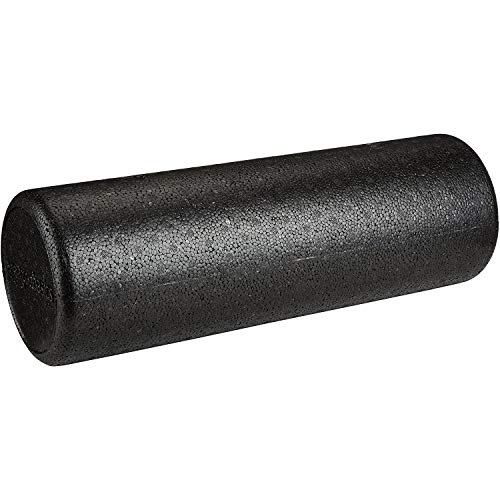
The best-selling roller in this comparison is also the simplest: a firm polypropylene cylinder, eighteen inches long, with molded edges that do not bite when you roll off the end. It holds its shape, wipes clean, weighs nearly nothing, and costs about as much as a smoothie. The 18-inch length is the sweet spot for handling both back and legs without becoming furniture.
Pros:
- Proven firm density that does not soften with use
- Molded edges are kinder on the transition than cut foam
- Light enough to carry to class daily
- Rock-bottom price for a full-service size
Cons:
- Smooth surface cannot isolate individual trigger points
- Firmness may feel intense on very sore beginners
Best for: the default first roller — effective, durable, and cheap enough to buy without deliberating.
TriggerPoint Grid 1.0
The Grid built the textured-roller category and still defines it. EVA foam wrapped over a rigid hollow core creates a firmer platform than solid foam, while the surface’s varied zones — flat planes, ridges, and nodules — mimic the palm, fingers, and thumbs of a massage therapist. Shift your calf an inch and the sensation changes character. It is thirteen inches long, travel-sized, and famously durable under daily use.
Pros:
- Distinct surface zones let you tune intensity by position
- Hollow-core design delivers true deep-tissue pressure
- Holds shape through years of frequent use
- Compact enough for a suitcase
Cons:
- Too intense for some first-time users
- Thirteen inches is short for full-back rolling
Best for: regular exercisers upgrading from smooth foam to targeted trigger-point work.
321 Strong Textured Roller
The 321 Strong takes the massage-hands idea in a gentler direction: medium density, so more of your body weight sinks in before the pushback, with three sizes of surface projection that go from fingertip-light to thumb-deep as you angle onto them. The design is protected by seven US patents and ships with a companion eBook of rolling routines — useful when you are not sure what to do beyond calves.
Pros:
- Medium density is the friendliest textured option for sore days
- Three distinct massage zones in one small roller
- Solid core keeps its shape despite the softer surface feel
- Included guide shortens the learning curve
Cons:
- Too soft for lifters who want maximum pressure
- Short length limits back coverage
Best for: anyone who found firm rollers painful but still wants targeted texture.
Amazon Basics 24-Inch Roller
Same firm polypropylene as its 18-inch sibling with six more inches of working surface. That extra span keeps both shoulder blades on foam during upper-back passes and gives long-legged users a full hamstring track without repositioning. It still fits under a bed, which the 36-inch cannot claim.
Pros:
- Covers the upper back without balance drama
- Same durable, shape-holding foam as the whole Basics line
- Still storable in normal apartments
- Modest price step over the 18-inch
Cons:
- Less portable than the shorter sizes
- Smooth surface, no trigger-point targeting
Best for: home use where back rolling is the main event.
Amazon Basics 36-Inch Roller
The full-length option is the physical-therapy standard: lie along it lengthwise for spine-mobility and posture drills, or across it for wide, stable back rolling where falling off the edge simply is not possible. Same firm foam, same molded edges, in a blue-speckled finish. If a therapist has ever handed you a roller, it was probably this shape.
Pros:
- Lengthwise spine work is only possible at this size
- Maximum stability for beginners and balance drills
- Same proven foam as the shorter Basics rollers
- Doubles as a Pilates and core-training prop
Cons:
- Takes real storage space
- Overkill if you only roll legs
Best for: physical-therapy homework, posture work, and shared household use.
Amazon Basics 12-Inch Roller
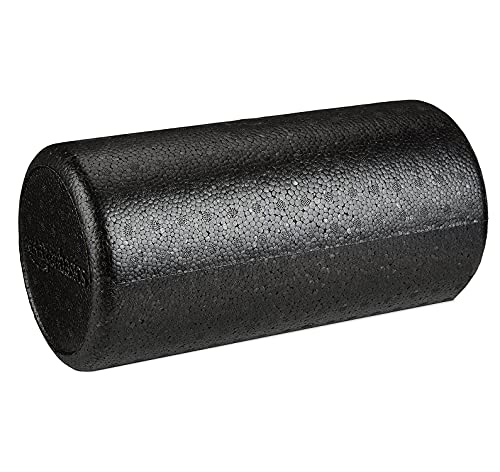
The smallest Basics roller trades coverage for portability: twelve inches of the same firm foam, light enough to forget it is in your bag. One limb at a time it does everything its bigger siblings do — calves, quads, IT bands — and it is routinely the cheapest way into foam rolling altogether.
Pros:
- Fits a gym bag, suitcase, or desk drawer
- Lowest price in the entire lineup
- Identical firm density to the larger sizes
- Easy to stash anywhere at home
Cons:
- Too short for comfortable back rolling
- Narrow margin for error on balance moves
Best for: travel, office recovery breaks, and leg-focused rolling on a minimum budget.
5-Piece Whole-Body Kit
This kit answers the places a roller cannot go: a firm 12-inch roller for the big muscle groups, a 15-inch anti-slip stick for standing quad and calf work, a spiky ball for plantar-fascia foot relief, a peanut ball that straddles the spine, and a stretching strap — all in a mesh carry bag. The roller itself is solid high-density foam rated to 300 pounds, so the bundle price does not hide a soft centerpiece.
Pros:
- Covers feet, spine, and standing work a roller misses
- 300-pound-rated solid roller anchors the set
- Mesh bag keeps the pieces together
- Costs less than buying the pieces separately
Cons:
- Individual pieces are functional rather than premium
- Short roller limits back coverage
Best for: building a complete recovery toolkit in one purchase.
ProsourceFit 12-Inch Roller
ProsourceFit’s expanded-polypropylene roller is the firm-and-simple pick from a dedicated fitness brand: 300-pound capacity, water-resistant closed-cell foam that stays hygienic, and a density noticeably deeper than standard foam. The same roller comes in four lengths if you decide the 12-inch is your format.
Pros:
- Firmer than standard foam for a deeper baseline massage
- Water-resistant EPP is easy to keep clean
- 300-pound weight capacity
- Fitness-brand quality at near-generic pricing
Cons:
- Firmness is a lot for first-timers
- Smooth surface only
Best for: heavier users and firm-pressure fans who want portable simplicity.
Krightlink 5-in-1 Recovery Set
The second kit swaps the strap-and-two-balls formula for a resistance band: a 13-inch hollow textured roller, a 15-inch massage stick, a 2.5-inch massage ball, the band, and a mesh bag. The hollow PVC-and-EVA roller runs firmer than solid foam and holds 200 pounds, and the band extends the kit from recovery into light strength and mobility work.
Pros:
- Textured hollow roller delivers deeper pressure than kit rollers usually do
- Resistance band adds warm-up and mobility utility
- Complete portable system with carry bag
- Waterproof materials wipe down easily
Cons:
- 200-pound capacity trails the 300-pound rollers here
- Accessory quality is serviceable, not standout
Best for: travelers and beginners who want recovery plus light training in one bag.
RumbleRoller Basic
The RumbleRoller is the deep end. Tall, firm-but-flexing bumps cover its surface and behave like kneading thumbs — they sink past the superficial layer and work into tissue smooth rollers only skim. The solid three-piece EVA core supports 300 pounds without the crushing failures hollow rollers can suffer, and the 5.5-inch diameter by 13-inch length keeps it maneuverable. A downloadable guide covers technique, which you will want.
Pros:
- The deepest tissue work of any roller in this group
- Bumps flex like fingertips instead of bruising like ridges
- Solid core will not break or deform under heavy use
- Compact dimensions despite the intensity
Cons:
- Genuinely intense — not a beginner’s first roller
- Costs more than the smooth alternatives
Best for: experienced rollers whose knots laugh at smooth foam.
Verdict
Best Overall: Amazon Basics 18-Inch Roller. The most-bought roller in the category for a plain reason: firm, durable, sized right for backs and legs alike, and priced so low there is no excuse not to start. Most people never need more.
Best Value: 5-Piece Whole-Body Kit. For the price of one branded roller you get the roller plus the stick, balls, and strap that reach everywhere foam cannot — the fastest way to a complete recovery setup.
Best Premium: TriggerPoint Grid 1.0. The defining textured roller: massage-hand surface zones, real deep-tissue firmness, and a durability record that justifies the step up.
FAQ
How often should I foam roll?
Short sessions beat marathon ones: five to twenty minutes after training, and again the following day or two while soreness lingers, is the widely used pattern. Slow passes — roughly an inch per second — with extra time on tender spots work better than fast scrubbing.
Should a foam roller hurt?
Discomfort in the “good hurt” range is normal on tight tissue; sharp or radiating pain is not. If a firm roller leaves you wincing and bruised, drop to medium density or shift more weight onto your supporting limbs and build up gradually.
Smooth or textured — which actually works better?
Both relieve muscle tightness; the difference is targeting. Smooth rollers spread pressure evenly and are easier to tolerate. Textured surfaces concentrate force on small areas, which helps isolate stubborn trigger points but demands more tolerance and technique.
What length should my first roller be?
Eighteen to twenty-four inches balances coverage against storage for most people. Choose 36 inches if back and posture work is your priority, or 12 to 13 inches if the roller needs to travel.
Can foam rolling replace stretching or massage?
It complements rather than replaces both. Rolling before training pairs well with dynamic warm-ups, and afterward it can reduce soreness while you regain range. For persistent or injury-related pain, a professional assessment still comes first.
This article may contain affiliate links; see our Affiliate Disclosure.