Back pain from a desk chair rarely announces itself at the desk — it shows up that evening, and by then you have spent eight hours in a seat that held your spine in the wrong shape. The fix is not a firmer cushion; it is adjustable lumbar support that meets your lower back where it actually curves.

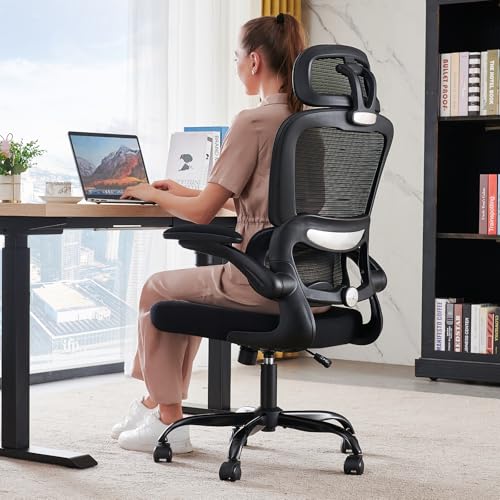

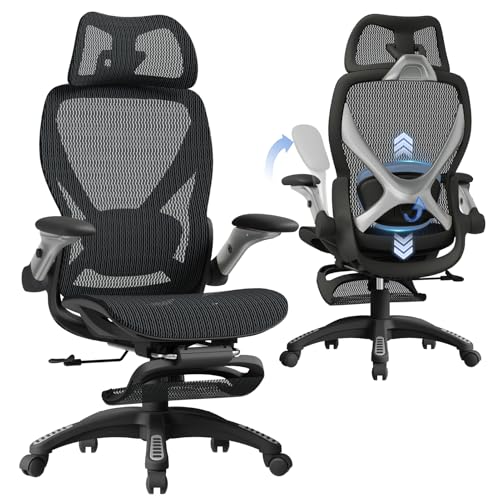

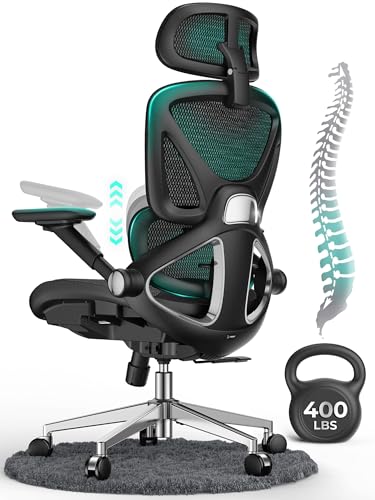
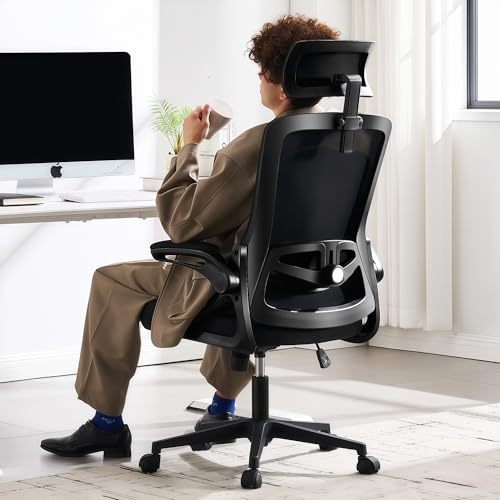
Ergonomic chairs earn the name on adjustability: lumbar that moves in and out, arms that follow your typing position, recline that lets the spine change shape through the day. The seven chairs below run from a proven budget seller to a footrest-equipped recliner, and the differences that matter for a sore back are exactly what this comparison sorts.
| Chair | Standout features | Price | Link |
|---|---|---|---|
| BestOffice Mid-Back | Mesh back, fixed lumbar curve, BIFMA parts, 250 lb | Budget | |
| TRALT Mesh | Real adjustable lumbar, molded foam seat, 330 lb metal base | Mid-range | |
| Marsail High-Back | Lumbar adjusts on two axes, 3D arms, 2D headrest, 90–120° recline | Mid-range | |
| ELABEST X100 | Auto-tracking 3D lumbar, 5D flip-up arms, 18" footrest | Premium | |
| HOLLUDLE V-Back | Rotating 3D lumbar, 3D arms, BIFMA/EN1335, 5-year warranty | Mid-range | |
| CAPOT High-Back | 8-level lumbar dialed to L1–L5, 400 lb, 4D flip-up arms | Premium | |
| Fizzin | 400 lb rating, adjustable headrest and lumbar, 125° tilt | Mid-range | |
How to choose a chair that actually helps your back
Marketing says “ergonomic”; your back cares about four specific mechanisms. Check them in this order.
Adjustable lumbar beats a lumbar-shaped back
Every chair here has a curve at the lower back. The difference is whether it moves. A fixed curve (BestOffice) fits the average spine; an adjustable mechanism — TRALT’s tensioned support, Marsail’s two-axis slider, CAPOT’s eight-position dial, ELABEST’s spring-loaded pad that tracks you as you shift — fits your spine. If back pain is the reason you are shopping, adjustable lumbar is the one feature not to compromise on: the support should press gently into the curve just above your belt line, not into your ribs or tailbone.
Seat depth, height, and the two-finger rule
Height is right when feet rest flat and knees sit at ninety degrees. Depth is right when two or three fingers fit between the seat edge and the back of your knees — a too-deep seat forces you to slouch forward off the lumbar support entirely, which quietly defeats the whole chair. The wider seats here (TRALT’s 19.7 inches, CAPOT’s 20) also let you shift positions through the day, which spines prefer to any single posture.
Recline is a feature, not a slack habit
Reclining to around 110–135 degrees transfers load from the lumbar discs into the backrest — alternating between upright and reclined is measurably kinder to the lower back than eight rigid hours. Look for lockable positions (Marsail’s 90–120 degrees, CAPOT’s three levels, Fizzin’s 125 degrees) and, if you nap or do long reading blocks, the ELABEST’s footrest turns the deepest setting into genuine rest.
Mesh, foam, and the cylinder underneath
Mesh backs breathe and flex; the seat is where foam quality shows. Cheap foam pancakes within a year — TRALT’s molded high-resilience seat and CAPOT’s thick cushion are built against exactly that. Under it all sits the gas cylinder: BIFMA-certified, anti-sink cylinders (TRALT, ELABEST, CAPOT’s SGS-tested lift) are the difference between a chair that holds its height and one that sighs downward every afternoon. Weight ratings here run from 250 pounds (BestOffice) to 400 (CAPOT, Fizzin) — buy comfortable margin, not the minimum.
Armrests decide shoulder pain
Arms that sit too low drag your shoulders down; too high, they shrug them up. Height-adjustable arms are the floor; 3D (Marsail, HOLLUDLE) and 4D/5D arms (CAPOT, ELABEST) also slide and pivot to follow your keyboard position, and flip-up designs tuck the chair under the desk when space is tight.
BestOffice Mid-Back Mesh Chair
The best seller in this comparison covers the fundamentals for the price of a dinner out: a fully ventilated mesh back with a built-in lumbar curve, a high-density cushion, adjustable height from 17.1 to 20 inches, and components that meet BIFMA standards under a 250-pound rating. Assembly runs ten to fifteen minutes. It will not adapt to an unusual spine — the lumbar is shaped, not adjustable — but as a first ergonomic upgrade from a kitchen chair, nothing touches its value.
Pros:
- Lowest price here by a wide margin
- Breathable mesh back with a genuine lumbar curve
- BIFMA-standard components at a budget price
- Fast, simple assembly
Cons:
- Lumbar curve is fixed — no adjustment
- 250-pound rating and mid-back height suit smaller frames best
Best for: the first step up from a non-ergonomic chair on the tightest budget.
TRALT Ergonomic Mesh Chair
TRALT builds its pitch around the failure points of budget chairs: an adjustable lumbar mechanism with real tension instead of a snap-in plastic piece, a molded high-resilience foam seat engineered not to flatten, an anti-sink BIFMA-certified cylinder, and a reinforced metal base rated to 330 pounds. The maker openly skipped the headrest to spend the budget on structure — a real trade at this price, and the 19.7-inch seat gives broad sitters real room.
Pros:
- Durable adjustable lumbar, not a fixed insert
- Molded foam seat resists the one-year pancake
- Anti-sink certified cylinder and 330-pound metal base
- Wide, roomy seat
Cons:
- No headrest by design
- Recline range is modest next to the premium picks
Best for: buyers who want the structural quality that budget chairs cut, without paying premium prices.
Marsail High-Back Chair
Marsail delivers the full adjustment stack at a mid-range price: lumbar support that travels 1.18 inches in and out and 2.16 inches up and down to land precisely on your curve, a 2D headrest, 3D padded armrests that flip up, a 90-to-120-degree lockable recline, and a 3.14-inch high-density foam seat. It is the cheapest chair here that adjusts in every dimension that matters for a painful back.
Pros:
- Two-axis lumbar adjustment targets your exact curve
- Full set: headrest, 3D flip-up arms, lockable recline
- Thick foam seat over a supportive frame
- Strong feature-per-dollar ratio
Cons:
- Recline stops at 120 degrees
- Assembly is more involved than the simple chairs
Best for: the sweet spot — complete back-focused adjustability without premium spend.
ELABEST X100 with Footrest
The X100’s lumbar does something the others cannot: a spring-loaded 3D pad auto-tracks your back as you move, staying in contact whether you lean in to type or slump back to think, with lockable depth, two inches of height travel, and fifteen degrees of rotation. Around it: 5D flip-up armrests, a three-stage recline, an 18-inch extendable footrest, dense dual-stripe mesh, and BIFMA certification at 300 pounds — a design built with orthopedic-specialist input for people whose backs complain by mid-afternoon.
Pros:
- Auto-tracking lumbar keeps contact through posture changes
- Footrest plus three-stage recline for true break positions
- 5D flip-up arms with dense, skin-friendly padding
- High-elasticity mesh with strong airflow
Cons:
- Premium price
- Feature count means a longer assembly and learning curve
Best for: long-hours desk workers who want the chair adapting to them, not the reverse.
HOLLUDLE V-Back Chair
HOLLUDLE’s 3D lumbar moves up, down, forward, backward, and rotates — a range that lets it support asymmetric pain patterns most fixed supports miss. The distinctive silver V-shaped back frame carries a 2D headrest and 3D armrests, and the build clears both BIFMA and the European EN1335 standard, backed by a five-year warranty — the longest coverage in this group.
Pros:
- Rotating 3D lumbar reaches spots slider designs miss
- Dual BIFMA and EN1335 certification
- Five-year warranty
- Distinctive design that does not look like every mesh chair
Cons:
- 20–30 minute assembly
- V-frame styling is a taste call
Best for: buyers who weight certification and warranty as heavily as features.
CAPOT High-Back Chair
CAPOT engineered for the longest days: eight lumbar positions across two inches of travel aligned to the L1–L5 vertebrae, a 19.3-by-20-inch cooling-mesh seat, a leak-proof SGS-tested gas lift, 4D flip-up arms, a three-level tilt, and a 3D headrest sized for sitters from 5’5" to 6’2". The 400-pound rating on a stainless base makes it one of the two strongest chairs here, and parts are covered free for sixty months.
Pros:
- Eight-level lumbar dial with real vertebral range
- 400-pound rating on a stainless base
- 4D flip-up arms and silent wheels
- Five years of free parts coverage
Cons:
- Premium price tier
- Large frame overwhelms small desks
Best for: 8-plus-hour days and bigger frames that outmatch standard chairs.
Fizzin 400 lb Mesh Chair
Fizzin packs a 400-pound weight rating, an adjustable lumbar, a headrest with 3.9 inches of height travel plus angle adjustment, 90-degree adjustable armrests, and a 125-degree tilt into a mid-range price — the accessible route to heavy-duty capacity. The full-mesh build keeps long sits cool, and the tilt range edges past most rivals at this tier.
Pros:
- 400-pound capacity at a mid-range price
- Adjustable headrest, lumbar, and arms across the board
- 125-degree tilt for real pressure relief
- Breathable full-mesh construction
Cons:
- Adjustments are functional rather than premium-smooth
- Brand is newer to the category
Best for: bigger users who want headrest-to-lumbar adjustability without the premium-tier price.
Verdict
Best Overall: TRALT Ergonomic Mesh Chair. It spends its budget exactly where back pain lives — a durable adjustable lumbar, a seat that stays supportive past year one, and a certified cylinder on a 330-pound base — and its sales record shows buyers have noticed.
Best Value: BestOffice Mid-Back. The category’s best seller delivers mesh ventilation, a lumbar curve, and BIFMA components for the least money on the list — the real minimum for a healthier desk.
Best Premium: ELABEST X100. The auto-tracking lumbar, 5D arms, and footrest make it the chair for people who live at their desk and want it to fight back-pain actively.
FAQ
Where exactly should lumbar support press?
Into the natural inward curve of your lower back, roughly at belt height — the L1–L5 region. You should feel gentle, even contact when sitting fully back. Pressure at the ribs or tailbone means the support needs to move, which is why adjustability matters.
Is a mesh or padded seat better for long days?
Mesh backs win on cooling almost universally. Seats split: quality molded foam distributes pressure well and lasts years, while mesh seats stay coolest but can dig at the thigh edges on some frames. The failure mode to avoid is cheap foam, which flattens within a year.
Do I need a headrest for back pain?
Lower-back pain, no — lumbar support and recline do that work. Neck and upper-shoulder tension, yes: an adjustable headrest supports the head during reclined breaks, which is when neck muscles finally release.
How much should I recline while working?
Alternate. Upright (90–100 degrees) for focused typing, 110–120 for reading and calls. The recline shifts load off the lumbar discs, and the alternation itself — not any single “correct” angle — is what backs respond to.
What does BIFMA certification actually mean?
BIFMA is the furniture industry’s durability and safety standard — certified components have passed load, fatigue, and stability testing. It is a floor for build quality, not a comfort rating; EN1335 is the comparable European standard.
This article may contain affiliate links; see our Affiliate Disclosure.