Every camera here puts 24-hour parking mode in its title, and not one of them can do it out of the box. Your cigarette lighter socket dies when you turn the key, so watching a parked car needs a hardwire kit run to the fuse box, sold separately. Five listings admit that in a bracket at the end of a bullet. One goes further and gives you the part number. The other two do not mention it at all.




At a glance
| Product | Front and rear, and where the good sensor is | Price tier | Link |
|---|---|---|---|
| WANLIPO A13 | 4K + 2.5K. Its first bullet lists the app’s paywall | Budget | |
| FAIMEE 4K+2K | 4K + 2K, 170 degrees, and 64GB in the box | Budget | |
| 70mai A810 Lite | Wi-Fi 6, three GPS constellations, and 4G | Budget | |
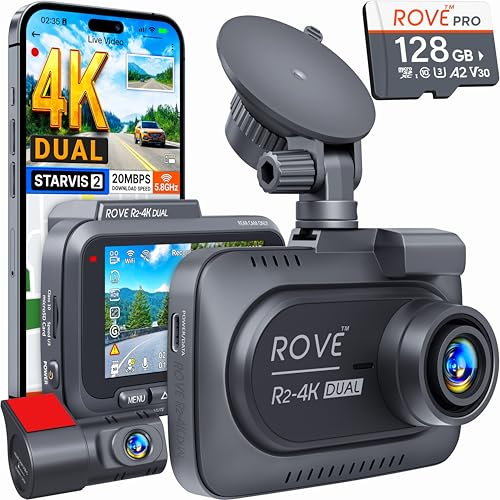
| ROVE R2-4K DUAL | The only listing that gives you the hardwire part number | Mid-range | |
| REDTIGER F7NP | Heat-resistant, and do not expose it to heat | Mid-range | |
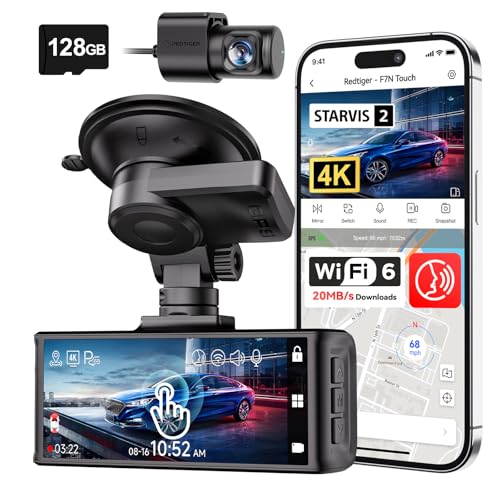
| REDTIGER F7N Touch | A touchscreen and voice, on the same 4K and 1080P | Mid-range | |
| VIOFO A229 Plus | The good sensor in both cameras, and a lower front number | Premium | |
How to choose
24-hour parking mode is not included
It is in every title on this page and it needs hardware nobody puts in the box. A parked car has no power at the accessory socket, so continuous monitoring means running a kit to your fuse box with a low-voltage cutoff so it does not flatten your battery. Five listings concede this in brackets: hardwire kit needed, hardwiring kit required, not included. One does markedly better and prints the exact part number you will need to order. Budget for it, or accept that the headline feature of every camera here is a feature you do not have.
The rear camera is where you get hit
Look at the pairings: 4K and 1080P, four times. That means the good sensor faces forward and something much cheaper watches the direction most collisions come from. One camera here does the opposite, putting the same premium sensor in both housings, and the consequence is that its front number reads lower than everyone else’s. That is not a weaker camera. It is a company deciding that two good cameras beat one good camera and a witness who cannot read a plate.
Sensor beats resolution after dark
The pixel count tells you how much detail is theoretically there; the sensor decides whether any of it survives a dark road. Three cameras here name a specific Sony sensor, and one names the exact part in both cameras and claims two and a half times the dynamic range and light sensitivity of the previous generation. One of the others names the same sensor and then quietly adds two words: for the front camera. Read that carefully on every listing, because the sensor claim and the camera it applies to are often in different halves of the sentence.
One camera admits its features fight each other
The best bracket on this page belongs to the most expensive camera: its front camera cannot do 60 frames a second while HDR is switched on. That is a real limitation, printed voluntarily, on the two features the same listing spends its first two bullets selling. Nobody else here admits any feature conflicts with any other, which does not mean their features do not.
Count the satellite constellations
Everyone says built-in GPS. Two say more: one names four systems and one names three. This matters in exactly the place you want it to work, which is a city, where buildings block half the sky and a receiver listening to four networks locks on and stays locked where one flounders. It shows up as accurate speed on the video overlay, which is the part an insurer reads.
A lithium battery does not belong on a windshield
Three cameras here use a supercapacitor instead of a battery and one explains it properly: better heat resistance, longer life, safer in hot climates and long parking. A dash cam sits in direct sun behind glass, which is the worst environment you could design for a lithium cell. Worth noting that the same listing that praises its heat resistance also warns you, one bullet later, not to expose the device to high temperatures for long periods, which is a curious instruction for a windshield mount.
Check what the app charges for
The cheapest camera here opens its bullet list with a list of what its app does not charge for, and by implication what it does: speed adjustment, timeline viewing and cloud uploads need a membership. It also volunteers that the app is a third-party product and not exclusive to the brand. That is a remarkable first bullet, and the useful thing is that no other listing on this page mentions app subscriptions at all. That silence is not evidence there are none.
Wi-Fi speed is real, and one listing shows its working
Downloading a 4K clip over the wrong band is the difference between a minute and ten. Claims here run from 8 to 25 megabytes a second, with one camera using Wi-Fi 6 for the top figure. Only one listing does the real thing and gives you both bands to compare: eight megabytes a second on 5GHz against two on 2.4. That comparison is the only place on this page where the benefit of the fast band is shown rather than asserted.
WANLIPO A13
A third the price of the mid-range cameras here, and its rear camera records 2.5K, which is better than the 1080P that four dearer rivals put behind you. Its first bullet is extraordinary: a plain list of what the app does not charge for, an admission that some features do need a membership, and a note that the app is third-party and not exclusive. Nobody else raises subscriptions at all. It also shows its Wi-Fi working, quoting 8 megabytes a second on 5GHz against 2 on 2.4. The rear lens is 120 degrees, fifty narrower than its front.
Pros:
- 2.5K rear, where dearer rivals give 1080P
- Its first bullet lists what the app charges for; nobody else does
- Compares both Wi-Fi bands plainly: 8 against 2 megabytes a second
- 64GB card, GPS, G-sensor, 1-year warranty; the lowest price here
Cons:
- A 120-degree rear lens; the narrowest on this page
- Names no image sensor
- Says nothing about a supercapacitor or battery
- Parking mode needs a hardwire kit it does not name
Best for: a better rear camera than cameras costing four times more.
FAIMEE 4K+2K
Four K in front and a genuine 2K behind, at 2304 by 1296, which is the second-best rear resolution on this page and a real step up from the 1080P most cameras leave you with. Both lenses are 170 degrees, so the coverage matches front and back rather than tapering off behind you, and it claims six lanes of view. A 64GB high-endurance card is included and it takes up to 256GB. Time-lapse and impact parking modes, dual-band Wi-Fi, built-in GPS, an 18-month warranty, and a 3-inch screen.
Pros:
- 2K rear at 2304 by 1296; second best here
- 170 degrees front and rear; matched coverage
- High-endurance 64GB card included; takes 256GB
- Time-lapse and impact parking modes; 18-month warranty
Cons:
- Names no image sensor
- No Wi-Fi speed published
- Says nothing about a supercapacitor
- Hardwire kit required and not included
Best for: matched 170-degree coverage, front and back.
70mai A810 Lite
The only camera here with Wi-Fi 6, and it turns that into the fastest transfer claim on the page at 25 megabytes a second. It is also the only one with 4G, meaning live view and vehicle tracking from anywhere rather than only when you are standing next to the car, though that needs a data plan its own bullet begins to mention. Three GPS constellations rather than one. A supercapacitor instead of a battery, low-voltage protection so parking mode does not flatten you, voice control, and it is credit-card sized.
Pros:
- Wi-Fi 6 and 25 megabytes a second; the fastest here
- 4G LTE live view and tracking from anywhere
- Three GPS constellations; better lock in cities
- Supercapacitor, not a battery; low-voltage protection built in
- Voice control; credit-card sized; 18-month warranty
Cons:
- 4G needs a data plan it does not price
- 1080P rear; the good camera faces forward
- Names no image sensor
Best for: watching the car from another city.
ROVE R2-4K DUAL
It gives you the part number. Its parking mode needs a hardwire kit like everyone else’s, and it is the only listing on this page that tells you which one to buy rather than leaving you to find out. It also names its sensor precisely, a Sony IMX675 STARVIS 2, and is fair that this applies to the front camera. Both apertures are published at f1.5 and f1.8. A 128GB card is included, it takes up to 1TB, it has a supercapacitor, and its GPS overlay comes with a free player for PC and Mac so the speed data is actually readable.
Pros:
- The only listing that names the hardwire kit you need
- Names its sensor exactly, and which camera it is in
- Both apertures published; 128GB included; takes 1TB
- Free GPS player for PC and Mac; supercapacitor
- Three parking modes with a voice alert on your next start
Cons:
- 1080P rear behind a 4K front
- The rear camera gets no named sensor
- Its 150-degree front is narrower than rivals’ 170
Best for: the only camera that tells you what else to buy.
REDTIGER F7NP
The clearest explanation on this page of why a supercapacitor matters: no lithium battery, better heat resistance, safer in hot climates and through long parking hours, which is exactly the argument for a device that lives in direct sun behind glass. STARVIS 2 with an f1.5 aperture and a six-layer lens, 5.8GHz Wi-Fi at 20 megabytes a second, a free card, and 18 months of warranty. Its final bullet then tells you not to expose the device to high temperatures for long periods, one bullet after the heat-resistance argument.
Pros:
- Explains the supercapacitor properly: no lithium, heat resistant
- STARVIS 2, f1.5 aperture, six-layer optical lens
- 5.8GHz at 20 megabytes a second; free card included
- Two parking modes; 18-month warranty
Cons:
- Says heat resistant, then says do not expose to heat
- 1080P rear; the sensor claim does not say which camera
- Hardwire kit needed, unnamed
Best for: hot climates, according to most of its own bullets.
REDTIGER F7N Touch
The same 4K and 1080P STARVIS 2 pairing as its sibling with a 3.18 inch touchscreen and voice control added, and the sensible detail is that it kept the buttons too, so you are not hunting a touch target at 60 miles an hour. One tap locks an emergency clip, turns on Wi-Fi or grabs a photo. A 128GB card is included, GPS logs route and speed, 5.8GHz gives 20 megabytes a second, and there is a pry tool in the box for hiding the wiring, which is the fiddly part of the job.
Pros:
- Touchscreen and voice, with the physical buttons kept
- One-tap emergency lock; STARVIS 2 front
- 128GB card and a wiring pry tool included
- 5.8GHz at 20 megabytes a second; 18-month warranty
Cons:
- Ten dollars more than its sibling for a screen
- 1080P rear; no sensor named for it
- Parking mode needs a separate kit
Best for: a touchscreen that did not delete the buttons.
VIOFO A229 Plus
Two Sony STARVIS 2 IMX675 sensors, one in each camera, which is why its front records 1440P where rivals claim 4K and why that is the right trade. The car behind you is the one that hits you, and everyone else photographs it with the cheap sensor. Dual-channel HDR front and rear, quad-constellation GPS naming all four networks, twelve voice commands, and three parking modes including a buffered one that saves the 15 seconds before an impact as well as the 30 after. It tells you plainly that 60fps and HDR cannot run together.
Pros:
- STARVIS 2 in both cameras; the only one here
- 1440P front and rear; the rear is not an afterthought
- Quad-constellation GPS, all four named
- Buffered parking mode saves 15 seconds before the impact
- Admits its own 60fps and HDR conflict
Cons:
- The highest price here
- 1440P front reads worse than 4K on a box
- No card included; no Wi-Fi speed published
- Never mentions the hardwire kit its parking modes need
Best for: the camera pointed at the car that hits you.
The verdict
Two things decide this page and neither is on the front of the box. Parking mode, which every title promises and no box delivers without a hardwire kit. And the rear camera, which four of these handle as a formality while pointing their good sensor at the empty road ahead.
Best overall: ROVE R2-4K DUAL. Every camera here needs a hardwire kit for the parking mode in its title, and this is the only listing that tells you which one, by part number, instead of leaving you to work it out after delivery. It names its sensor exactly and says which camera it is in, publishes both apertures, includes a 128GB card, takes up to a terabyte, and ships a free GPS player so the speed overlay is readable on a computer rather than trapped in an app. It gives you a voice alert on your next start if something happened while you were away.
Best value: WANLIPO A13. A third of the price of the mid-range cameras, and its rear camera records 2.5K where four dearer rivals record 1080P, which is the wrong way round for anyone who thinks about where accidents come from. Its first bullet is a real inventory of what the app charges for and an admission that the app is third-party, on a page where nobody else mentions subscriptions. It also proves its Wi-Fi claim by giving you both bands. The 120-degree rear lens is the real compromise.
Best premium: VIOFO A229 Plus. It is the only camera here with the premium sensor in both housings, and that is why its front says 1440P instead of 4K. That number will lose it sales and it is the correct engineering: the vehicle behind you is the one that hits you, and everyone else is filming it with the cheap sensor. Add four GPS constellations, a buffered parking mode that keeps the 15 seconds before the bang, and the only bracket on this page where a company admits two of its own features cannot run at once.
FAQ
Does 24-hour parking mode work out of the box?
No. Your accessory socket dies with the ignition, so it needs a hardwire kit to the fuse box, sold separately. Five listings admit it in brackets, one names the part, and two never raise it.
Is 4K front and 1080P rear a good pairing?
It is the common one and it puts your best camera on the empty road ahead. One camera here uses the same premium sensor in both and records 1440P each way, which reads worse and sees better where it counts.
Does the sensor matter more than the resolution?
At night, yes. Three cameras name a Sony sensor and one names it in both housings. Read carefully: one listing names the sensor and then adds, quietly, that it applies to the front camera only.
Why a supercapacitor instead of a battery?
Because a lithium cell behind glass in summer is a bad idea. Three cameras use one and one explains it properly. That same listing then warns you not to leave the device in high temperatures.
Will the app cost me money?
The cheapest camera here says which features need a membership and admits the app is third-party. No other listing on this page mentions subscriptions, which is not the same as not having any.
This article may contain affiliate links; see our Affiliate Disclosure.