A playard with a bassinet is two products sharing a frame, and they have completely different limits. The bassinet is for a newborn who cannot roll. The playard is for a toddler. One listing here publishes both numbers and names the moment bassinet use ends. One publishes a single 30 pound figure that belongs to the playard, in a listing selling the bassinet. The other four publish no weight limit of any kind.



At a glance
| Product | Limits published, and standards named | Price tier | Link |
|---|---|---|---|
| Dream On Me Zazzy | Both limits separately, and it names the standards | Budget | |
| Pamo Babe | One 30 lb figure, and it belongs to the playard | Budget | |
| Graco On The Go | 20% more compact than its own unnamed siblings | Budget | |
| Graco On the Go Zip | The only listing naming a safe-sleep authority | Budget | |
| Graco Dome LX | Bassinet works on or off the playard | Mid-range | |
| Graco Day2Dream | A real bedside bassinet with its own bag, plus a changer | Premium | |
How to choose
The bassinet ends before the weight limit does
One listing here gives the rule properly, and it is worth quoting the shape of it: the bassinet suits infants up to 15 pounds, or five months, or until your baby begins to roll over, whichever comes first. That last clause is the one that actually ends bassinet use in most homes, because babies roll before they are heavy, and an elevated bassinet is not the place for a baby who can turn over. Five other listings on this page sell you a bassinet and never mention when to stop using it.
Thirty pounds is the toddler’s number, not the newborn’s
One listing offers a single limit: suitable from birth to 30 pounds. That figure describes the playard, which is the toddler half of the product, and it appears in the same bullet as the bassinet. A 30 pound child has no business in a bassinet and the listing does not say so. Compare the one that separates them cleanly: 15 pounds for the bassinet, 30 pounds and 35 inches for the playard. Same frame, two numbers, and only one company prints both.
Four products, one brand, no dimensions
Four playards here come from the same well-known name and range from about eighty dollars to nearly three hundred. Between them they publish no assembled size, no folded size, no product weight, no bassinet limit and no playard limit. Meanwhile the cheapest thing on this page gives you all five, plus a warranty. That is not a comment on the hardware, which is probably excellent. It is a comment on which listing lets you check whether it fits in your car.
Twenty per cent more compact than what
One listing claims a 20% more compact fold than other playards from the same brand. That is a comparison against its own unnamed siblings, three of which are also on this page publishing no folded dimensions, so there is nothing to check it against. The listing that gives you an actual folded figure, 28 by 7.5 inches, is the one nobody is comparing themselves to.
Look for the standards, not the adjectives
Two listings here name something outside themselves. One says it meets and exceeds the applicable ASTM and CPSC safety standards, which are the mandatory rules playards are actually tested against. Another says its playard and bassinet follow the American Academy of Pediatrics safe sleep guidelines, which is the professional body whose guidance the rolling rule comes from. The other four offer sturdy, safe and durable, which are not certifications. On a product your newborn sleeps in unattended, that difference is the whole listing.
Does the bassinet leave the frame
This is what separates the eighty dollar playards from the three hundred dollar one. On most of these, the bassinet is a hammock that sits in the playard and comes out when you are done with it. On two, the bassinet is its own product: it detaches, it has its own carry bag, and one has two height positions, so it lives beside your bed at home and travels separately. If you wanted a bedside bassinet and a playard, that is two purchases in most of this page and one purchase in two of it.
The sheets cost extra
Two listings note that compatible sheets are available and sold separately, and one of those is the most expensive product on this page. Playard mattresses are an odd size and ordinary crib sheets do not fit them, so this is a real line item rather than a nicety. The cheapest playard here includes a removable, washable mattress pad in the box and says so.
Wheels and how it folds
Small mechanical details decide whether this thing gets used or lives in a cupboard. Two listings mention wheels for moving it between rooms. One describes folding feet and a push-button fold. One describes a seven-point base and rounded corners. One zips its bassinet in rather than clipping it, which means one less part to lose. These are the differences that matter at eleven at night, and they are the ones nobody quantifies.
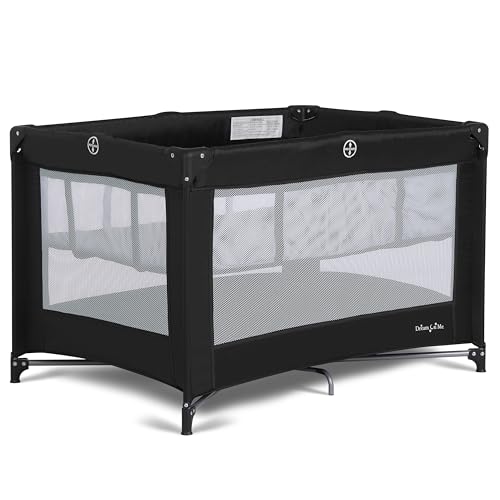
Dream On Me Zazzy
The cheapest playard here and the only listing that behaves like a specification. The bassinet is stated at up to 15 pounds, five months, or until your baby begins to roll over, which is the real ending and which five rivals omit entirely. The playard is stated separately at 30 pounds and 35 inches. It publishes its assembled size, its folded size, its own weight at 16.6 pounds, and it names the ASTM and CPSC standards it is built to. A removable washable mattress pad, 360-degree mesh, no-tool setup, travel bag and a year of warranty.
Pros:
- Publishes the bassinet limit separately, including the rolling rule
- Publishes the playard limit at 30 lbs and 35 inches
- Names ASTM and CPSC; the only mandatory standards cited here
- Assembled size, folded size and product weight all given
- Washable mattress pad and travel bag included; one-year warranty
Cons:
- The bassinet does not detach for bedside use
- No changing station; no toy bar
- No wheels mentioned
Best for: the only listing that tells you when to stop using it.
Pamo Babe
A detachable bassinet, a seven-point base for stability, rounded corners, two wheels for moving it between rooms, and a bassinet frame that snaps in place in seconds. Its care instructions are unusually specific and useful: mild soap and warm water, no bleach, no machine washing, which is the sort of thing you find out too late. Its weight guidance is the problem. Birth to 30 pounds appears in the same bullet as the bassinet, and 30 pounds is the playard’s figure, not a bassinet’s.
Pros:
- Bassinet detaches; frame snaps in place in seconds
- Seven-point base and rounded corners
- Two wheels for moving between rooms
- Clear, specific cleaning instructions
- Carry bag; fits a car boot
Cons:
- Gives one 30 lb limit, which belongs to the playard
- No bassinet weight, age or rolling guidance at all
- No dimensions, folded size or product weight
- No safety standard named
Best for: wheels and a stable base, if you know the bassinet rule already.
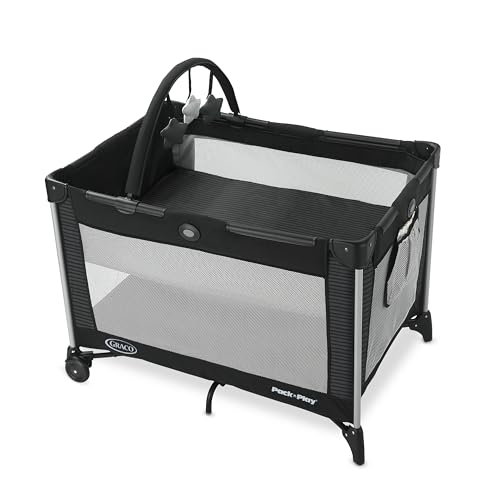
Graco On The Go
The mechanism is the selling point and it is a good one: the bassinet folds with the playard rather than coming out first, so take-down is one action instead of two. Folding feet and wheels give a fold the listing calls 20% more compact, measured against other playards from the same brand, three of which are also on this page and none of which publishes a folded size either. A full-size bassinet at an easy-to-view height, a toy bar, the brand’s push-button fold, and a carry bag. Sheets are sold separately.
Pros:
- Bassinet folds with the playard; one action to pack up
- Folding feet and wheels; push-button fold
- Full-size bassinet at an easy viewing height
- Toy bar and carry bag included
Cons:
- 20% more compact than its own unnamed siblings
- No dimensions, folded size, weight or limits published
- No safety standard named; sheets sold separately
Best for: folding it up in one go.
Graco On the Go Zip
The only listing on this page that names a safe-sleep authority, saying the playard and bassinet follow the American Academy of Pediatrics guidelines. That is the body whose guidance the rolling rule comes from, and naming it is more than four rivals manage. The bassinet zips in rather than clipping, which means one fewer part to lose and a cleaner transition to toddler playtime, and the mesh sides keep the baby visible at eye level. Premium knit fabrics throughout. No dimensions, no weights, no limits.
Pros:
- Names the American Academy of Pediatrics safe sleep guidelines
- Zip-in bassinet; nothing to lose, clean transition to playard
- Breathable mesh siding for continuous visibility
- Upgraded knit fabrics; folds quickly and compactly
Cons:
- No bassinet or playard weight limit published
- No dimensions, folded size or product weight
- Bassinet does not detach for bedside use
Best for: the only listing that names who wrote the sleep rules.
Graco Dome LX
Its bassinet works on the playard or off it, which is the feature that turns one purchase into two: a bedside bassinet for the first months and a playard for the years after. That is a genuine saving against buying both, and it is what you are paying the extra hundred and thirty dollars for over the zip version. It converts to a toddler playard, has a push-button fold and a travel bag. Like every other playard from this brand on this page, it publishes no dimension, no weight and no limit.
Pros:
- Bassinet used on or off the playard; two products in one
- Converts from portable bassinet to toddler playard
- Push-button fold; lightweight and portable
Cons:
- No dimensions, weights or limits published anywhere
- No safety standard or guideline named
- No changing station at this price
Best for: a bassinet that leaves the frame, for less than the top model.
Graco Day2Dream
The bassinet here is genuinely its own product: it removes for bedside use, has two height positions so it matches your bed, folds compactly, and comes with its own carry bag separate from the playard’s. That is a travel bassinet, a home bassinet and a playard in one box, plus a nappy changer with wipe-clean fabrics. At this price you are buying three things, and against buying a bedside bassinet and a playard separately the arithmetic works. It publishes nothing you can measure, and its sheets cost extra.
Pros:
- The bassinet detaches, has two heights and its own carry bag
- Works bedside at home and travels independently
- Nappy changer with wipe-clean fabrics included
- Carry bags for both the bassinet and the playard
- Transitions to a full toddler playard
Cons:
- The highest price here by a wide margin
- No dimensions, weights or limits published
- No safety standard named; sheets sold separately
Best for: replacing a bedside bassinet and a playard with one purchase.
The verdict
Two products, one frame, two limits. One listing on this page prints both and names the moment the bassinet stops being appropriate. Four print neither, and one prints the toddler’s number next to the newborn’s bed.
Best overall: Dream On Me Zazzy. It is the cheapest thing here and the only listing that snacks you like someone with a question. The bassinet’s limit is stated separately from the playard’s, with the clause that actually matters: until your baby begins to roll over. It names the ASTM and CPSC standards rather than saying sturdy, and it publishes its assembled size, its folded size and its own weight so you can work out whether it fits your car and your cupboard. A washable pad and a bag are in the box.
Best value: Graco On the Go Zip. The only listing on this page that names the body behind the safe sleep guidance it claims to follow, which on a product your newborn sleeps in unattended is worth more than any fabric. The zip-in bassinet is the practical half of the argument: nothing to unclip, nothing to lose, and a clean handover from newborn naps to toddler play. It will not tell you a single dimension or weight, which is a real gap at any price.
Best premium: Graco Day2Dream. Buy it if you were going to buy a bedside bassinet as well. Its bassinet detaches properly, has two height positions to match your bed, folds down and travels in its own bag, which makes this three products rather than one with an accessory. Add the changer and the arithmetic against buying separately holds up. Just note that at nearly three hundred dollars, the sheets are still extra and nothing about it is measured.
FAQ
When does my baby outgrow the bassinet?
One listing here gives the rule: up to 15 pounds, five months, or when your baby begins to roll over, whichever is first. The rolling usually comes first. Five listings on this page never mention it.
Is a 30 pound limit the bassinet’s?
No. Thirty pounds is the playard, which is the toddler half. One listing puts that figure in the same bullet as its bassinet. The listing that separates them gives 15 pounds for the bassinet and 30 pounds with 35 inches for the playard.
What standards should I look for?
ASTM and CPSC are the mandatory ones for playards, and one listing here names both. Another names the American Academy of Pediatrics safe sleep guidelines. The other four offer sturdy and safe, which are adjectives.
Do I need the bassinet to detach?
Only if you want it beside your bed. On most of these it is a hammock inside the frame. On two it comes out, and on one it has two height positions and its own carry bag, which is a bedside bassinet and a playard in one purchase.
Are sheets included?
Often not. Two listings say compatible sheets are sold separately, including the most expensive product here. Playard mattresses are an odd size and crib sheets will not fit. The cheapest playard here includes a washable pad.
This article may contain affiliate links; see our Affiliate Disclosure.