You slip on a headset, drop into a match, and suddenly you can hear the footsteps behind you before you see anyone. That is the promise of the PS5 and its Tempest 3D audio engine, and the headset you pick decides how much of it you actually get.

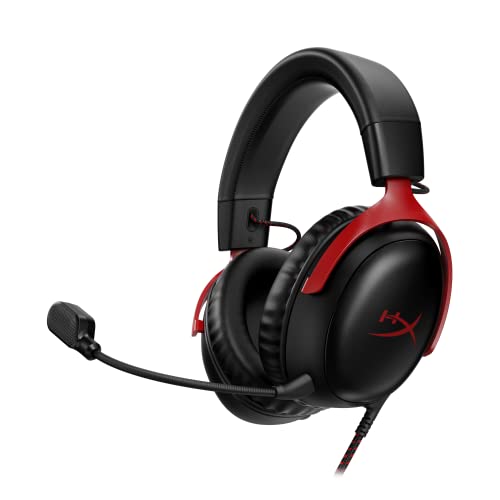
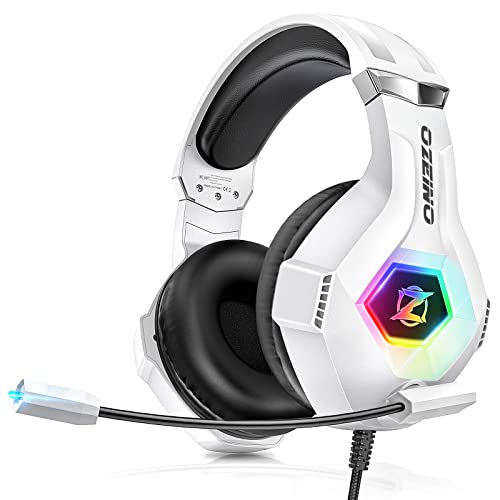


A great PS5 headset is really three things working together: drivers that place sound in space, a mic that keeps your voice clear, and cushions that stay comfortable through a long session. This guide compares five popular picks, from a wired budget favorite to a wireless flagship, so competitive players, movie-night listeners, and anyone sharing a couch can find the right fit.
| Headset | Standout feature | Price tier | Link |
|---|---|---|---|
| Razer BlackShark V2 X | Triforce 50mm drivers, light and clear | Budget | |
| HyperX Cloud III | Angled 53mm drivers, DTS spatial audio | Mid-range | |
| Ozeino 7.1 Surround | RGB lighting, lowest entry price | Budget | |
| Turtle Beach Stealth 500 | 2.4GHz wireless plus Bluetooth, long battery | Mid-range | |
| SteelSeries Arctis Nova 5P | Companion app presets, retractable mic | Premium | |
How to choose a PS5 headset
Let the console do the spatial work
Here is the point that saves a lot of confusion. The PS5 has its own Tempest 3D audio engine built in, and it turns ordinary stereo into positional, height-aware sound for any headset plugged into the DualSense controller or connected by a USB dongle. You do not need a headset that advertises “7.1 surround” to get spatial audio on PS5, because the surround processing happens in the console, not the earcups. A plain way to read the marketing: 7.1 and virtual surround labels describe software effects, and on PlayStation the Tempest engine is usually the better one to use. What actually matters is driver quality and a good seal, because those decide how cleanly the console’s spatial cues reach your ears.
Wired or wireless
Wired headsets connect through the 3.5mm jack on the controller. They are cheaper, never need charging, and pass Tempest 3D audio without any fuss. Wireless models use a 2.4GHz USB dongle for low-latency play, and many add Bluetooth so you can hear a phone at the same time. Wireless buys you freedom to get up and stretch, at the cost of battery management and a higher price. If you sit close to the TV and want the most sound per dollar, wired wins. If you pace, share a room, or hate cables, wireless is worth it.
Microphone and comfort
Squadmates notice your mic more than your drivers. Look for a cardioid or noise-canceling pattern that favors your voice and rejects the room, plus an easy mute, whether that is a flip-to-mute boom or a button. Comfort is the quiet dealbreaker: memory foam cushions, light weight, and even clamping force are what let you play for hours without a headache. Glasses wearers should favor softer leatherette or fabric cushions that do not press the temples.
What “competitive” sound actually means
Marketing loves to promise a competitive edge, but the useful version of that idea is narrow. In a shooter you are listening for quiet, mid-range detail: a footstep on concrete, a reload, a door two rooms away. A headset with a huge bass hump buries those cues under explosions, which feels exciting and loses fights. Look instead for separation, the ability to keep several sounds distinct at once, which is what driver designs that tune highs, mids, and lows independently are chasing. A good seal matters just as much, because leaked bass muddies everything. If a headset offers an EQ, a mild cut to the low end and a small lift around the mid-range usually reveals more than any preset labeled for gaming.
Fit, glasses, and the long session
Weight and clamp decide whether a headset is still comfortable in hour three. Anything around 250 grams disappears on the head; heavier models need better weight distribution to compensate, which is what suspension and floating headbands are for. Clamping force is a trade-off, since a tight fit seals bass in but presses on the jaw over time. Cushion material matters too: leatherette seals best and runs warm, fabric breathes but leaks a little more low end. If you wear glasses, softer memory foam that lets the arms sink in will save you a headache, and some players simply loosen the headband a notch and accept slightly less bass in exchange for playing comfortably all evening.
Razer BlackShark V2 X
The BlackShark V2 X is the most popular pick in this group, and it earns that spot by getting the fundamentals right for very little money. Its Triforce 50mm drivers split each driver into three zones so highs, mids, and lows are tuned separately, which keeps footsteps and gunfire distinct instead of muddy. At around 240 grams it is genuinely light, the closed earcups isolate well, and the cardioid mic keeps chat clear. It plugs into the DualSense with a single 3.5mm cable, so Tempest 3D audio just works.
What you give up is software. On console there is no companion app to reshape the sound, so you get Razer’s tuning as delivered, which leans clear and detailed rather than bass-heavy. For most players that is the right call, and the on-headset volume wheel covers the only adjustment you need mid-match. Because the same 3.5mm cable works on Xbox, PC, and Switch, it is also the easiest headset here to move between systems, and there is no dongle to lose or battery to watch.
- Clear, well-separated sound from the Triforce 50mm drivers
- Lightweight with memory foam cushions for long sessions
- Focused cardioid mic that rejects background noise
- Simple 3.5mm connection across PS5, Xbox, PC, and Switch
- Wired only, so no untethered movement
- No software EQ when used on console
Best for: competitive players who want the cleanest audio and mic for the lowest sensible outlay.
HyperX Cloud III
If the Razer is the value champ, the Cloud III is the comfortable step up. HyperX tuned its angled 53mm drivers so the soundstage feels a touch wider and the low end has more weight, which pays off in big cinematic games and busy team fights. The aluminum frame and plush memory foam are the reason the Cloud line has a loyal following, and the detachable mic with an LED mute indicator is a practical touch. It offers a lifetime DTS Headphone:X activation for PC, though on PS5 you will lean on the console’s own spatial engine.
The angled drivers are the interesting part. Tilting them to sit at a slight angle to the ear mimics how speakers are placed in a room, which tends to make the stage feel less like sound trapped against your head. Paired with the PS5’s spatial processing, the effect is a little more room and a little more depth than a flat driver of the same size. The trade-off is price and the fact that its headline DTS feature is really a PC perk. If you play mostly on console, you are paying for the drivers, frame, and cushions rather than the software, which is still a reasonable deal.
- Wider, weightier sound from angled 53mm drivers
- Durable aluminum frame and very comfortable cushions
- Clear detachable mic with a visible mute light
- USB-C, USB-A, and 3.5mm connections included
- Costs more than entry wired models
- DTS spatial mode is most useful on PC, not console
Best for: players who want a plusher, longer-wearing wired headset without going wireless.
Ozeino 7.1 Surround Gaming Headset
The Ozeino is the pick when the budget is tight or you are outfitting a younger player who will not baby their gear. It brings crowd-pleasing RGB lighting, breathable over-ear pads, and a rotatable noise-canceling mic, all at the lowest price here. The “7.1 surround” label refers to the headset’s own virtual effect, so on PS5 you will simply let the Tempest engine handle spatial cues and enjoy the punchy stereo tuning underneath. Note the PC connection uses a 3.5mm splitter cable, which is normal for this class.
Set expectations plainly and it is a satisfying buy. At this price the materials are plastic and the tuning is punchy rather than refined, so bass-heavy games feel fun while fine detail is less distinct than the pricier picks. The RGB draws power over USB, so on PS5 you will typically run audio through the controller’s 3.5mm jack and plug the USB in only if you want the lights. For a spare set, a guest, or a younger player who might sit on it, that combination of low cost and cheerful design is exactly right.
- Lowest price of the group
- Fun RGB lighting and comfortable padded design
- Flexible noise-canceling mic on a rotatable arm
- Broad compatibility across consoles and PC
- Build and materials feel entry level
- Virtual surround label adds little on PS5
Best for: first headsets, spare sets, and cost-conscious buyers who still want a mic and some flair.
Turtle Beach Stealth 500
The Stealth 500 is the easiest way to cut the cable without overspending. It pairs low-latency 2.4GHz wireless for the game with Bluetooth for your phone, so you can take a call or hear a chat app while you play, and a quick-switch button jumps between the two. A long battery keeps it going across several sessions, and the Swarm II app adds a 10-band EQ and Turtle Beach’s Superhuman Hearing mode that lifts faint cues like distant footsteps. The floating headband and memory foam keep it light on the head.
Two features deserve a closer look. Variable mic monitoring pipes your own voice into the earcups at a level you choose, which stops the shouting that closed earcups otherwise encourage and is genuinely kinder to everyone in the room. Superhuman Hearing is Turtle Beach’s name for a preset that lifts quiet mid-range cues; it is an EQ curve rather than magic, and it does make footsteps easier to catch at the cost of a natural balance. Use it in competitive matches and switch back for story games. The dual connection is the real reason to buy: game audio and a phone call at once, with a button to jump between them.
- 2.4GHz wireless plus Bluetooth at the same time
- Long battery life for multi-day play
- App EQ, presets, and mic monitoring for fine tuning
- Flip-to-mute mic and comfortable floating headband
- Needs charging and occasional app setup
- Amplified 40mm drivers trade some detail for volume
Best for: players who want wireless freedom and phone audio without paying flagship money.
SteelSeries Arctis Nova 5P
The Arctis Nova 5P is the flagship of the bunch and feels it. Its companion app ships with a deep library of game-specific audio presets, so you can load a profile tuned for a shooter one night and an open-world game the next. Custom neodymium drivers deliver crisp detail and controlled bass, the quick-switch toggles between 2.4GHz and Bluetooth 5.3, and fast charging tops up hours of play in minutes. The fully retractable ClearCast mic tucks away when you are just listening, which keeps the look clean.
The presets are the reason to choose it over cheaper wireless. Rather than a handful of generic modes, the app carries profiles built for specific titles, so a racing game and a shooter get different balances without you touching a slider. That only pays off if you install the app and keep it updated, which is a small commitment worth knowing about. The upgraded mic runs at a higher bandwidth than most gaming mics, so your voice sounds closer to a proper microphone than a walkie-talkie, and it retracts fully when you are watching a film rather than talking.
- Large library of tailored game audio presets
- Detailed, well-balanced neodymium drivers
- Quick-switch 2.4GHz and Bluetooth with fast charging
- Retractable mic and long battery life
- Highest price in this comparison
- Best features depend on installing the companion app
Best for: enthusiasts who want the richest sound, per-game tuning, and a tidy wireless setup.
Verdict
Best Overall: the Razer BlackShark V2 X is the one to beat. It is the most popular choice here for good reason, delivering clean, well-separated audio, a focused mic, and all-day comfort for a price that leaves room in the budget for games. Plug it into the DualSense and Tempest 3D audio does the rest.
Best Value: the Ozeino 7.1 Surround covers the essentials, a mic, comfort, and lighting, for the least money, making it the smart spare or starter set.
Best Premium: the SteelSeries Arctis Nova 5P justifies its price with detailed drivers, per-game presets, and dual wireless. For a comfortable wireless middle ground, the Turtle Beach Stealth 500 is the one to shortlist.
Frequently asked questions
Do I need a special headset for PS5 3D audio? No. The PS5’s Tempest engine spatializes sound for any headset connected to the controller or a USB dongle. A clean-sounding stereo headset with a good seal will present that 3D audio well.
Is wired or wireless better for competitive play? Wired has a tiny latency edge and never dies mid-match, and it costs less. Modern 2.4GHz wireless is fast enough for nearly everyone, so the real question is whether you value freedom of movement over price.
What does “7.1 surround” mean on these headsets? It is a virtual surround effect created in software. On PS5 you will usually get better results letting the console’s own spatial engine handle positioning, so take the label as a bonus rather than a requirement.
Will these work with Xbox, PC, or Switch too? The wired models work almost anywhere with a 3.5mm jack. Wireless dongles are typically tuned for PS5 and PC, so check each model’s supported platforms before buying if you switch consoles often.
Do I need to plug anything into the PS5 itself? For a wired headset, no. It goes into the 3.5mm jack on the DualSense controller and the console handles the rest. Wireless models plug their USB dongle into a port on the console. Either way, check that the PS5 sound settings list your headset as the output device for both game audio and chat.
How long should a gaming headset last? The cushions almost always fail before the drivers. Earpads compress and flake after heavy use, so a model with replaceable cushions extends its life considerably. Cables are the other weak point on wired sets, which is why detachable cables are worth having, and batteries in wireless headsets gradually hold less charge over several years.
This article may contain affiliate links; see our Affiliate Disclosure.