A bowl of silky, restaurant-smooth soup used to mean ladling hot liquid into a blender jar in nervous batches. Two kinds of machine fixed that. An immersion blender drops straight into the pot and purees everything where it cooked, and an all-in-one soup maker heats and blends in a single sealed jug while you do something else. Both turn a pile of vegetables into a velvety bowl; they just take different routes to get there.



The best pick turns on which kind of cook you are. If you already simmer soup on the stove and want a fast way to smooth it, an immersion blender is cheaper, more versatile, and stores in a drawer. If you want to load a jug, press a button, and walk away, an all-in-one soup maker earns its counter space. The five below cover both camps, from a best-selling stick blender to a heat-and-blend machine and dedicated soup makers, so a solo cook after big batches and a family feeding a table are both served.
At a glance
| Product | Standout feature | Price tier | Link |
|---|---|---|---|
| Turelar 1100W Immersion Blender Set | Best-selling stick blender, 5-in-1, variable speed trigger | Budget | |
| Bonsenkitchen Immersion Hand Blender | Simple two-speed stick blender, lowest cost | Budget | |
| Ninja Foodi Heat-iQ Cold and Hot Blender | Heats and blends, cooks soup, 12 smart programs | Premium | |
| Homtone 1.6L Soup Maker Machine | Dedicated smooth and chunky soup maker, self-clean | Mid-range | |
| Potlimepan 2L Soup Maker | Larger 2L jug, 6-in-1 modes, 4 to 6 servings | Mid-range | |
How to choose a soup-making blender
Immersion stick, or all-in-one machine
This is the first fork. An immersion blender is a handheld wand you lower into a hot pot to puree soup where it simmered, then rinse and stash in a drawer. It is cheap, flexible, and doubles for smoothies, sauces, and baby food. A soup maker is a countertop jug that heats and blends on its own: add raw ingredients, pick smooth or chunky, and it cooks and purees in roughly twenty to thirty minutes with no stirring. The stick wins on price and versatility; the machine wins on hands-off convenience.
Power and blades
For an immersion blender, motor wattage and blade design decide how smooth the result is and how quickly you get there. A strong motor blitzes cooked vegetables into a lump-free puree in seconds and copes with tougher jobs. Soup makers pair a lower-wattage blending motor with a separate heating element, since they cook slowly rather than blast at high speed, so judge them on programs and capacity more than raw blend power. Either way, stainless blades that reach the sides of the pot or jug give an even texture.
Capacity and servings
An immersion blender is limited only by your pot, which is why big-batch cooks like it: fill the largest pot you own and puree the lot. Soup makers are fixed by jug size. A 1.6-liter machine makes roughly two to four servings, good for a couple or a small household, while a 2-liter jug stretches to four to six for a family or for cooking ahead. Match the size to how you actually eat, since running a big machine half full wastes both time and energy.
Heat, programs, and safety
The magic of a soup maker is in its modes. Smooth and chunky settings change how long it blends, a blend-only mode handles cold jobs like baby food, and extras like compote, reheat, and self-clean add real convenience. Anti-dry-burn and overfill sensors keep the cooking safe and mess-free. With an immersion blender there is no heating element, so you control the heat on the stove, and the safety point is different: a nylon or guarded blade collar that prevents splatter and protects your pots.
Cleanup and attachments
Immersion blenders shine here. The shaft and blade detach with a click and rinse or go in the dishwasher, while the motor body wipes clean, and many ship with a chopper, whisk, and frother that expand what the tool does. Soup makers are a jug with a fixed blade, so a built-in self-clean cycle, where you add water and let it whir, is the feature that keeps them from being a chore. Check whether the jug and lid are easy to reach into for the odd stubborn spot.
What else it can do
Few kitchens have room for a single-use gadget. A good immersion blender set also makes smoothies, whips cream, froths milk, and chops small batches. Heat-and-blend machines stretch to sauces, dips, frozen drinks, and even melting or infusing. Dedicated soup makers often add baby food, purees, jams, and smoothies alongside soup. The more of your everyday cooking a machine covers, the easier it is to justify the counter or drawer space it takes.
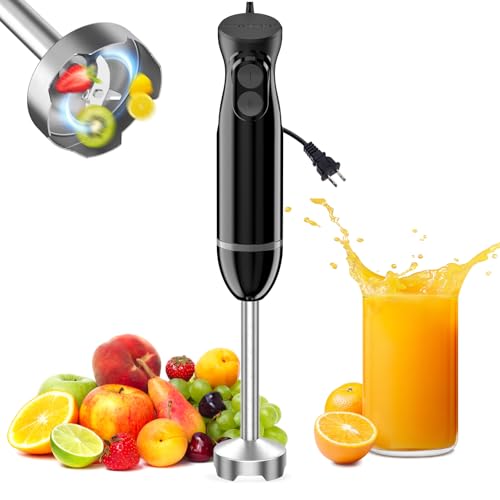
Turelar 1100W Immersion Blender Set
This stick blender tops the category’s best-seller list, and it is the sensible starting point for anyone who cooks soup on the stove. A strong 1100W motor drives it through cooked vegetables to a velvety puree in seconds, and a pulse-activated variable-speed trigger lets you ease in to reduce splatter, then push to full power. A food-grade nylon blade guard is the clever bit, minimizing suction so it will not scratch your pots. It comes as a 5-in-1 set with chopper, whisk, and frother attachments that click on and off for easy cleaning, so it doubles as a smoothie and baby-food tool. It is corded and designed to handle hot ingredients, though the maker notes it is not for crushing frozen fruit or large ice.
Pros
- Powerful 1100W motor for lump-free soup fast
- Variable-speed trigger for control and less splatter
- Pot-friendly nylon blade guard
- 5-in-1 set with chopper, whisk, and frother
Cons
- Corded, so you work near an outlet
- Not for frozen fruit or large ice cubes
Best for: stove-top cooks and big-batch makers who want smooth soup and a do-it-all kitchen tool.
Bonsenkitchen Immersion Hand Blender
If you want the simplest, cheapest way to smooth a pot of soup, this is it. The Bonsenkitchen runs a 300W motor with four sharp stainless blades and two speeds, which is plenty for pureed soups, sauces, marinades, and juices. The ergonomic handle keeps it comfortable through a batch, and the blade shaft detaches for dishwasher cleaning while the motor body wipes down. It asks for a light touch, with short one-minute runs and rests between, and it should not tackle hard or frozen items without liquid, but for everyday soup duty on a budget it does exactly what is needed.
Pros
- Lowest price, easy to pick up and use
- Two speeds cover most soup and sauce jobs
- Detachable, dishwasher-safe blade
- Compact and drawer-friendly
Cons
- Modest 300W motor for tougher tasks
- Short run times with cooling rests
Best for: budget shoppers and light users who mainly want smooth soup without extras.
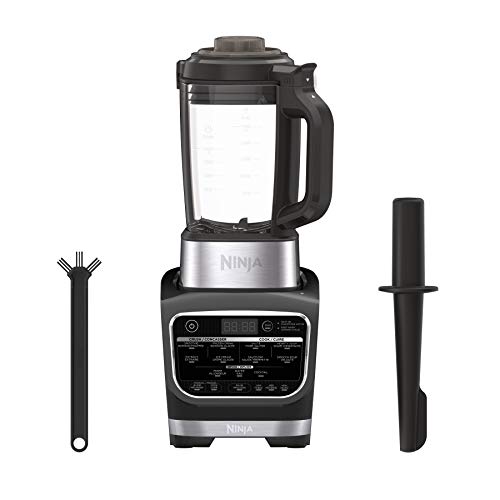
Ninja Foodi Heat-iQ Cold and Hot Blender
This is the do-everything machine, a blender that also cooks. A 1400-peak-watt motor crushes ice and blends smoothies and frozen drinks, while an 800-watt heating element boils in minutes to cook hearty or smooth soups, simmer sauces, and even melt chocolate. Twelve preset smart programs run the show at the touch of a button, from soups to sauces to ice cream, and the 64-ounce glass pitcher has a heated self-clean program. It is the priciest and largest pick here, but for a household that wants one appliance to make soup, smoothies, and more, it replaces a small shelf of gadgets.
Pros
- Heats and blends, cooking soup from raw
- Powerful motor also crushes ice and frozen drinks
- 12 preset programs for hands-off results
- Large glass pitcher with heated self-clean
Cons
- Premium price and a big countertop footprint
- Heavier to store than a stick blender
Best for: households that want a single machine for soup, smoothies, sauces, and frozen drinks.
Homtone 1.6L Soup Maker Machine
For pure set-and-forget soup, this dedicated machine is the value pick. The 1.6-liter stainless jug makes up to about four servings, and programmable smooth and chunky settings cook and blend on their own in roughly twenty to thirty minutes, so you load raw ingredients and walk away. Anti-dry-burn and overfill sensors keep it safe, an indicator light tracks progress, and a one-button self-clean mode handles the jug afterward. It also turns out baby food, sauces, and light purees. It does one job, soup, and does it without you standing over a pot, which is exactly the appeal.
Pros
- Fully automatic cook-and-blend, no stirring
- Smooth and chunky programs plus self-clean
- Anti-dry-burn and overfill safety sensors
- Durable stainless jug, also makes baby food
Cons
- 1.6L suits smaller households
- Single-purpose next to a heat-and-blend machine
Best for: couples and small households who want effortless soup with minimal cleanup.
Potlimepan 2L Soup Maker
The Potlimepan is the soup maker for a bigger table. Its 2-liter jug (minimum 1.2 liters) makes roughly four to six servings, so it suits a family or anyone cooking ahead for the week. Six modes cover more than soup: smooth and chunky for texture, a blend function for non-heated jobs like baby food, plus compote for fruit preserves and reheat to warm a batch, with a clean cycle to finish. Serrated stainless blades handle vegetables and meats, and an overfill sensor guards against spills. If the smaller machine feels tight for your household, this is the roomier, more versatile step up.
Pros
- Larger 2L jug for four to six servings
- Six modes including compote and reheat
- Blend function for cold jobs like baby food
- Serrated stainless blades and overfill sensor
Cons
- Bigger footprint than a compact soup maker
- Overkill for one or two portions at a time
Best for: families and batch cooks who want automatic soup in larger quantities.
The verdict
Best overall: the Turelar 1100W immersion blender is the category best seller and the most broadly useful buy. It smooths any pot of soup in seconds, doubles as a smoothie and baby-food tool, costs little, and stores in a drawer.
Best value: the Homtone 1.6L soup maker is the affordable route to hands-off soup, cooking and blending on its own with a self-clean cycle, ideal for smaller households. The Bonsenkitchen stick blender is the lowest-cost pick if you just want smooth soup.
Best premium: the Ninja Foodi Heat-iQ blender does the most, heating and blending soup while also crushing ice and handling sauces and frozen drinks, so it earns its price for a busy kitchen.
FAQ
Should I get an immersion blender or a soup maker?
Choose an immersion blender if you already cook soup on the stove and want a cheap, versatile way to smooth it. Choose a soup maker if you would rather load a jug, press a button, and let it cook and blend on its own.
Can I blend hot soup with an immersion blender?
Yes. Immersion blenders are made to work in a hot pot, which is safer than pouring boiling liquid into a jar blender. Keep the head fully submerged before switching on to avoid splatter, and use gentle speed to start.
How many servings do soup makers hold?
A 1.6-liter machine makes roughly two to four servings, while a 2-liter jug stretches to about four to six. Pick the size for how you eat, since running a large machine near empty is inefficient.
Are soup makers hard to clean?
Not if they have a self-clean cycle. You add water, run the program, and the blade whirs itself clean, then you rinse. The fixed blade means there is no disassembly like an immersion blender, just the jug to wipe.
Can these make more than soup?
Yes. Immersion sets handle smoothies, sauces, whipped cream, and baby food. Soup makers add purees, baby food, and often compote or jam, and a heat-and-blend machine also does frozen drinks, dips, and melting.
Can an immersion blender crush ice?
Some can crush small amounts of ice, but most are not built for hard, frozen ingredients, and forcing them shortens the motor’s life. For crushed ice and frozen drinks, a powerful jar or heat-and-blend blender is the right tool.
This article may contain affiliate links; see our Affiliate Disclosure.