Two machines in this search sit three dollars apart, from the same maker, with the same turbine, the same gun, the same hose and the same air cap. One has a 400cc cup on top. The other has a one quart cup underneath. That is the entire difference, and it is the only decision on this page that the price will not make for you.



At a glance
| Product | Stages and pressure | Price tier | Link |
|---|---|---|---|
| Earlex 5700 | 2.2 PSI. The only 1.5mm tip here | Budget | |
| Fuji 5070 T70 Gun | None. It is a gun, with no turbine | Budget | |
| Fuji 2202 Semi-PRO 2 | 1 quart bottom feed cup | Mid-range | |
| Fuji 2203G Gravity | 400cc gravity cup. Same machine, three dollars more | Mid-range | |
| PHALANX 3-Stage | 3 stages, 7.5 PSI. Matches a dearer machine | Mid-range | |
| Fuji Mini-Mite 5 | 5 stages, 9.5 PSI, noise reduction and HDC | Premium | |
| Fuji Q5 Platinum | 5 stages, 9.5 PSI. Same features, plus a speed dial | Premium | |
How to choose
Count the stages and you have already read the pressure
Line up every machine here that publishes both numbers and the pattern is exact. Three stages gives 7.5 PSI. Five stages gives 9.5 PSI. That holds across three different brands with no exceptions, because a turbine stage is a fan, and stacking fans in series is how you build pressure. The stage count is not a badge. It is the pressure, written a different way, and pressure is what breaks your finish into fine enough droplets to lay down flat.
Which means most of the price is not buying pressure
Two five-stage machines here both make 9.5 PSI and sit hundreds apart. Two more make 7.5 PSI and sit closer than you would guess. Once you have fixed the stage count, everything else you are paying for is the case, the hose, the gun, the noise and the extras. Those matter. They are just not the finish. Decide your stage count first, then shop within it, and the page gets much smaller.
The cheapest turbine here needs a bigger hole
One machine on this page runs at 2.2 PSI, and it is also the only one fitted with a 1.5mm tip rather than the 1.3mm every other system uses. Those two facts travel together. A finer tip needs more pressure behind it to atomize properly, and a bigger tip passes more material with less air. It is a perfectly good sprayer for stains and varnishes. It is not the one that lays down a glass-flat lacquer on a table top.
Gravity or bottom feed is about how you work, not what you pay
The two machines separated by three dollars make this the clearest choice in the search. A gravity cup sits on top and feeds down, so it drains almost completely, wastes very little, and holds less: 400cc here. A bottom feed cup hangs below and holds a full quart, roughly two and a half times as much, but it needs the pickup tube to stay submerged, so extreme angles starve it. For furniture, where you spray down onto flat panels, gravity suits the work and the cup size is the constraint.
Read what the quiet model is quiet about
Two five-stage machines from the same maker sit here, and both listings describe the noise reduction feature and the Heat Dissipation Chamber in the same words. Only one has “Quiet” in its name and carries a several-hundred premium. Reading their bullets side by side, the features the dearer one adds are a variable speed control dial and a bonus kit. The speed dial is a real thing worth having. It is worth knowing that is what you are buying.
Check whether the result is a system at all
One of the more expensive-looking items in this search is a spray gun. No turbine, no hose, no case: the gun on its own, at a price that reads like a machine. It is a good gun and it is what the top systems here already include. Another result in this search publishes no description whatsoever, not one line. In a category where the specification is three numbers, a listing with none of them is not asking to be compared.
The hose is not a detail
Most systems here ship 25 feet, and the cheapest ships 15, which is the difference between walking round a dresser and moving the turbine every time you do. One maker’s hose includes an air control valve so you can throttle at the gun end and cut overspray and bounce-back, which on a small workshop is worth real money in wasted finish. It is the sort of thing that never appears in a comparison and shows up on every project.
Earlex 5700
The way into turbine spraying at the lowest price here, and clear about being that. A 2.2 PSI turbine drives a metal gun with a 1.5mm stainless tip and needle, a flow control dial, and a spray pattern you can set round or horizontal. It handles urethanes, varnishes, oils, stains, sealers, enamels, glazes, water-based lacquer and thinned latex. The one quart container is PTFE coated with a quick-lock, which genuinely speeds color changes. On-board storage holds the gun and its 15 foot hose.
Pros:
- The lowest price into a real turbine system
- PTFE-coated quart cup with quick-lock for fast color changes
- Flow control dial; round or horizontal pattern
- On-board storage for gun and hose
Cons:
- 2.2 PSI; a fraction of everything else here
- 1.5mm tip, where the rest use 1.3mm
- 15 foot hose; ten feet shorter than the norm
Best for: stains and varnishes, not a mirror finish.
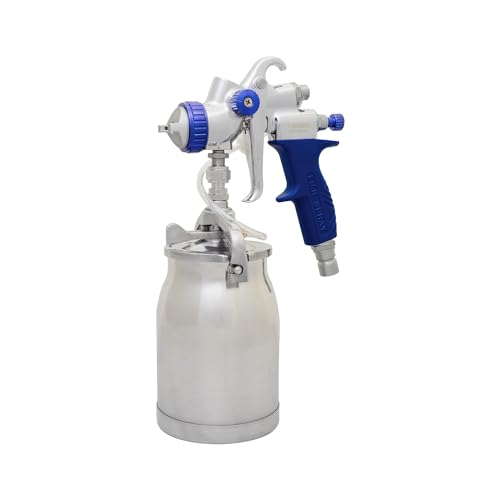
Fuji 5070 T70 Gun
A very good gun, and only a gun. There is no turbine in this box, no hose and no case, so it does nothing until you already own a system. What you get is the side pattern control knob that adjusts the fan from small to large without tools, a non-bleed design so it is not blowing shop dust around between passes, a high-efficiency air cap for less overspray, and fully stainless fluid components on a stay-cool handle. It is the gun the top system in this search ships with.
Pros:
- Side pattern control knob; fan size without tools
- Non-bleed, so it does not stir dust between passes
- 100 percent stainless fluid components
- High-efficiency air cap for less overspray
Cons:
- No turbine, hose or case; it is not a system
- Costs more than some complete machines
- Useless unless you already own a turbine
Best for: upgrading the gun on a turbine you already own.
Fuji 2202 Semi-PRO 2
The bottom feed half of the three-dollar decision. A full quart hangs under the gun, roughly two and a half times what its gravity twin carries, which on a dining table or a run of cabinet doors means fewer stops to refill and fewer chances to introduce a lap mark. The gun is non-bleed with adjustable fan control and a 1.3mm air cap, the turbine lives in a metal case with a gun holder, and the 25 foot hose carries an air control valve to cut overspray and bounce-back at the gun end.
Pros:
- Full quart cup; far fewer refills on big work
- 1.3mm air cap; the fine-finish standard here
- 25 ft hose with an air control valve at the gun
- Metal turbine case with a gun holder
Cons:
- Bottom feed starves at extreme angles
- Leaves more material behind than a gravity cup
- Does not publish its stage count or pressure
Best for: long sessions where refilling costs you a wet edge.
Fuji 2203G Gravity
The same machine as above, with the cup moved to the top, for three dollars more. 400cc rather than a quart, and gravity does the feeding, which means it drains to almost nothing and wastes very little finish. On furniture that matters twice over: you spend most of your time spraying downward onto flat panels, which is exactly where a gravity cup is happiest, and small batches of expensive lacquer are exactly what you do not want left in a pot. Same non-bleed gun, same 1.3mm cap, same 25 foot hose with its air control valve, same metal case and wrench and brush.
Pros:
- Drains nearly dry; very little finish wasted
- Gravity feed suits downward spraying on flat panels
- Sprays at any angle without starving
- Same gun, cap, hose and case as its bottom-feed twin
Cons:
- 400cc; under half the bottom feed’s capacity
- The cup sits in your sightline
- Does not publish its stage count or pressure
Best for: furniture, flat panels and finishes worth not wasting.
PHALANX 3-Stage
The arithmetic answer on this page. Three stages producing 7.5 PSI, which is the same pressure as a machine here costing meaningfully more, driving an 11A turbine through a 1.3mm air cap into a 32 ounce cup. Non-bleed gun with a pattern control knob from round to wide fan, a 25 foot hose, a heavy metal case with a gun holder, and a viscosity cup, brush, wrench and manual in the box. It plugs into any ordinary outlet with no compressor, and it handles latex, urethane, enamel, stains, acrylics and primers.
Pros:
- 7.5 PSI, matching a dearer machine here
- 1.3mm cap and a 32 oz cup as standard
- 25 ft hose and a metal case with gun holder
- Viscosity cup, brush and wrench included
Cons:
- Three stages; two PSI short of the five-stage machines
- No air control valve on the hose
- No noise reduction or heat dissipation named
Best for: 7.5 PSI at the lowest price it appears here.
Fuji Mini-Mite 5
Five stages, 9.5 PSI, and the top pressure on this page. Its listing also names the noise reduction feature and the Heat Dissipation Chamber, which are the two things the several-hundred-dearer machine here is named after, in the same words. The gravity gun carries the side pattern control knob for setting the fan without tools. Three bullets total is a thin listing for the money, and what those three bullets contain is the stage count, the pressure and the noise handling, which is most of what actually decides a finish.
Pros:
- Five stages and 9.5 PSI; the top pressure here
- Names the same noise reduction and HDC as the dearer model
- Gravity gun with side pattern control knob
- Hundreds less than the other five-stage machine
Cons:
- Three bullets; the thinnest listing at this price
- No variable speed dial
- No cup size, hose length or case detail published
Best for: the top pressure, without the badge.
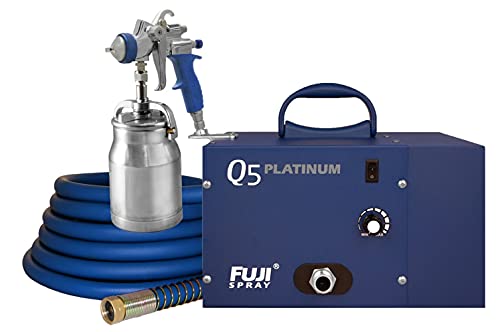
Fuji Q5 Platinum
The most complete machine here and the one that asks the hardest question. Five stages and 9.5 PSI, a patented noise reduction feature and a Heat Dissipation Chamber, the T70 gun with its side pattern knob, a 25 foot hose with an air control valve to cut overspray, and a bonus kit. The genuine addition over the cheaper five-stage machine is the variable speed control dial, which lets you wind the turbine down for small work instead of running flat out. The noise feature and the HDC appear on both listings.
Pros:
- Variable speed dial; wind it down for small work
- Five stages, 9.5 PSI, patented noise reduction and HDC
- 25 ft hose with air control valve at the gun
- T70 gun and a bonus kit included
Cons:
- Hundreds more than a five-stage with the same pressure
- Its noise feature and HDC appear on the cheaper model too
- The highest price on this page by a distance
Best for: the speed dial, if you spray small and large both.
The verdict
Stage count is pressure: three stages is 7.5 PSI and five is 9.5, across every brand here that publishes both. Fix that number first and the rest of the page is cases, hoses, cups and noise. Then notice that one result is a gun with no turbine, another publishes no description at all, and two machines differ only by where the cup sits.
Best overall: Fuji Mini-Mite 5. Five stages and 9.5 PSI is the top pressure in this search, and its listing names the noise reduction feature and the Heat Dissipation Chamber in the same words as the machine here that costs hundreds more and has “Quiet” in its name. The gravity gun’s side knob sets the fan without tools. You give up the variable speed dial, and you keep the pressure, which is the part that lands the finish.
Best value: PHALANX 3-Stage. 7.5 PSI is 7.5 PSI, and this makes it for less than the other machine here that makes the same. It comes properly equipped rather than stripped: 1.3mm air cap, 32 ounce cup, 25 foot hose, non-bleed gun with a pattern knob, metal case with a gun holder, plus a viscosity cup, brush and wrench. It plugs into a normal socket and needs no compressor.
Best premium: Fuji Q5 Platinum. Buy it for the variable speed control dial, because that is the real difference: the five stages, the 9.5 PSI, the noise reduction and the heat dissipation chamber all appear on the cheaper five-stage machine’s listing too. Being able to wind the turbine down for a small part instead of running it flat out is genuinely useful if your work varies. The 25 foot hose with its air control valve and the bonus kit come along.
FAQ
How many turbine stages do I need?
Stages are pressure. Every machine here that publishes both gives 7.5 PSI at three stages and 9.5 at five, across three brands. Five stages atomizes finer, which matters for lacquer on a table top. Three is plenty for most furniture work.
Why does the cheap sprayer have a bigger tip?
The 2.2 PSI machine here is also the only one with a 1.5mm tip instead of 1.3mm. A finer tip needs more pressure behind it to break the finish up properly. That pairing is the difference between a good stain job and a glass-flat lacquer.
Gravity cup or bottom feed?
Gravity drains nearly dry, wastes little and sprays at any angle, and holds 400cc here. Bottom feed holds a full quart but starves if you tip it far. Two machines here differ only in this, at three dollars apart, so choose by how you work.
Is the quiet model worth the premium?
Read both listings. The noise reduction feature and the Heat Dissipation Chamber appear on the cheaper five-stage machine too, in the same words. The real addition is a variable speed control dial and a bonus kit.
Is every result here a complete system?
No. One is a spray gun with no turbine, hose or case, at a price that looks like a machine, and it is the gun the top system already includes. Another result publishes no description at all.
This article may contain affiliate links; see our Affiliate Disclosure.