The clearest answer in this whole debate is printed by one of the ionizer makers themselves, in capital letters, at the very top of its own listing: this product does not meet California air cleaner regulation requirements and cannot be shipped to California. That is not a reviewer’s opinion. It is the manufacturer telling you which side of a regulatory line its machine falls on, before you have read a single specification.


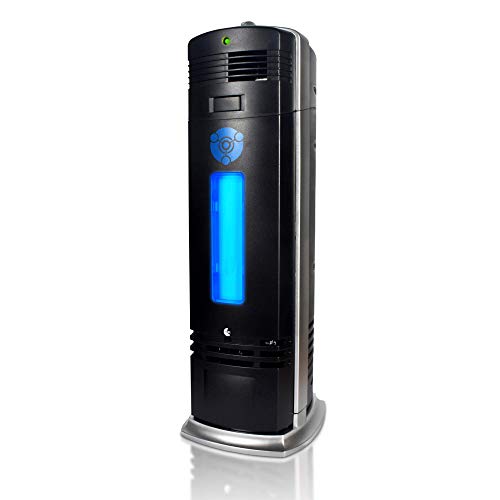


The two approaches are genuinely different. A HEPA filter is a physical net: air is pulled through it and particles are trapped in the material, then you throw the material away. An ionizer charges particles so they stick together and to whatever is nearby, which means they leave the air by landing on your furniture rather than by being captured.
At a glance
| Purifier | Standout feature | Price tier | Link |
|---|---|---|---|
| Purivortex | Best seller here; plain HEPA, no ionizer | Budget | |
| POMORON | H13 filter with a switchable ionizer and UV | Budget | |
| Holmes | The only CADR figure on this page | Budget | |
| OION B-1000 | No filters to buy; discloses its ozone output | Mid-range | |
| ECOSELF | PM2.5 display; up to 2400 sq ft | Mid-range | |
| InvisiClean Aura II | CARB certified and SGS tested | Premium | |
| Ivation | An ozone generator; cannot ship to California | Premium | |
How to choose between an ionizer and HEPA
Look for the certification, not the feature list
California regulates air cleaners sold in the state, and the California Air Resources Board runs the certification behind that. This is the single most useful sorting mechanism in the category, because it splits the machines along a line the manufacturers cannot argue with. InvisiClean states it is CARB certified and SGS tested. Ivation states, in its own opening line and in capitals, that it does not meet the California requirements and cannot be shipped there. Two machines, two positions, both self-declared. Read that line on any purifier before the marketing.
Ionizers do not capture, they relocate
This is the mechanical difference and it is worth understanding rather than taking sides on. A HEPA filter traps particles in the material, and when it is full you remove the material and the particles go in the bin. An ionizer gives particles a charge so they clump and stick to the nearest surface, which is how they leave the air. They have not been removed from the room; they are on the shelf, the curtain and the wall behind the unit. Some people find that a fair trade for never buying a filter. It is a trade either way, and the listings rarely put it plainly.
CADR is the only independent number here
Square footage claims are calculated by the brand, which is why they range from 250 to 3,700 across this page with no common method behind them. CADR, the Clean Air Delivery Rate, is a standardized measurement, and exactly one machine here publishes it: the Holmes, at 70. That is a modest figure for a desktop unit and it is a real one. Everyone else asks you to compare their own arithmetic against somebody else’s. Where a brand gives a CADR, it has submitted to a test.
Most ionizer purifiers are really HEPA purifiers with a switch
Read the feature lists rather than the titles and the category thins out fast. POMORON, InvisiClean and the Holmes all filter through HEPA and offer an ionizer alongside it, and Holmes is refreshingly direct in calling its an optional ionizer, which is to say a button you may never press. That is the practical answer for most people: buy the filter, and take the ionizer as a feature you can leave off. Only two machines here run on ionization as the main event rather than as an extra.
Filter grades are real and worth reading
H13 is a tighter grade than standard HEPA, and the brands using it say so: POMORON quotes a 3-layer H13 filtering 99.97%, and InvisiClean quotes an H13 rated 99.985%. Purivortex quotes 99.97% across three layers and points out something more useful, that its filter is physically deeper than the 4-inch elements typical at its size. More filter media means more surface to trap particles and longer before it clogs, which matters more than a third decimal place.
Running costs run both ways
The real case for ionizers is here. OION draws 7.5W and has a permanent filter you wash rather than replace, so there is nothing to buy again. Every HEPA machine on this page needs new filters at intervals, and over several years that adds up to real money that no listing mentions on the front page. If you are choosing an ionizer for that reason, you are choosing it for the reason that actually holds up.
Purivortex
The best-selling purifier here by a wide margin, and it sidesteps the whole debate by not having an ionizer at all. It is a plain three-layer HEPA machine, a pre-filter, a HEPA element and carbon, rated at 99.97% filtration, sized for a bedroom. The detail worth noticing is the filter depth: Purivortex points out that most purifiers this size use a 4-inch filter and its own is deeper, which means more media, more surface area and longer between changes. It is the cheapest thing on this page by a long way and it does the one job without asking you to think about ozone.
Pros:
- Comfortably the best-selling purifier here
- Cheapest on this page by a wide margin
- Three-layer HEPA at 99.97%; no ionizer to worry about
- Deeper filter than the 4-inch elements typical at this size
Cons:
- Bedroom-sized; not for a large open space
- No CADR published
- Filters are a recurring cost
Best for: a bedroom, and not having to think about any of this.
POMORON
The cheapest way to have it both ways. The backbone is a 3-layer True H13 filter rated to catch 99.97% of airborne particles, which is a tighter grade than standard HEPA, and around it sit a negative ion generator and a UV light. POMORON explains the ionizer plainly: it puts negative ions into the air, which attach to floating allergens like pollen, dust and dander. Four fan speeds run down to a 25dB sleep mode, with 8, 12 and 24-hour timers. If you want to try ionization without betting the machine on it, the filter here does the work regardless.
Pros:
- True H13 3-layer filter at 99.97%; tighter than standard HEPA
- Ionizer and UV alongside a real filter, not instead of one
- 25dB sleep mode; four fan speeds
- 8, 12 and 24-hour timers
Cons:
- No CADR or CARB certification stated
- Sells poorly against the plain HEPA machines
- Coverage is modest for the price
Best for: trying an ionizer with a proper filter doing the real work.
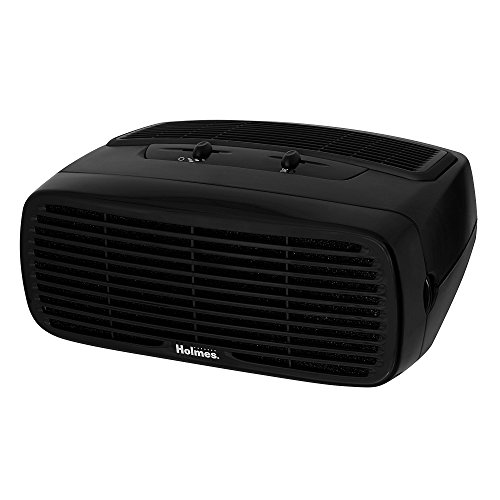
Holmes
The only machine here that submits to an independent measurement, and the only one that puts the word optional in front of ionizer. Its 70 CADR is a Clean Air Delivery Rate, the standardized figure that lets you compare purifiers on the same basis rather than on each brand’s own square-footage arithmetic. Seventy is modest and it is fair. The filter is HEPA-type, capturing up to 99% of airborne particles, with three speeds and an ionizer that binds negative ions to smoke and dust when you switch it on, and does nothing at all when you do not.
Pros:
- The only CADR figure on this page; a real, comparable number
- The ionizer is explicitly optional; switch it off and forget it
- Three speeds; a genuine desktop size
- An established name in home appliances
Cons:
- HEPA-type rather than True HEPA or H13; up to 99%
- 70 CADR is small; desktop coverage only
- Sells poorly
Best for: a desk, and the only purifier here with a number you can compare.
OION B-1000
The genuine ionizer on this page, and the one making the plain version of the argument. There are no filters to replace, ever: the element is permanent and you clean it, and the machine draws 7.5W, which is less than a light bulb. Over years, that is real money not spent. It adds carbon filtration, UV-C, a night light and a whisper-quiet fan. OION also does the thing most of this category avoids and puts a number on its ozone output, disclosing it as under 0.05 ppm alongside the odor reduction it is there to provide. Disclosure is not the same as absence, and it is more than most offer.
Pros:
- No filters to replace, ever; the element is permanent
- 7.5W; the running cost is negligible
- Publishes an ozone figure rather than staying silent
- Carbon filtration, UV-C and a quiet fan
Cons:
- No HEPA filter; particles settle on surfaces rather than being caught
- Produces ozone by design, at a disclosed level
- No CARB certification or CADR stated
Best for: odors and no ongoing filter bills, with the trade-off disclosed.
ECOSELF
The most machine for sensible money, and like the best seller it has no ionizer to argue about. A True HEPA filter covers up to 2400 sq ft, cycling the air twice an hour in a large living space, and the part worth paying for is the PM2.5 display: an infrared sensor reads the air in real time and shows you a number, then automatic mode adjusts the fan to match. That turns the machine from a thing that hums into a thing you can actually see working. A 22dB sleep mode is the quietest here, and there is aromatherapy and a timer if you want them.
Pros:
- PM2.5 display with an infrared sensor; you can see it working
- Automatic mode adjusts the fan to the reading
- Up to 2400 sq ft, twice an hour; no ionizer
- 22dB sleep mode, the quietest on this page
Cons:
- Coverage figure is the brand’s own arithmetic; no CADR
- Filters are a recurring cost
- Aromatherapy is a distraction from the job
Best for: a large room, with a live reading instead of a guess.
InvisiClean Aura II
The only machine here that is CARB certified, which on a page where a rival openly cannot be sold in California is the specification that matters most. InvisiClean adds SGS testing to it, so there are two independent bodies behind the claim rather than one marketing department. The filtration is the tightest quoted here, an H13 True HEPA rated 99.985%, with activated carbon, an ionizer and a UV light making up the four-in-one. It is easily installed for a bedroom or office. If you want the ionizer feature without wondering where the machine sits on the regulatory line, this is the one that answers.
Pros:
- CARB certified and SGS tested; two independent bodies
- H13 True HEPA at 99.985%; the tightest grade here
- Ionizer and UV alongside a real filter and carbon
- Replaceable filter; sized for a bedroom or office
Cons:
- Expensive next to plain HEPA machines that filter nearly as well
- No CADR published
- Sells very little
Best for: an ionizer you do not have to research before switching on.
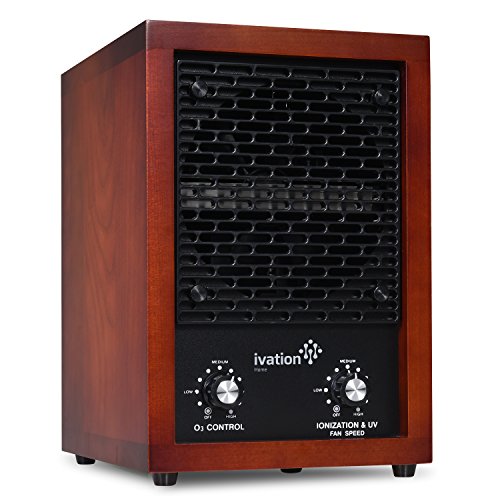
Ivation
Read this listing’s first line before anything else, because Ivation puts it in capitals: the product does not meet California air cleaner regulation requirements and cannot be shipped to California. That is the manufacturer being straight with you, and it tells you exactly what this machine is. It is an ozone generator, converting oxygen to ozone with an electrical charge to strip odors from smoke and pets, wrapped in a five-in-one that also includes a HEPA filter, carbon, a photocatalytic stage and negative ions, across up to 3,700 sq ft. It is the most expensive thing here and the most specialized.
Pros:
- Ivation states the California position openly and first
- Five stages including HEPA and activated carbon
- Up to 3,700 sq ft; the largest coverage claim here
- Built for heavy odor work rather than everyday dust
Cons:
- Cannot be shipped to California, by the maker’s own statement
- An ozone generator, not a purifier with an ionizer attached
- Most expensive here; sells very little
Best for: odor remediation in an empty space, if you understand what it is.
The verdict
The sorting rule is on the listings themselves. Ivation says it fails California’s air cleaner requirements and cannot ship there. InvisiClean says it is CARB certified. Whatever you conclude about ionizers, those two sentences do more work than any specification below them.
Best overall: ECOSELF. It wins by not entering the argument. A True HEPA filter covering up to 2400 sq ft, twice an hour, with no ionizer to think about, plus the one feature that changes how you use a purifier: a PM2.5 display fed by an infrared sensor, with automatic mode matching the fan to the reading. You stop guessing whether it is doing anything. At 22dB in sleep mode it is the quietest here too.
Best value: Purivortex. The best seller on this page by a distance and the cheapest thing on it, doing the one job properly: three-layer HEPA at 99.97% in a bedroom-sized unit, with a filter physically deeper than the 4-inch elements usual at this size, which means more media and longer between changes. No ionizer, no ozone question, no decision to make.
Best premium: InvisiClean Aura II. If you do want the ionizer, this is the one that has been through the certification. CARB certified and SGS tested is two independent bodies rather than a marketing claim, and behind it sits the tightest filter here, an H13 True HEPA at 99.985%, with carbon and UV. It costs well over the plain HEPA machines, and what that buys is not having to work out where it stands.
FAQ
Ionizer or HEPA?
They do different things. HEPA traps particles in a filter you later throw away. An ionizer charges particles so they clump and settle onto nearby surfaces, meaning they leave the air but stay in the room, on your shelves and curtains. Most machines here are HEPA with an ionizer alongside, and Holmes calls its ionizer optional, which is the plain description.
What is CARB certification and why does it matter?
California regulates air cleaners sold in the state through the California Air Resources Board. InvisiClean states it is CARB certified. Ivation states, in its own first line, that it does not meet the California requirements and cannot be shipped there. That one line separates this category faster than any feature list.
Do ionizers make ozone?
The one true ionizer here discloses that it does, at under 0.05 ppm, alongside the odor reduction it is sold for. Ivation’s machine is an ozone generator by design and says so. Disclosure is not the same as absence, and a brand that publishes a figure is telling you more than one that says nothing.
What is CADR and why does only one have it?
Clean Air Delivery Rate is a standardized measurement, so it compares across brands. Holmes publishes 70. Everyone else quotes square footage, which each brand calculates itself, which is how the claims on this page range from 250 to 3,700 with no shared method behind them.
Are ionizers cheaper to run?
That is the argument that holds up. OION draws 7.5W and its filter is permanent, so nothing is ever bought again. Every HEPA machine here needs replacement filters at intervals, and across several years that is real money the listings do not put on the front page.
This article may contain affiliate links; see our Affiliate Disclosure.