The number that decides whether a base layer works for you is printed on almost every listing here and almost nobody reads it: the fabric weight in grams per square meter. It runs from 165 to 320 across this page, and that is not a small difference. It is the difference between a shirt you hike in and a shirt you sit still in.

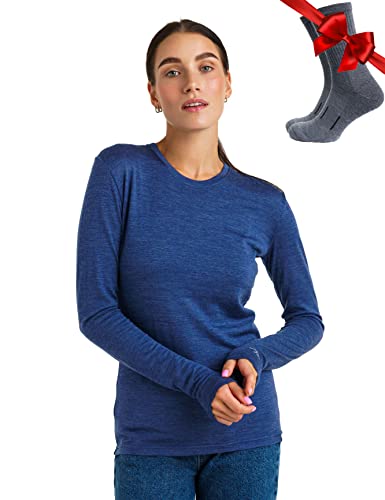

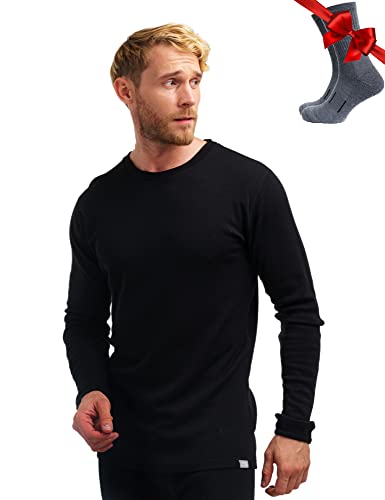


Merino earns its reputation on multi-day trips for one real reason: it does not start to smell after two days the way synthetics do, so a shirt you sweat in stays wearable. Everything here is 100% merino, which maximizes that and comes with a trade worth understanding before you buy.
At a glance
| Base layer | Standout feature | Price tier | Link |
|---|---|---|---|
| Innophra 190 | Cheapest here; the only one built for hiking | Budget | |
| Merino.tech Women’s Top | Best seller here; three weights, 17.5 micron | Mid-range | |
| YESWEL Men’s Set | Cheapest full set; 180 gsm | Mid-range | |
| Merino.tech Men’s Top | Three weights in the finest fiber here | Mid-range | |
| Merino.tech Women’s Set | 200 gsm; the hiking weight, as a set | Mid-range | |
| LEADHALO Women’s Set | 250 gsm midweight top and bottom | Mid-range | |
| Merino.tech Men’s Set | Pick any of three weights, top and bottom | Premium | |
How to choose a merino base layer
Weight in gsm is the whole decision
Merino.tech lays it out plainly across its range: 165 gsm lightweight, 250 midweight, 320 heavyweight. Innophra is 190, YESWEL 180, LEADHALO 250, and Merino.tech’s newer thermal set is 200. For hiking, the useful band is roughly 150 to 200, because you generate heat walking uphill and a 320 gsm shirt turns you into a sauna within ten minutes, then soaks and chills you at the top. Heavyweight is for standing still in the cold. If the trip involves moving with a pack on, you want the lower numbers, and half of these listings let you choose.
Micron is the itch number
Merino comes in grades and the fiber diameter is what decides whether it feels soft or scratchy against bare skin. Merino.tech uses 17.5 micron across its whole range, which is the finest on this page and genuinely fine wool. Innophra and LEADHALO both use 18.5, and are clear about the result: Innophra says barely itchy or scratchy, which is a more truthful phrase than most brands manage. YESWEL says soft without itching but names no micron at all. One micron sounds like nothing and it is the difference between a shirt you forget about and one you notice all day.
100% merino is the odor champion and the fragile option
Everything here is 100% merino, and that is why it resists odor so well over several days. It is also worth knowing what is not there: no nylon. Many purpose-built hiking base layers blend a small amount of synthetic in specifically to resist abrasion, because the two places a base layer wears through are the shoulders under pack straps and the hips under a belt. Pure merino has nothing to help it there. That is the trade you accept for the odor resistance, and no listing on this page mentions it.
Look for the word hiking
Most of these are thermal underwear that would also work outdoors. Exactly one says otherwise: Innophra opens with designed for hiking and snow sports, and follows it with a slim fit and hip length, which are the specifications that matter under a pack. A slim fit is not a style choice on a base layer; loose fabric bunches under a strap and rubs. Hip length stays tucked when you reach up. At 190 gsm it is also in the right weight band. That is a listing written by someone who had walked somewhere.
Buy the set only if you want the bottoms
The sets here roughly double the price of a top, which is fair since they contain twice the wool. The question is whether you will wear merino long johns. For winter hiking, ski touring and cold camping, yes, and the sets from Merino.tech, LEADHALO and YESWEL all cover it. For three-season hiking, the top is the piece that matters and the bottoms sit in a drawer. Merino.tech sells the same shirt separately, which makes that an easy decision rather than an expensive one.
Wash it gently, and rarely
Merino.tech is refreshingly straight about this: washer safe, and for longer lasting wear, hand wash and lay flat to air dry. Both halves of that sentence are true, and the second is the one that keeps a shirt alive for years. Merino also barely needs washing, which is the point of it on a multi-day trip. Air it overnight and it recovers. YESWEL claims it retains shape and elasticity through numerous washes, which is a fair claim to make and the wrong ambition; the aim is to wash it less.
Innophra 190
The cheapest thing here and the only one written for the job. It opens with designed for hiking and snow sports, and every detail follows from that: 190 gsm, which sits squarely in the band where you can walk uphill without cooking; a slim fit, so nothing bunches under a pack strap; and hip length, so it stays put when you reach. The fiber is 100% merino at 18.5 micron, and Innophra describes it as barely itchy or scratchy, which is a more accurate sentence than the no-itch promises elsewhere. It is naturally odor resistant, warm and breathable.
Pros:
- Cheapest base layer here by a clear margin
- The only listing explicitly designed for hiking
- 190 gsm; the right weight for moving with a pack
- Slim fit and hip length; real about the itch
Cons:
- 18.5 micron, not the 17.5 available elsewhere
- One weight only; no choice
- Sells poorly against the big brand here
Best for: hiking, from the one listing that says so.
Merino.tech Women’s Top
The best-selling base layer here, and it wins by letting you choose. The same shirt comes in 165 gsm lightweight, 250 midweight and 320 heavyweight, so you pick the weight for the trip rather than accepting somebody else’s guess, and for hiking the 165 is the one to take. The wool is 100% superfine merino at 17.5 micron, the finest fiber on this page, which is what earns the no-itch claim. It wicks and resists odor naturally, and Merino.tech is straight about care: washer safe, though hand washing and flat drying make it last.
Pros:
- The best-selling base layer here
- Three weights: 165, 250 and 320 gsm
- 17.5 micron superfine; the finest fiber on this page
- Real care advice rather than an easy promise
Cons:
- Costs well over the Innophra for a similar job
- Nothing said about fit or length
- Also sold in several near-identical color listings
Best for: picking your own weight, in the softest wool here.
YESWEL Men’s Set
The cheapest complete set on this page, and it is at the right weight for moving: 180 gsm of 100% merino across a long-sleeved shirt and long johns, which is light enough to hike in and warm enough for a cold camp in the evening. That combination is genuinely useful, because 180 gsm bottoms are far more wearable on the trail than the 250 gsm ones elsewhere here. It is soft and smooth against skin without itching, wicks moisture, and YESWEL says it holds its shape and elasticity through many washes. No micron figure is given.
Pros:
- Cheapest full top-and-bottom set here
- 180 gsm; light enough to actually hike in
- 100% merino; wicking and odor resistant
- Claims to hold shape and elasticity through washing
Cons:
- No micron rating published; the itch is unknown
- One weight only
- The worst-selling item on this page
Best for: a full set at a walkable weight, cheaply.
Merino.tech Men’s Top
The men’s version of the best seller, with the same three-weight choice: 165 gsm lightweight, 230 to 250 midweight, 320 heavyweight. That range covers a summer dawn start and a winter belay from one product line, and for hiking with a pack the 165 is the one. The wool is 100% superfine merino at 17.5 micron, so the no-itch claim has a number behind it, and it wicks and regulates temperature naturally. Care is the same real line: washer safe, and hand washing with flat drying makes it last longer. It costs a little more than the women’s top.
Pros:
- Three weights from 165 to 320 gsm
- 17.5 micron superfine merino; the finest here
- Natural wicking and temperature regulation
- Straightforward, real care instructions
Cons:
- Dearer than the women’s version of the same shirt
- No fit or length described
- Sells well behind the women’s top
Best for: the same weight choice and fine wool, for men.
Merino.tech Women’s Set
The cleverest weight on the page. Merino.tech calls 200 gsm its performance weight and the balance is exactly right: heavier than the 165 so it holds warmth when you stop, lighter than the 250 so you can still climb in it. For a multi-day trip where you walk all day and then sit in the cold, that single fabric handles both ends, which is what saves you carrying two shirts. It is 100% superfine merino at 17.5 micron across a top and bottoms, wicking and odor resistant, with the same hand-wash advice. It costs less than the three-weight sets.
Pros:
- 200 gsm; walks uphill and still warms you at camp
- 17.5 micron superfine merino
- Full top and bottom set, cheaper than the other sets here
- One fabric covers both halves of a trip day
Cons:
- One weight; no choice, unlike the rest of the range
- Sells modestly
- No fit or length detail
Best for: multi-day trips where you walk hot and stop cold.
LEADHALO Women’s Set
A midweight set at a stated 250 gsm, and the clarity of naming it midweight rather than reaching for a warmer-sounding word is worth something. Two hundred and fifty is a real winter weight: too warm to climb a hill in, and right for a cold morning, a chairlift, or standing around a camp. The fiber is superfine merino at 18.5 micron, which is soft though not the finest here, and it comes as a top and bottoms together. It wicks, resists odor and regulates temperature, indoors as much as out. Consider carefully whether you want to walk in it.
Pros:
- States 250 gsm and calls it midweight; no exaggeration
- Superfine 18.5 micron; soft against skin
- Full top and bottom set
- A genuine cold-weather weight
Cons:
- 250 gsm is too warm for hiking uphill with a pack
- 18.5 micron, not the 17.5 available for similar money
- Sells poorly
Best for: cold and still, rather than moving and warm.
Merino.tech Men’s Set
Everything the brand does well, doubled. It is a full top and long johns set available in the same three weights, 165 lightweight, 250 midweight and 320 heavyweight, so you match the whole outfit to the trip rather than mixing and hoping. The wool is 100% superfine merino at 17.5 micron, the finest here, wicking and odor resistant so several days between washes is normal rather than optimistic. It breathes and regulates body temperature naturally, and the care advice is the same real line about hand washing. It is the most expensive thing on this page.
Pros:
- Three weights available as a complete set
- 17.5 micron superfine merino throughout
- Top and bottoms matched to the same weight
- Wicking and odor resistant; several days between washes
Cons:
- Most expensive item on this page
- Costs roughly triple the cheapest set here
- Sells modestly against the single tops
Best for: one weight, head to toe, chosen for the trip.
The verdict
Read the gsm before anything else. Anything at 320 is for standing still. For hiking with a pack, 150 to 200 is the band, and the fact that most of these listings publish the figure is the most useful thing about them.
Best overall: Merino.tech Women’s Set. The 200 gsm performance weight is the smartest fabric on this page for a multi-day trip, because it is light enough to climb in and warm enough when you stop, which is the whole problem a base layer has to solve. It is 17.5 micron superfine merino, the finest fiber here, across a top and bottoms, and it costs less than the sets that make you choose a weight. One fabric, both halves of the day.
Best value: Innophra 190. The cheapest thing here and the only listing written by someone who hikes. Designed for hiking and snow sports, 190 gsm which is the right band, a slim fit so nothing bunches under a pack strap, and hip length so it stays tucked. The wool is 18.5 micron and Innophra says barely itchy rather than promising no itch, which is the sort of clarity worth rewarding.
Best premium: Merino.tech Men’s Set. The full kit in 17.5 micron superfine merino, available in 165, 250 or 320 gsm so top and bottoms match the trip rather than each other by accident. Take the 165 for walking. It is the most expensive thing on the page and it is the only one that lets you buy an entire weight-matched outfit from a brand that publishes both numbers that matter.
FAQ
What weight should I buy for hiking?
Roughly 150 to 200 gsm. You make your own heat walking uphill, and a 320 gsm shirt cooks you within ten minutes and then chills you when you stop. Innophra is 190, YESWEL 180, Merino.tech’s lightweight is 165 and its performance set is 200. Save 320 for standing still.
What does the micron number mean?
How fine the wool fiber is, which decides whether it itches. Merino.tech is 17.5 micron across its range, the finest here. Innophra and LEADHALO are 18.5, which Innophra plainly describes as barely itchy. YESWEL names no figure at all.
Is 100% merino better than a blend?
For odor, yes, which is why it suits multi-day trips. For durability, it is the trade: blends add a little nylon specifically to resist abrasion at the shoulders under pack straps and at the hips under a belt, and pure merino has nothing helping it there. Everything on this page is 100% merino.
How often do I need to wash it?
Far less than a synthetic, which is the point of it. Air it overnight and it recovers. When you do wash, Merino.tech’s advice is the plain version: it is washer safe, and hand washing with flat drying will make it last considerably longer.
Should I buy the set or just the top?
The top, unless you know you will wear merino long johns. For winter hiking and cold camping the bottoms earn their place; for three-season walking they stay in a drawer. Merino.tech sells the same shirt on its own, which makes that an easy call.
This article may contain affiliate links; see our Affiliate Disclosure.