A big planter changes a space the way a piece of furniture does. Fill one with a maple, a fountain of grasses, or a tumble of trailing flowers, and a bare porch corner suddenly has a focal point. The trouble starts a season later, when a cheap pot cracks in the first hard frost or fades to a chalky gray after one summer of sun.



A great large planter has to do three quiet jobs well: shrug off frost so it does not split over winter, hold its color under UV so it still looks new next year, and drain properly so roots do not drown. It also helps if you can lift it, because a big pot full of damp soil gets heavy fast. Below are five proven sellers that cover the full range, from a budget-friendly barrel set to a statement concrete bowl, so a first patio garden, a balcony refresh, and a full front-entry redesign are all covered. They span materials, sizes, and price tiers, and each one is chosen because it holds up outdoors rather than just looking good on day one.
At a glance
| Planter | Standout feature | Price tier | Link |
|---|---|---|---|
| Quarut Whiskey Barrel (Set of 4) | Four 12-inch pots with saucers and drainage | Mid-range | |
| Garden Elements Glazed 15-Inch (Pair) | Ceramic look, UV fade-resistant, very light | Mid-range | |
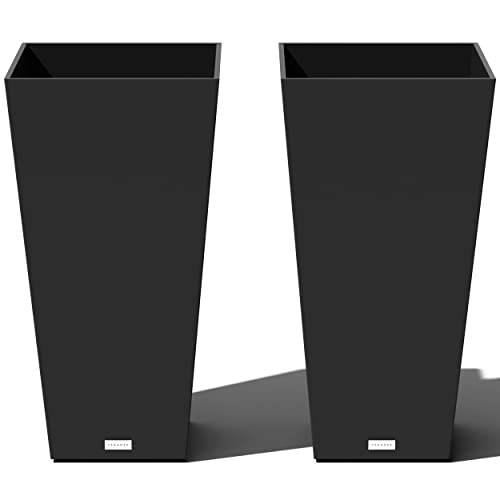
| Veradek Taper 30-Inch (Pair) | Tall modern column, frost-resistant resin | Premium | |
| Kante 18-Inch Concrete | Real concrete-fiberglass bowl, rubber-plug drainage | Premium | |
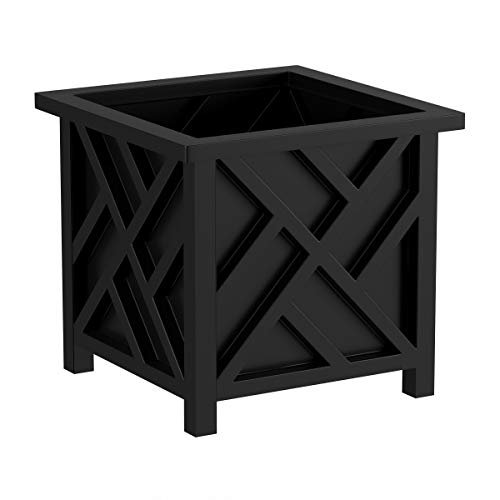
| Pure Garden Lattice Box | Lightweight lattice cover, snap-together assembly | Budget | |
How to choose a large outdoor planter
Material sets the tone and the weight
Resin and polyethylene planters mimic the look of wood, ceramic, or stone while staying light enough to move on your own. That matters more than it sounds: a big pot full of wet soil can weigh as much as a bag of cement, so a light shell is the difference between rearranging your patio yourself and needing a second pair of hands. Concrete and fiberglass blends look and feel like the real thing and stay planted in wind, but they are genuinely heavy and best placed where they will stay. Pick the material for where the planter will live, not just how it looks in the photo.
Frost resistance
Water expands as it freezes, and that is what splits a cheap pot over winter. Quality resin and polypropylene planters are formulated to flex slightly and resist cracking through freeze-thaw cycles, which is why the Veradek in particular calls out cold-climate durability. If you get real winters, choosing a frost-resistant material and leaving room for drainage will save you from buying the same pot twice.
UV stability
Sun is as hard on a planter as frost. Cheap plastic fades to a dull, chalky finish after a season outdoors, while UV-coated and UV-stable materials hold their color for years. Every pick here is built for outdoor exposure, but it is worth confirming a finish is UV-stabilized before you put it somewhere that bakes all afternoon.
Drainage
Roots need to breathe, and standing water rots them. Look for planters with drainage holes, ideally with a saucer to catch runoff on a deck, or a rubber plug so you can seal the hole for indoor use and open it outdoors. If a decorative box has an open bottom, it is designed to hold a nursery pot rather than loose soil, which is a perfectly good approach and makes seasonal swaps easy.
One big pot or a set
A single large statement planter anchors an entryway or frames a door. A matched set or a multi-pack lets you build symmetry, line a walkway, or group different plants for a fuller look. Sets also tend to give you more planting volume for the money, which is worth weighing if you are filling a whole space rather than adding one accent.
Style and plant pairing
The planter and the plant should agree on a mood. A rustic barrel suits herbs, tomatoes, and cottage-garden flowers; a glossy glazed pot flatters bold tropical foliage; a tall modern column looks best with an upright grass or a clipped topiary; and a weathered concrete bowl sets off structural succulents or a small tree. It also helps to think in threes: a taller centerpiece plant, a rounded mid-height filler, and something that spills over the rim gives a full, finished look in almost any large pot. Matching finish to setting, warm tones near wood and brick, cool grays and blacks near modern render or metal, ties the whole scene together.
Quarut Whiskey Barrel Planters (Set of 4)
The best-selling pick here is a set of four 12-inch pots styled after whiskey barrels, and the value is obvious the moment you do the math per pot. Each one is molded from recyclable polyethylene, so they are light enough to move fully planted, and each ships with a drainage hole and a matching saucer to catch runoff. The rustic barrel look leans farmhouse without trying too hard, and the set makes it easy to line a patio edge or cluster herbs, flowers, and small evergreens together. For filling a space rather than accenting it, this is the workhorse.
Pros
- Four coordinated pots for the price of one premium planter
- Lightweight polyethylene, easy to lift and rearrange
- Drainage hole and saucer included on every pot
- Handles sun and winter without breaking down or fading
Cons
- 12-inch size suits herbs and mid-size plants, not small trees
- Molded plastic look is casual rather than upscale
Best for: anyone furnishing a whole patio or balcony who wants coordinated pots at a friendly per-pot price.
Garden Elements Glazed 15-Inch Planter (Pair)
These give you the glossy, brushed look of glazed ceramic without the weight or the fragility. At 15 inches across and just over a pound and a half each, the pair is featherlight, yet the wide top and tapered base keep them stable enough for a mature plant. The all-weather plastic is UV fade-resistant, so the bold color stays bold, and integrated drainage keeps roots healthy. Offered in vivid glazed tones, they are the easy way to add a pop of color that will not chip like true ceramic.
Pros
- Ceramic-style gloss finish in bold, fade-resistant colors
- Extremely light at about 1.55 pounds each
- Built-in drainage for healthy roots
- Wide, tapered shape stays stable with tall plants
Cons
- Very light shell can tip in strong wind when underplanted
- Plastic feel is less premium up close than real ceramic
Best for: adding color and a ceramic look to a porch or patio without the weight or breakage risk.
Veradek Taper 30-Inch Planter (Pair)
Standing 30 inches tall, the Veradek pair brings height and a sharp modern silhouette that instantly dresses up an entrance or frames a doorway. The single-wall polypropylene composite is scratch-resistant and impact-resistant, and it is specifically hardened to handle colder climates and resist fading. A clever removable insert shelf lets you fill the whole column with soil or drop in a nursery pot higher up to save on filler, and there is an optional drainage hole. It is the premium statement piece of the group.
Pros
- Tall, contemporary column that frames entryways
- Frost-resistant, fade-coated for cold climates
- Removable insert shelf saves soil and adds versatility
- Lightweight for its size despite the sturdy build
Cons
- Premium price, sold as a pair
- Tall narrow form suits upright plants more than sprawling ones
Best for: a modern entryway or patio that needs height and a designer look.
Kante 18-Inch Round Concrete Planter
If you want the real thing, the Kante is a handmade blend of concrete and fiberglass with a weathered, authentic surface and graceful curves. It reads as genuine stone because it largely is, and that mass keeps it rock-solid in wind and gives a big plant a serious anchor. A drainage hole with a rubber plug means you can run it open outdoors or sealed indoors, so it moves between a patio and a bright interior corner. The trade-off is weight: this is a place-it-once planter, not one you will nudge around on a whim.
Pros
- Authentic concrete-fiberglass build with a stone-like finish
- Drainage hole with rubber plug for indoor or outdoor use
- Heavy enough to stay put in wind
- Roomy 18-inch bowl for trees, succulents, or flowers
Cons
- Genuinely heavy, so plan its spot before filling
- Single planter at a premium price
Best for: a permanent statement planting where a real stone look and stability matter most.
Pure Garden Lattice Planter Box
The budget pick is a nearly 15-inch-square lattice box with a farmhouse feel and tool-free snap-together assembly. The tough polypropylene is light, and a center base stand adds support for heavier plants. Its open, T-shaped bottom keeps an inner nursery pot elevated for drainage, and an optional bottom insert lets you fill it with soil directly if you prefer. It is the definition of an easy win: cheap, quick to set up, and versatile enough to hold mums in fall or a topiary by the door year-round.
Pros
- Lowest price in the group
- Tool-free snap-together assembly
- Open bottom drains well and holds a nursery pot
- Optional insert lets you plant directly in soil
Cons
- Decorative box rather than a heavy standalone planter
- Lightweight build may need the insert for stability
Best for: a low-cost, good-looking cover for a nursery pot on a porch or deck.
The verdict
Best Overall: Quarut Whiskey Barrel Set. As the top seller, it delivers the most usable planting for the money: four coordinated, lightweight pots with drainage and saucers, ready to furnish a whole patio in one purchase. It is the easiest recommendation for most spaces.
Best Value: Pure Garden Lattice Box. The cheapest way to dress up a nursery pot, with quick assembly and a look that suits any season. If you just need one attractive cover, start here.
Best Premium: Veradek Taper Pair. Height, a modern silhouette, and genuine cold-climate durability make this the statement choice. The Kante concrete bowl is the runner-up for anyone who specifically wants the weight and feel of real stone.
The deciding question is usually location. For a spot that gets moved with the seasons, favor the light resin and plastic picks. For a fixed entryway that has to look sharp for years, the tall Veradek or the solid Kante earns its price. Match weight and material to the place, and the plant will thank you.
FAQ
Will these planters survive a freezing winter? The resin and polypropylene models here are made to resist cracking through freeze-thaw cycles, and the Veradek is specifically hardened for cold climates. Leaving drainage open so water does not pool and freeze inside also helps any pot last longer.
How do I keep a lightweight planter from tipping in wind? Add weight low in the pot with a layer of gravel or heavier soil at the base, plant something with a low center of gravity, or place light planters against a wall or in a sheltered corner.
Do I need drainage holes? For most outdoor plants, yes. Standing water rots roots. Pots with a rubber plug give you both options, and open-bottom decorative boxes drain naturally when they hold a nursery pot.
Can I plant directly in these or do I need a liner? The barrel, glazed, concrete, and tall resin pots take soil directly. The lattice box is designed to hold a nursery pot but includes an insert if you want to fill it with soil.
How big a plant can a large planter hold? A 15-to-18-inch pot comfortably handles shrubs, small trees, and full flower arrangements. Taller columns suit upright grasses and structural plants, while wide bowls suit spreading or trailing growth.
How do I cut down on how much potting soil a tall planter needs? Filling a deep column entirely with soil is heavy and wasteful. Use the planter’s insert shelf if it has one, or place an upturned nursery pot or some lightweight filler in the bottom third, then add soil above it. Most plants only root in the top portion anyway.
Are lightweight resin planters as durable as heavy ones? For weather resistance, often yes. Quality resin and polypropylene resist frost cracking and UV fading as well as heavier materials. The main thing weight buys you is stability in wind, which you can add back with gravel in the base or a sheltered spot.
Should I bring planters indoors for winter? The frost-resistant models here are built to stay out year-round. Emptying them or tipping them so water cannot collect and freeze inside extends their life, but they do not need to come in.
This article may contain affiliate links; see our Affiliate Disclosure.