Put on a well-driven planar magnetic headphone and the first thing you notice is control: bass that starts and stops on a dime, treble that shimmers without turning harsh, and a stage that lets each instrument sit in its own space. Planar drivers chase that precision with a thin diaphragm pulled evenly across a magnet array, and the results range from surprisingly affordable to genuinely flagship. This guide compares open-back and closed-back over-ear planars you can buy right now.


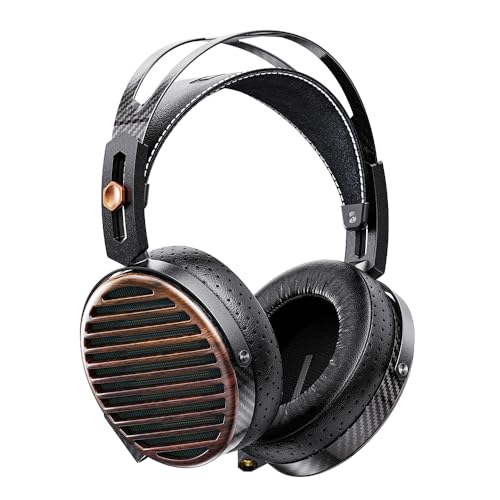


A great planar headphone pairs a fast, well-tuned driver with a comfortable build and enough efficiency to sing from your gear. This lineup runs from an accessible best seller to a true four-figure flagship, and it includes both airy open-backs and an isolating closed-back. Whether you are stepping up from dynamic headphones, mixing in a studio, or assembling an endgame listening rig, there is a clear candidate below.
At a glance
| Product | Standout features | Price tier | Link |
|---|---|---|---|
| FiiO FT1 Pro | Best seller, large open-back driver, easy to drive | Budget | |
| Audeze MM-100 | Studio-tuned accuracy, tough build, high efficiency | Mid-range | |
| FiiO FT7 | 106mm driver, carbon fiber build, swappable pads | Premium | |
| Dan Clark Audio Noire X | Flagship closed-back, AMTS tech, low distortion | Premium | |
| Moondrop SKYLAND | 100mm driver, open-back flagship, balanced cable | Premium | |
How to choose flagship planar headphones
Planar magnetic headphones reward a little homework. These are the factors that shape what you will hear and how you will live with them.
Open-back versus closed-back
Open-back designs let air move freely behind the driver, which tends to produce a wider, more natural stage and airier treble. The trade is that they leak sound both ways, so they suit quiet rooms rather than shared offices or commutes. Closed-back planars, like the Noire X here, seal the rear to isolate you from the world and keep your music private, at the cost of a slightly more intimate stage. Pick based on where you listen.
Driver size and diaphragm
A larger planar driver can move more air, which often helps low-end authority and effortless dynamics. Diaphragm thickness and coatings shape speed and detail, with ultra-thin films chasing quicker transients. Bigger is not automatically better, since tuning matters most, but the flagship models here lean on large drivers and refined diaphragms to justify their price.
Amplification and efficiency
Planars have a reputation for needing power, and some do. The upside is that several modern models are efficient enough to run from a capable dongle or portable player. The FT1 Pro is noted for high sensitivity, while larger flagships generally sound their best from a dedicated headphone amplifier. Budget for the source, because a great planar underfed by weak gear never shows its full ability.
Comfort, weight, and build
Planar drivers add mass, so headband design, clamp, and pad quality decide whether long sessions stay comfortable. Lightweight materials like carbon fiber help, and swappable pads let you fine-tune fit and even tone. Detachable, high-quality cables and balanced connectors are common at this level and make the headphones easier to integrate and maintain. Pads are consumable parts that compress and harden over a few years, and replacing them restores both comfort and sound, so check that spares exist for any headphone you plan to keep.
What planar drivers actually do differently
A conventional dynamic headphone drives a cone from a single voice coil at its center, which means the outer edges lag slightly behind and the diaphragm can flex rather than move as one. A planar magnetic driver instead prints a flat conductor across a very thin film suspended between magnet arrays, so force is applied evenly across nearly the whole surface. That even drive is the source of the planar reputation: bass that stays tight and textured instead of blooming, transients that start and stop cleanly, and low distortion across the range. It also explains the weight, since those magnet arrays are heavy, and the appetite for power, since a flat diaphragm is a demanding load. There is no free lunch here, just a different set of trade-offs that many listeners find worth the mass.
Balanced cables, and what upgrades really matter
Most flagships here ship with a detachable balanced cable, often 4.4mm, plus adapters. A balanced connection gives many amplifiers more available power and better channel separation, which can matter for a hungry planar, though the effect is modest compared with simply having enough clean power. Be skeptical of exotic cable claims: a well-made cable of the right length with the right plug is what you need, and the money is better spent on a decent amplifier or on pads that fit your head. Fit and seal, especially on a closed-back, change what you hear far more than any cable will.
Living with a flagship planar
These are not casual purchases, so a few practical points are worth setting out. Consider the whole chain: a capable source and amplifier are not audiophile superstition with a large planar, they are the difference between the headphone sounding thin and lifeless and sounding like what you paid for. That said, do not assume you need an expensive stack, since an efficient model like the FT1 Pro plays happily from a good dongle and the Audeze is designed to work with a wide range of gear. Think plainly about where you listen, because an open-back in a shared room annoys everyone nearby and lets their noise in, which is why the closed-back option exists. Give any new headphone a fair chance before judging it: your ears adapt over days, and the fit takes adjusting. Look after them and they last: keep them on a stand rather than the desk, store them away from heat and damp, and work on the thin diaphragm with respect, since planar drivers do not enjoy impacts or being stretched over furniture. Pads and cables are replaceable; drivers generally are not.
FiiO FT1 Pro
The FT1 Pro is the best seller here and the easiest way into serious planar sound. Its large in-house driver, roughly 95 by 86mm, gives a wide, open stage that belies the price, and an ultra-thin diaphragm with a dual sapphire and aluminum coating chases detail and speed. High sensitivity means it plays loud and clean from modest gear, so you do not need a big amplifier to enjoy it. For a first flagship-style planar, it delivers a lot of the experience for a fraction of the outlay.
Pros
- Best seller with strong value for the performance
- Large open-back driver with a spacious stage
- High sensitivity, so it runs well from a dongle
- Refined dual-coated diaphragm for detail
Cons
- Open-back leaks sound and offers no isolation
- Not the last word in refinement versus true flagships
Best for: newcomers who want a taste of flagship planar sound affordably.
Audeze MM-100
The MM-100 brings Audeze’s respected planar engineering to a more attainable price, tuned for production-grade accuracy rather than flash. It is built to take abuse, with a chassis of magnesium, aluminum, and steel, and its high-efficiency drivers pair well with a wide range of gear. A clever cable design lets you connect to either earcup to keep the lead out of the way while you work. It is the choice when neutral, real tuning and a durable build matter more than warmth or spectacle.
Pros
- Neutral, production-grade tuning from a trusted name
- Rugged metal build made to last
- Efficient drivers that pair with many sources
- Flexible either-side cable connection
Cons
- Analytical voicing is less lush for pure fun listening
- Open-back, so no isolation for shared spaces
Best for: studio work and listeners who want fair, accurate sound.
FiiO FT7
The FT7 is FiiO’s step into true flagship territory, built around a large 106mm planar driver with a multi-layer gold-and-silver-coated diaphragm for rich, nuanced sound. Premium materials keep it special and comfortable: a zebrawood grille, a carbon fiber body and headband, and two sets of interchangeable pads to tune fit and tone. A cryogenically hardened copper cable and a balanced connector round out the package. It is the sweet spot for someone who wants a big-driver flagship experience without top-tier boutique pricing.
Pros
- Large 106mm driver with a refined coated diaphragm
- Premium carbon fiber build that stays lightweight
- Two interchangeable pad types to tune the sound
- High-quality balanced cable included
Cons
- Benefits from a capable headphone amplifier
- Open-back leakage rules out noisy environments
Best for: enthusiasts who want a big-driver flagship at a relative value.
Dan Clark Audio Noire X
The Noire X is the true flagship of this group and the only closed-back, which makes it special: it aims for open-back openness while sealing out the room. An enhanced V-planar diaphragm and a stiffer driver cut distortion across the range, and the patented AMTS acoustic system tames standing waves for smooth, clear highs. Carefully engineered baffles, waveguides, and resonators expand the stage and even out the treble. It is a serious investment, but it targets endgame closed-back performance for private, high-resolution listening.
Pros
- Flagship closed-back that isolates while sounding open
- Low-distortion V-planar driver and AMTS tuning
- Smooth, refined treble and expansive stage
- Ideal for private, high-fidelity listening
Cons
- The most expensive option by a wide margin
- Deserves a quality source to reach its potential
Best for: listeners who want an endgame closed-back with isolation.
Moondrop SKYLAND
The SKYLAND is Moondrop’s open-back flagship, built on a large 100mm driver that drives almost its entire surface for even, electrostatic-like motion. A low-diffraction open grille reduces reflections for clearer mids and highs, while an optimized N55 magnet array and an ultra-thin roughly 500-nanometer diaphragm chase rapid, detailed response. It ships with a high-purity single-crystal copper balanced cable and adapters for different connections. It is a compelling open-back flagship for those who want a big, airy stage and modern driver engineering.
Pros
- Large 100mm driver with near-full-surface drive
- Open, low-diffraction design for clear mids and highs
- Ultra-thin diaphragm for fast, detailed response
- Balanced cable and adapters included
Cons
- Open-back leaks and needs a quiet room
- Large flagship driver rewards a strong amplifier
Best for: open-back fans who want a big, airy flagship stage.
The verdict
Best overall: the FiiO FT1 Pro. As the best seller it earns the top spot for delivering a genuinely wide, detailed planar experience at an accessible price, and its high sensitivity means most people can enjoy it without buying a big amplifier first.
Best value: the FiiO FT7, which brings a large 106mm driver and a premium carbon fiber build for far less than boutique flagships cost.
Best premium: the Dan Clark Audio Noire X, the true flagship here, and the pick for anyone who wants endgame closed-back sound with real isolation.
Frequently asked questions
Do planar magnetic headphones need a powerful amplifier? Some do, but not all. Efficient models like the FT1 Pro play well from a good dongle, while larger flagships sound their best from a dedicated headphone amplifier. Budget for a capable source.
Open-back or closed-back? Open-back designs sound wider and airier but leak sound, so they suit quiet rooms. Closed-back models like the Noire X isolate you and keep music private, which suits shared spaces.
Are these good for studio or mixing work? The Audeze MM-100 is tuned for production-grade accuracy and built tough, which makes it a natural for studio use. Neutral tuning helps you hear the recording plainly.
Why are planar headphones heavier? The magnet arrays add mass. Good headband design, comfortable pads, and lightweight materials like carbon fiber offset the weight for longer sessions.
Is a more expensive model always better? Not necessarily. Price buys refinement and build, but tuning and fit matter most. Many listeners are thrilled with the affordable best seller, while others want the last few percent a flagship provides.
What is the difference between planar and regular dynamic headphones? A dynamic driver pushes a cone from its center, while a planar drives a thin flat film evenly across almost its whole surface. That even drive is what gives planars their tight bass, quick transients, and low distortion, at the cost of extra weight.
Do I need a balanced cable? It helps if your amplifier delivers more power on its balanced output, which a demanding planar can use. It is a useful convenience rather than a transformation, and most of these include a balanced cable anyway.
Can I use these for gaming or movies? Yes, and open-backs are excellent for it thanks to their wide, well-separated stage. Choose the closed-back if you need to keep sound in or block a noisy room.
Are planar headphones fragile? The diaphragm is very thin, so avoid impacts and do not stretch the headband over furniture. Handled sensibly they last for years, and pads and cables are replaceable when they wear.
This article may contain affiliate links; see our Affiliate Disclosure.