Sand collects in the deep corner where the liner meets the floor, and no amount of skimming touches it. You can spend a Saturday dragging a suction head on a hose that keeps losing prime, or you can drop something in the water and go make lunch. Above-ground pools have quietly become the best-served corner of the pool cleaning market, and the reason is that the flat floor makes the hard problem easy.



Two real routes exist. A cordless handheld vacuum on a pole gives you precision and costs little, but you are the motor that moves it. A robot does the floor unsupervised and misses the fiddly bits. Which suits you depends less on your pool than on how you feel about standing in the sun holding a stick. Plenty of people end up owning both, and that is not a failure of planning.
At a glance
| Product | Standout feature | Price tier | Link |
|---|---|---|---|
| KOKIDO Cordless Handheld Pool Vacuum | Under 3 lb, 60 min runtime, IPX8, 6 ft pole and two heads | Budget | |
| PoolMr Handheld Pool and Hot Tub Vacuum | 90 min runtime; 13.2 gallons per minute; triangular corner head | Budget | |
| Enhulk Handheld Pool Vacuum | Strongest handheld suction here; four filter bags in two mesh grades | Mid-range | |
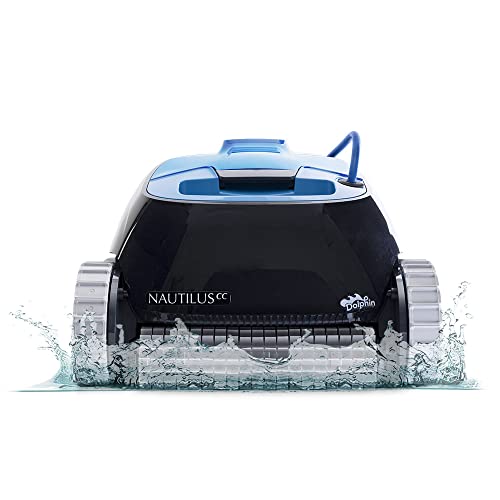
| Dolphin Nautilus CC Robotic Pool Vacuum | Climbs and scrubs walls; full clean in about two hours | Premium | |
| WYBOT A1 Robotic Pool Cleaner | Cordless, 130 min runtime, self-parks at the wall when low | Mid-range | |
How to choose an above-ground pool vacuum
Handheld or robot: the real difference
A cordless handheld is a battery, a motor and a filter bag on the end of a pole. You aim it, which means you can chase one patch of sand in ninety seconds and be done. It is also the only sensible tool for a hot tub, a kiddie pool or an inflatable, where a robot has nowhere to go. The cost is your time and your shoulders.
A robot is dropped in and forgotten. It covers the floor methodically, holds far more debris, and does not care that the job takes two hours. What it will not do is clean the exact spot you care about, get behind a ladder, or fit in a spa. The split is genuinely about attention, not about pool size.
Suction, and the number that means something
Flow rate in gallons per minute is the real measure of a handheld. Among these, the figures run from about 13 gallons per minute to over 18, and that gap is noticeable on wet sand. For robots the equivalent figure is gallons per hour, and the numbers are much larger because a robot is moving water continuously for two hours rather than in bursts. Do not compare the two directly; they are answering different questions.
Filter mesh decides what you actually catch
This is the spec most people skip and then regret. A coarse bag passes fine sand straight back into the pool, which feels exactly like the vacuum not working. Finer mesh catches silt but clogs faster and cuts suction as it fills. The better designs give you a choice: Enhulk ships two mesh grades so you can match the bag to the mess, and WYBOT layers a fine filter behind a foam layer so large debris does not blind the fine one immediately. If your problem is sand and pollen rather than leaves, mesh matters more than motor.
Runtime against pool size
Sixty minutes sounds ample until you are halfway round a 24 ft pool. Handhelds here range from 60 to 90 minutes, and robots from about 130 minutes to mains-powered indefinite. Match the runtime to the pool, then add margin, because battery figures are quoted at the kindest settings. A vacuum that dies with a quarter of the floor left is a vacuum you stop using by August.
Flat floors, sloped floors and walls
Most above-ground pools have a flat or gently dished floor, which is why budget robots exist at all: no slope to climb, no deep end to navigate. Check the limits before buying. WYBOT specifies slopes under 15 degrees; Dolphin climbs walls outright and handles pools up to 33 ft. If your pool has a pronounced slope or you want the waterline scrubbed as well as the floor, that capability is the whole reason to spend more.
Cordless safety and the out-of-water rule
These motors are cooled by the water they pump. Run one dry and you damage it, which is why several here shut off automatically when they surface. It is a sensible protection, and it also means a device that stops the moment you lift it to inspect the bag. That is the design working, not a fault.
KOKIDO Cordless Handheld Pool Vacuum
This is comfortably the most popular pool vacuum in the group, and it earns that by being the least demanding thing you can own. It weighs under three pounds, runs 60 minutes on a charge, and comes complete with a 72-inch aluminum pole and two interchangeable heads for corners and open floor. Kokido rates it IPX8 for full submersion, quotes 60 dB operation, and builds in automatic shutoff when it leaves the water. It is clear about its limits too: light debris, sand and particles, in pools up to 20 feet, with nothing larger than three inches. Kokido positions it as a companion to a robot rather than a replacement, which is exactly the right way to think about it, and backs it with a year’s warranty.
Pros
- Most popular pick here by a wide margin
- Under 3 lb, so it is genuinely easy to hold at arm’s length
- Pole and two heads included; works with standard pool poles
- IPX8 rated with automatic out-of-water shutoff
- Works in cold and warm water, from about 41 to 108 F
Cons
- Rated for pools up to 20 ft; light duty by design
- Not for leaves or debris over three inches
- 60 minutes is the shortest runtime here
Best for: spot cleaning a small above-ground pool, spa or hot tub, or finishing what a robot missed.
PoolMr Handheld Pool and Hot Tub Vacuum
PoolMr’s answer to the Kokido is more battery and more reach. A 2.5Ah cell gives up to 90 minutes, a 20W motor moves up to 13.2 gallons a minute, and a 120 micron trash can catches twigs, leaves, dirt and sand. The head selection is smarter than most: a triangular brush for the corner seam where debris always settles, and a regular head for open floor and floating bits. The three-section aluminum pole extends to 6.3 ft and is rated to carry four times the vacuum’s weight out of water, which is the sort of detail that stops a pole folding at the worst moment. PoolMr is refreshingly precise about the safety rule: submerge within 60 seconds of starting, switch off within 60 seconds of lifting out.
Pros
- 90 minutes of runtime, the longest handheld here
- Triangular corner head is genuinely useful on a liner seam
- Sturdy three-section pole rated well above the vacuum’s weight
- Handles water from about 32 to 104 F
- Clear, specific operating guidance
Cons
- Four hours to recharge fully
- 13.2 gallons per minute is the lowest flow rate here
- Single filter grade rather than a choice of mesh
Best for: a pool and a hot tub in the same yard, cleaned in one session on one charge.
Enhulk Handheld Pool Vacuum
If the cheap handhelds leave sand behind, this is the one that fixes it. A 20V 40W motor pulls up to 18.5 gallons per minute, half again what the PoolMr manages, and it comes with four reusable filter bags in two mesh grades so you can run coarse for leaves and fine for silt. The telescopic pole spans 3 to 7.3 ft and swaps for a short handle when you are working close, which is a small thing that makes hot tub work far less awkward. The battery recharges in about 90 minutes, faster than anything else here, though runtime is 60 minutes rather than PoolMr’s 90. Enhulk asks you to clean and dry it after use, and with a motor this size that is worth doing.
Pros
- Strongest handheld suction in the group at up to 18.5 gallons per minute
- Four filter bags across two mesh grades
- Telescopic pole plus a short handle for close work
- Recharges in about 1.5 hours
- Handles leaves, twigs, sand and bugs
Cons
- Twice the price of the budget handhelds
- 60 minute runtime despite the bigger battery pack
- Needs cleaning and drying after each use
Best for: a larger above-ground pool with a real sand or leaf problem and no patience for a second pass.
Dolphin Nautilus CC Robotic Pool Vacuum
The Dolphin is the only machine here that cleans the walls as well as the floor. It climbs, it scrubs with an active brush rather than merely sucking, and it works on any surface or shape, which matters if your liner grows a green film at the waterline every August. Setup is plug and drop: no hoses, no booster pump, no plumbing into your filter. A cycle takes about two hours and the filter basket loads from the top, so emptying it does not mean flipping a wet robot upside down over your lawn. It handles pools up to 33 ft, in-ground or above. Dolphin has been making these for over 40 years, and the Nautilus CC is the model that ends the argument about whether robots work.
Pros
- Climbs and actively scrubs walls, not just the floor
- Top-load filter basket is easy to empty
- Plug and play; no hoses or pump connection
- Full clean in about two hours, unattended
- Suits pools up to 33 ft, above or in-ground
Cons
- By far the most expensive option here
- Corded, so it needs a nearby outlet and the cord can tangle
- Overkill for a small or inflatable pool
- Cannot do a hot tub or spot-clean on demand
Best for: a larger above-ground pool where the waterline and walls need as much attention as the floor.
WYBOT A1 Robotic Pool Cleaner
This is the robot built for exactly the pool this article is about: flat, above ground, up to about 1,100 square feet, and nowhere near a power outlet. It is cordless, runs 130 minutes, and pulls 2,280 gallons an hour through a dual-layer filter that pairs a 180 micron fine element with a textured foam layer, a design WYBOT credits with up to 50% better filtration than a single-stage robot. The touch that earns its keep is self-parking: when the battery runs low it drives itself to the wall so you are not fishing a dead robot off the floor with a pole. Four cleaning modes and a five-color status light round it out. WYBOT specifies slopes under 15 degrees, which is the one thing to check against your pool.
Pros
- Fully cordless, so no outlet or cord tangle
- 130 minutes of runtime; covers up to about 1,100 sq ft
- Dual-layer filtration catches fine silt and leaves together
- Self-parks at the wall when the battery is low
- A fraction of the Dolphin’s price
Cons
- Floor and edges only; it does not climb and scrub walls
- Needs a slope under 15 degrees
- Filter wants clearing every 30 minutes in a badly soiled pool
Best for: a flat-bottomed above-ground pool where you want the floor done automatically without running an extension lead.
Verdict
Best overall: the KOKIDO Cordless Handheld Pool Vacuum. It is the runaway favorite in this group and the reason is simple: light, cheap, complete in the box, and useful in every body of water you own. For most above-ground pools it is all the vacuum required.
Best value: the WYBOT A1 Robotic Pool Cleaner. Cordless automation with two-stage filtration for a fraction of what robots used to cost, aimed squarely at flat pools. It buys back your Saturday.
Best premium: the Dolphin Nautilus CC. Wall climbing and active scrubbing put it in a different category, and nothing else here touches the waterline.
If you want one handheld that will not leave sand behind, the Enhulk has the suction and the filter bags to back it up.
Frequently asked questions
Do I need a robot, or will a handheld do?
For a small above-ground pool, a hot tub or an inflatable, a handheld is the better tool and a robot is often physically unsuitable. Once you are past about 18 to 20 ft, the handheld becomes a chore and a robot starts paying for itself in Saturdays. Many owners keep a cheap handheld alongside a robot for corners, steps and the spot the robot always skips.
Will a robotic cleaner damage a vinyl liner?
Cleaners intended for above-ground pools are designed around soft liners, using brushes and tracks meant to be gentle on vinyl. The Dolphin explicitly states it is gentle on surfaces while scrubbing. The genuine risk is not the robot but grit trapped under it, so rinse it after use and do not drag it across a paved surround.
Why does my vacuum blow sand back into the pool?
Almost always the filter mesh is too coarse for the debris. Fine sand and silt pass straight through a leaf-grade bag. Fit the finest mesh you have, accept that it clogs sooner, and clear it more often. This is why models that ship with two mesh grades, like the Enhulk, are worth the extra outlay if sand is your particular problem.
How long do these batteries last on one charge?
Among the handhelds here, 60 to 90 minutes; the WYBOT robot runs 130 minutes and the Dolphin is mains-powered so runtime is not a limit. Take quoted figures as best-case. If your pool takes 50 minutes to do properly, a 60-minute battery will frustrate you by its second season, when the cell has aged.
Can I use a pool vacuum in a hot tub or inflatable pool?
A handheld, yes, and it is one of the best reasons to own one. Both handhelds here are rated for spas and hot tubs, with temperature ranges topping out around 104 to 108 F. A robot generally cannot: there is no floor area to navigate and no way for it to work in that space.
This article may contain affiliate links; see our Affiliate Disclosure.