Real stereo sound does not need a rack of gear anymore. A pair of powered bookshelf speakers puts a built-in amplifier inside the cabinets, so two boxes and one cable turn a desk, a turntable, or a TV into a proper listening setup.
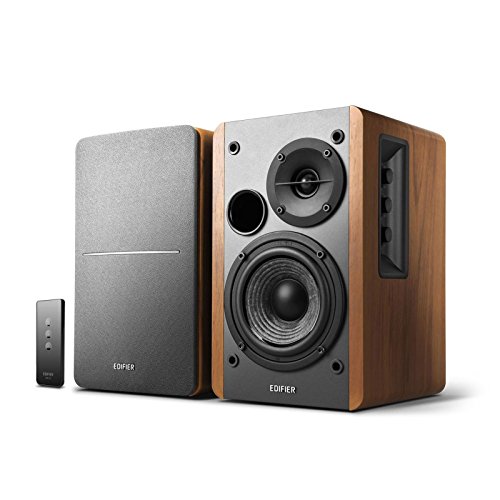


The best powered bookshelf speakers give you warm, room-filling sound without a separate receiver, and the inputs to feed them from whatever you already own. Whether you are building a desktop hi-fi, reviving a record player, or finally giving your TV audio worth hearing, the picks below cover every common setup and budget tier.
| Speakers | Standout features | Price | Link |
|---|---|---|---|
| Edifier R1280T Powered Bookshelf Speakers | 42W wooden 2.0 active pair, dual RCA/AUX inputs, remote, side EQ | Mid-range | |
| Saiyin Bluetooth Bookshelf Speakers | Bluetooth plus optical, coaxial and RCA, silk-dome tweeter | Budget | |
| Electrohome Huntley Powered Bookshelf Speakers | Retro wood cabinets, 3-inch drivers, Bluetooth 5, rear-ported bass | Budget | |
| ULTIMEA 3-Way Powered Bookshelf Speakers | 3-way design, 5.25-inch woofer, 70W RMS, HDMI ARC, sub out, app EQ | Premium | |
| MEVOSTO Active Bookshelf Speakers | 5-inch woofer, silk-dome tweeters, USB DAC, Bluetooth 5.4, 36W RMS | Mid-range | |
The price column shows a general tier only. Prices move often, so tap a link for the live figure on Amazon.
How to choose powered bookshelf speakers
Powered speakers hide a lot of decisions inside two tidy boxes. Get these few things right and the pair will fit your gear, your room, and the way you listen.
What powered or active means
Powered, also called active, speakers have the amplifier built in, so you do not need a separate receiver or stereo amp. One speaker houses the amp and controls, and it drives the second through a connecting cable. That makes setup simple and saves the cost and clutter of extra gear. It is the opposite of passive bookshelf speakers, which need an external amplifier to make any sound at all.
Driver size and 2-way versus 3-way
Bigger woofers move more air and reach lower, so a 5 to 5.25-inch driver delivers noticeably deeper bass than a 3-inch one. Most bookshelf speakers are 2-way, using a woofer and a tweeter. A 3-way design, like the ULTIMEA, adds a dedicated midrange driver, which can clean up vocals and detail by letting each driver handle a narrower band. For a desk, a good 2-way is plenty; for a small living room, a larger woofer or a 3-way pays off.
Connectivity for your sources
Match the inputs to your gear. Bluetooth streams from phones and laptops, AUX and RCA handle computers and many players, optical or coaxial pull clean digital audio from a TV, and HDMI ARC is the tidiest way to take sound from a modern television with one cable and volume synced to the TV remote. A USB audio input, as on the MEVOSTO, is ideal for a desktop. List your sources first, then pick the pair that covers them.
Turntables and the preamp question
If you want to play records, note that most powered speakers expect a line-level signal, so your turntable needs a built-in phono preamp, or you will add a small external one. Many modern record players include a preamp with a switch on the back. Several speakers here explicitly support turntable use over RCA. Confirm the chain before you buy so the record player, preamp, and speaker inputs all line up.
Room size and placement
Bookshelf speakers shine in nearfield and small-to-medium rooms. On a desk, position them at ear height and angled toward you for the best stereo image. On a shelf, a little breathing room behind a rear-ported design helps the bass. If you are filling a larger living room or want home-theater impact, favor the higher-power, larger-woofer options and consider adding a subwoofer where an output is provided.
Edifier R1280T Powered Bookshelf Speakers (Best Overall)
The best seller here has become the default recommendation for a reason: it delivers genuinely pleasant, balanced sound from classic wooden cabinets at an approachable price. The 2.0 active design packs a built-in amplifier rated at 42 watts, and two AUX inputs let you connect a computer and another source at the same time with no plugging and unplugging. Side-panel knobs adjust volume plus bass and treble to taste, and an included remote handles it from the couch. The wood-effect finish looks at home on a desk or a shelf. It is the safe, satisfying starting point.
Pros
- Balanced, room-friendly sound from wooden cabinets
- Built-in 42W amplifier, no receiver needed
- Two AUX inputs for two sources at once
- Side-panel bass and treble controls
- Remote control included
Cons
- No Bluetooth on this model
- Wired connections only
- Bass suits nearfield more than a large room
Best for: desktop and shelf hi-fi listeners who want proven, balanced sound with simple wired inputs.
Mid-range tier. Check price on Amazon
Saiyin Bluetooth Bookshelf Speakers
The Saiyin pair is the connectivity-rich budget option, built to slot in behind a TV or beside a turntable without extra gear. Alongside Bluetooth for phones, tablets, and computers, it offers optical and coaxial digital inputs plus RCA, so it can take audio straight from a television or a record player with a built-in preamp. A 3.75-inch woofer and a half-inch silk-dome tweeter give a fuller, warmer sound than the size suggests, and the remote switches inputs and adjusts volume from across the room. For the money, the input flexibility is the headline.
Pros
- Bluetooth plus optical, coaxial, and RCA inputs
- Works well as TV or turntable speakers
- 3.75-inch woofer with silk-dome tweeter
- Remote switches inputs and volume
- Low price for the connectivity offered
Cons
- Turntable needs a built-in preamp
- Modest power for large rooms
- Plainer cabinet finish
Best for: budget setups that want Bluetooth and digital inputs for a TV or record player.
Budget tier. Check price on Amazon
Electrohome Huntley Powered Bookshelf Speakers
The Electrohome Huntley leans into warm, natural sound and retro looks, with handcrafted wood cabinets that are acoustically tuned and rear-ported for fuller bass. Three-inch drivers produce a balanced, well-rounded profile that flatters music, podcasts, and video alike, and the compact size fits a desk or a bookshelf without dominating it. Connectivity is broad for the price, covering RCA, aux-in, and Bluetooth 5, so a turntable, TV, computer, or phone all have a home. It is the choice for anyone who wants classic style and easy wireless streaming on a budget.
Pros
- Warm, natural sound from tuned wood cabinets
- Rear-ported design for fuller bass
- Bluetooth 5 plus RCA and aux-in
- Compact, retro styling suits a desk or shelf
- Strong value for the features
Cons
- Small 3-inch drivers limit deep bass
- Best suited to nearfield and small rooms
- No optical or HDMI input
Best for: budget buyers who want retro style, warm sound, and easy Bluetooth streaming.
Budget tier. Check price on Amazon
ULTIMEA 3-Way Powered Bookshelf Speakers
The ULTIMEA is the ambitious pick, a true three-way system with a dedicated midrange driver that separates vocals and detail from the 5.25-inch woofer’s deep, 50Hz-reaching bass. Rated at 70 watts RMS with low distortion, it plays cleanly at higher volumes, and edge-horn tweeter placement widens the soundstage. The standout for home-theater use is HDMI ARC, which pulls high-fidelity audio directly from a modern TV, backed by a dedicated subwoofer output if you want to add more low end. Optical, RCA, USB, and Bluetooth round it out, and an app with pro EQ presets tunes the sound for movies, music, or gaming.
Pros
- True 3-way sound with dedicated midrange
- 5.25-inch woofer reaches deep 50Hz bass
- 70W RMS plays clean at higher volumes
- HDMI ARC and subwoofer output for home theater
- App control with movie, music, and gaming EQ
Cons
- Larger cabinets need more shelf space
- Most expensive option here
- More features than a simple desktop setup needs
Best for: home-theater and music listeners who want the biggest, most connected sound of the group.
Premium tier. Check price on Amazon
MEVOSTO Active Bookshelf Speakers
The MEVOSTO is aimed squarely at the desk, pairing a 5-inch bass driver with a 1-inch silk-dome tweeter in each cabinet for crisp highs and a deeper low end than most compact speakers manage. A built-in USB digital audio path delivers clean, low-latency sound straight from a computer, which is a real advantage for a desktop rig, and Bluetooth 5.4 adds fast, stable wireless from a phone. Ten-level bass and treble adjustment tailors the sound to music, games, or video, and the natural wood finish with control knobs and a remote keeps everyday use simple.
Pros
- 5-inch woofer with silk-dome tweeter
- USB DAC input for clean desktop audio
- Bluetooth 5.4 for fast, stable wireless
- Ten-level bass and treble adjustment
- Wood finish with knobs and remote
Cons
- Best matched to nearfield desktop use
- Power supply needs matching for RV use
- Less deep bass than the 3-way pick
Best for: desktop listeners who want a USB DAC and Bluetooth with fuller-bodied sound.
Mid-range tier. Check price on Amazon
The verdict
Best overall
The Edifier R1280T is the best seller and the easiest pair to recommend. It sounds balanced and warm from real wooden cabinets, needs no receiver, offers two inputs plus side EQ and a remote, and costs little. For a first powered bookshelf setup on a desk or shelf, it hits the sweet spot of price and performance. Check price on Amazon
Best value
The Electrohome Huntley packs the most into a budget pair. Tuned, rear-ported wood cabinets give warm sound, Bluetooth 5 adds effortless streaming, and RCA and aux-in cover a turntable or TV. For style and versatility at a low price, it is the value standout. Check price on Amazon
Best premium
The ULTIMEA 3-way is the choice when you want the fullest, most flexible sound. A dedicated midrange, a deep-reaching 5.25-inch woofer, 70 watts RMS, HDMI ARC, a subwoofer output, and app EQ make it as much a compact home-theater system as a music pair. It costs the most and earns it. Check price on Amazon
Frequently asked questions
What does powered or active mean for speakers?
It means the amplifier is built into the speakers, so they make sound on their own without a separate receiver or stereo amplifier. You connect your source, phone, computer, TV, or turntable, directly to the powered speaker, and it drives its partner through a cable. This keeps a setup simple and affordable. Passive speakers, by contrast, produce no sound until you connect them to an external amp.
Do I need a separate amplifier or receiver?
No. Every pair here is powered, so the amplifier is already inside. You just need the right cable from your source and a power outlet. That is the main appeal of powered bookshelf speakers over traditional passive ones: you skip buying, wiring, and finding space for a receiver, and you still get real stereo sound from two proper speakers.
Can I connect a turntable to these speakers?
Usually yes, with one thing to check. Powered speakers expect a line-level signal, so your turntable needs a built-in phono preamp, or you add a small external one between them. Many current record players include a preamp with a switch on the back. Several models here support turntable connection over RCA. Confirm that your turntable, any preamp, and the speaker inputs match before buying.
Will powered bookshelf speakers work as TV speakers?
They make an excellent TV upgrade, and some are built for it. Look for optical, coaxial, or HDMI ARC inputs to take audio straight from the television. HDMI ARC is the neatest, letting one cable carry the sound and syncing volume to your TV remote, as on the ULTIMEA. Others use optical or RCA. The result is far clearer dialogue and fuller sound than built-in TV speakers deliver.
Bookshelf speakers or a soundbar, which is better?
For music and stereo separation, a pair of bookshelf speakers wins because the two cabinets create a genuine left-right image a single bar cannot match. A soundbar is tidier under a TV and simpler for movies in a living room. If your priority is listening to music at a desk or shelf, or reviving a turntable, powered bookshelf speakers are the better pick; for a one-piece TV solution, a soundbar may suit.
This article may contain affiliate links; see our Affiliate Disclosure.