The cheap robot vacuum’s dirty secret is the part nobody films: you still crouch by the bin, still rinse a gray mop pad in the laundry sink, still pick hair off a brushroll with scissors. An all-in-one dock is a machine bought specifically so that never happens again, and the good ones deliver months of floors you simply do not think about.


At this level the vacuuming is close to solved, so the dock is the product: how long it goes between emptyings, whether it washes the mop in hot water and dries it with heat, and whether it refills its own tank. What still separates these machines is how they handle carpet, how they handle hair, and how real their obstacle avoidance is. All five suit a busy household, a pet-heavy floor plan, or anyone who would rather buy back an hour a week.
At a glance
| Product | Standout features | Price tier | Link |
|---|---|---|---|
| roborock Qrevo S Pro | 18,500 Pa suction, 167°F mop wash, 3.8-inch low profile, anti-tangle brush | Premium | |
| roborock Qrevo Series QV 35A | Auto water refill from a 4L tank, 200 RPM spinning mops, SGS-certified zero-tangle brush | Premium | |
| Shark Stratos | Sonic mopping at 100 scrubs per minute, HEPA sealed filtration, bagless 60-day base | Mid-range | |
| iRobot Roomba 415X | 20,000 Pa suction, SmartScrub pressure mopping, heat-dried pads, slim body | Mid-range | |
| MOVA P20 Ultra | 30,000 Pa suction, MopExtend edge reach, 12N TurboScrub, 100-day auto-empty | Mid-range | |
How to choose an all-in-one robot vacuum and mop
What “all-in-one” has to include
The phrase is used loosely, so check for four jobs, not one. The dock should empty the robot’s bin into a bag or bin of its own, wash the mop pads, dry them with heat, and refill the robot’s clean-water tank. Miss the drying step and a damp pad sits in a warm plastic box until it smells; miss the refill and you are still carrying water. Every machine here does all four, which is exactly why they cost what they do.
Hot wash and hot dry are not the same feature
Mop pads get washed at different temperatures and dried in different ways, and both halves matter. The roborock pair wash at 167°F, which cuts kitchen grease that cold water only spreads around. The Roomba washes and then heat-dries at 113°F after every run. The MOVA dries with 145°F hot air. Warm water lifts the dirt; the drying stops the odor. A dock that does one but not the other leaves you a job.
Suction numbers are marketing, up to a point
Pascal ratings climb every product cycle and the relationship to real pickup is loose. Between 8,000 Pa and 30,000 Pa on this list there is a genuine difference on deep carpet, but on hard floors any of them clears crumbs and hair without effort. Take a high figure as headroom rather than a ranking, and give more weight to the brush design underneath it.
Hair, and the brush that decides everything
If anyone in the house has long hair, or there is a dog, the anti-tangle system is the most important spec on the page. Rubber spiral brushes and asymmetrical side brushes shed hair instead of winding it into a solid collar around the roller. The roborock QV 35A cites an SGS-certified zero-tangle rate on its side brush, the Shark uses a self-cleaning brushroll, and the Roomba and MOVA both use tangle-resistant rubber. This is the difference between a robot you maintain monthly and one you attack with scissors weekly.
Carpet, thresholds and mop lift
A combo robot has to keep a wet mop off your rug. Mop lift is the answer, and 10 mm is the common figure among these; the Shark goes further with AutoLift, raising the whole body over higher thresholds. If your home is mostly carpet with an island of tile, look hard at this. If it is all hard floor, it matters less than the mop pressure.
Edges, corners, and low furniture
Round robots cannot reach into a square corner, so makers cheat in different ways. MOVA and DREAME extend the mop pad sideways, the Roomba extends a brush, and the Shark blows air along the baseboard to pull debris into its path. Height matters too: the Qrevo S Pro is 3.8 inches tall and the Roomba is deliberately slim, which decides whether under the sofa gets cleaned or just gets ignored.
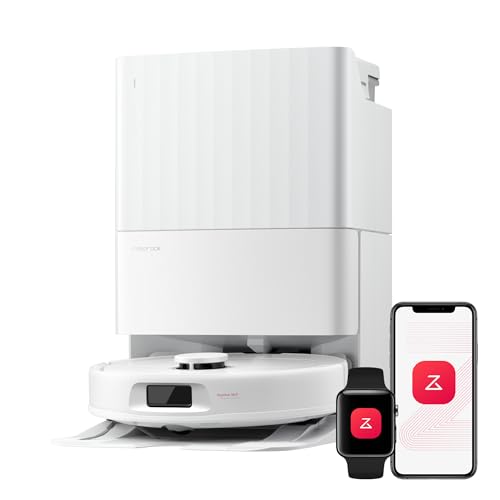
roborock Qrevo S Pro
The best-selling machine here, and it reads like a list of the right decisions. Suction is 18,500 Pa, the dock empties into a sealed 2.7L bag good for seven to nine weeks, and mop self-cleaning runs at 167°F. The anti-tangle package is thorough: a zero-tangle side brush, an all-rubber main brush, and an omnidirectional wheel you can actually clean, which is the part that usually collects a hair doughnut nobody notices. It stands 3.8 inches tall so it fits under beds and sofas, lifts the mop 10 mm and boosts suction on carpet, and SmartPlan 2.0 adjusts settings by room, floor type and past runs rather than making you build the logic yourself. It comes in white here and in an identical black version.
Pros
- The most popular pick of this group
- 18,500 Pa suction with automatic carpet boost
- 167°F hot mop washing in the dock
- Sealed 2.7L bag lasts roughly two months
- Thorough anti-tangle design, wheel included
- 3.8-inch height reaches under low furniture
Cons
- Among the more expensive machines here
- The dock takes real floor space, as they all do
- Bagged docks mean an ongoing consumable
Best for: a mixed-floor home with pets and low furniture, and anyone who wants the safest all-round choice.
roborock Qrevo Series QV 35A
The second best-seller, and an interesting counterpoint to its own sibling: less suction on paper at 8,000 Pa, more machine around it. The dock carries a 4L clean-water tank and refills the robot itself, which is the feature that turns a large home from a two-trip job into a zero-trip one, alongside the same 2.7L sealed dust bag. Mopping is done by two 200 RPM spinning pads with 10 mm lift and 30 water levels, so a sealed hardwood floor and a tiled kitchen can have different amounts of water. The side brush is SGS-certified at a 0% hair tangling rate, the main brush is full-rubber spiral, and PreciSense LiDAR maps in 360 degrees. Note it joins 2.4 GHz networks only.
Pros
- Dock refills the robot from a 4L tank, not just empties it
- Dual 200 RPM spinning mops with 30 water levels
- SGS-certified 0% tangle side brush, full-rubber main brush
- PreciSense LiDAR mapping with Reactive Tech obstacle avoidance
- Second best-selling machine here
- Deep app control: routes, schedules, child lock, multi-map
Cons
- The priciest option of the five
- 8,000 Pa is the lowest suction figure in this group
- 2.4 GHz WiFi only, and built for 100–120V supply
Best for: larger homes and heavy mopping schedules, where auto water refill saves the most walking.
Shark Stratos
Shark takes a different route to clean floors: rather than pressing harder, the Stratos vibrates, scrubbing up to 100 times a minute to break dried spills loose. Its NeverTouch base is the only bagless one here, self-emptying into a 60-day bin, refilling water for up to 30 days, and washing and drying the pad. Two features stand out beyond the mopping. HEPA filtration with an Anti-Allergen Complete Seal means what it picks up stays picked up, which matters if anyone in the house reacts to dust or dander. And AutoLift raises the body over high thresholds and the mop over carpet, so a home with rugs and door transitions does not need babysitting. Edge Detect fires air along walls to pull debris out of the baseboard line.
Pros
- Sonic mopping scrubs stuck-on stains rather than smearing them
- Bagless 60-day base, no bags to buy
- HEPA with a fully sealed anti-allergen path
- AutoLift clears high thresholds and lifts the mop over carpet
- Edge Detect air blasts for corners and baseboard
- Self-cleaning anti-hair-wrap brushroll, 360-degree LiDAR
Cons
- No published Pascal figure to compare against the others
- Bagless emptying means a dustier moment when you do empty it
- Water refill spans 30 days against the auto-empty 60
Best for: allergy-conscious homes, and floors with rugs, thresholds and dried-on kitchen mess.
iRobot Roomba 415X
The Roomba’s angle is reach and pressure. It is 46% slimmer than the design it replaces, which is the unsexy spec that decides whether the dust under your sofa is cleaned or simply out of sight, and extending brushes pull debris out of corners a round robot would otherwise circle. SmartScrub adds downward pressure where mess is stubborn instead of applying the same gentle wipe everywhere, useful on dried food and muddy paw prints. Suction is 20,000 Pa, tangle-free rubber brushes handle fur, and the AutoWash Dock washes and heat-dries the pads at 113°F after every run, empties for up to 90 days and refills water. LiDAR mapping and obstacle recognition mean no tidying the floor before you press start.
Pros
- 20,000 Pa suction with tangle-free rubber brushes
- SmartScrub applies extra pressure on stubborn dried mess
- Pads washed and heat-dried at 113°F after every run
- Dock empties for up to 90 days and refills its own water
- Slim body reaches under more furniture; extending brushes catch edges
- Mop lifts 10 mm to keep rugs dry
Cons
- 113°F drying is the coolest wash-and-dry figure here
- Sells below the roborock pair but above the MOVA
Best for: homes with low furniture and real corners, and dried-on messes that need pressure, not just water.
MOVA P20 Ultra
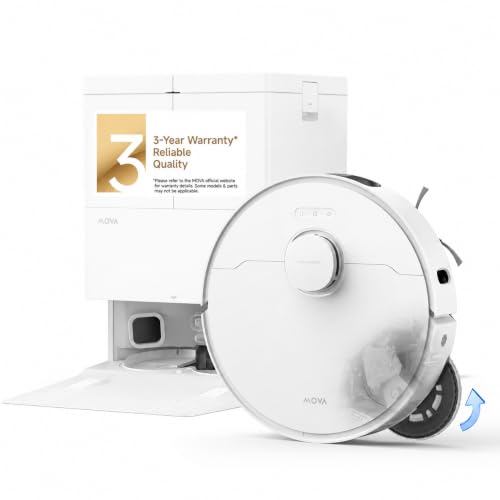
The most aggressive spec sheet at the lowest price of the five. Suction is 30,000 Pa, the highest here by a distance. TurboScrub presses the mop down with 12N of force while spinning it up to 260 RPM, which is a genuinely different approach to dried stains than wiping. MopExtend pushes the pad out along walls and around furniture legs to reach what a circle cannot. The dock runs 100 days between emptyings, dries with 145°F hot air, and its JetSpray Dryboard rinses itself with 20 nozzles while it washes the mop, so the washing surface does not slowly become the dirtiest part of the machine. The tank covers up to 700 square meters in a cycle, and MOVA backs it with a three-year warranty. It is built for 110–120V supply.
Pros
- 30,000 Pa, the strongest suction figure of the group
- 12N mop pressure at up to 260 RPM for dried stains
- MopExtend reaches walls, corners and furniture edges
- 100-day auto-empty and 145°F hot air drying
- Self-rinsing wash tray with 20 spray nozzles
- Three-year warranty, the longest here
- Lowest price of the five
Cons
- Smaller brand presence than roborock, Shark or iRobot
- Region-locked to 110–120V, and some app features vary by region
Best for: maximum cleaning hardware per dollar, big floor plans, and edges that other robots miss.
The verdict
Best overall: roborock Qrevo S Pro. It is the best-selling machine of this group and the most complete: strong suction with automatic carpet boost, a 167°F hot mop wash, a genuinely thorough anti-tangle design, and a low 3.8-inch body that cleans where taller robots give up. Nothing here is obviously missing, which is the highest praise a machine like this can earn.
Best value: MOVA P20 Ultra. The cheapest pick here has the strongest suction, the highest mop pressure, the longest auto-empty interval and the longest warranty. The trade is brand familiarity, not capability. If the spec sheet is what you are buying, this is the most of it for the least.
Best premium: roborock Qrevo Series QV 35A. The second best-seller justifies the top price with the dock, not the robot: a 4L tank that refills the machine, 30 water levels, and a certified zero-tangle brush. In a large home, that is the version of this product you stop maintaining altogether. The Shark Stratos remains the pick if sealed HEPA filtration or high thresholds are the deciding factor.
FAQ
Do these actually replace vacuuming and mopping?
For routine upkeep on hard floors, largely yes, and that is the accurate claim to make. They will not clean stairs, they will not do baseboards or a deep carpet extraction, and a proper spring clean is still a human job. What they replace is the daily and weekly grind of crumbs, dust, fur and footprints.
Bagged or bagless dock?
Bagged docks, like the roborock pair, seal dust away so emptying releases nothing into the air, at the cost of buying bags. The Shark’s bagless base costs nothing to run but hands you a full bin to tip out. If allergies are in play, sealed bags win; otherwise it is a running-cost preference.
Will the mop wreck my carpet or wooden floors?
Mop lift is what protects carpet, and every pick here raises the pad 10 mm on detecting one, with the Shark also lifting its body over thresholds. For sealed hardwood, the control that matters is water volume: the QV 35A’s 30 levels or a low setting on any of these leave the floor damp rather than wet, which is what you want.
How much space does the dock need?
More than people expect. These docks hold a dust bag or bin, clean and dirty water, and a mop-washing tray, so they are furniture-sized objects that want clearance either side and in front. Measure the spot before ordering, and pick somewhere near a drain-free power outlet you will not resent.
Is more suction always better?
Not on its own. Between the 8,000 Pa QV 35A and the 30,000 Pa MOVA there is a real gap on deep pile, but on hard floors the brush design, the mop pressure and the anti-tangle system decide the result far more than the headline number. Buy the machine, not the figure.
This article may contain affiliate links; see our Affiliate Disclosure.