A tough cut of beef that would need three hours in the oven turns fork-tender in forty-five minutes. Dried beans skip the overnight soak. A summer glut of tomatoes becomes shelf-stable jars for winter. That is the quiet magic of a stovetop pressure cooker: it uses trapped steam to raise the boiling point, driving heat deep into food and slashing cooking time, all on the burner you already own.

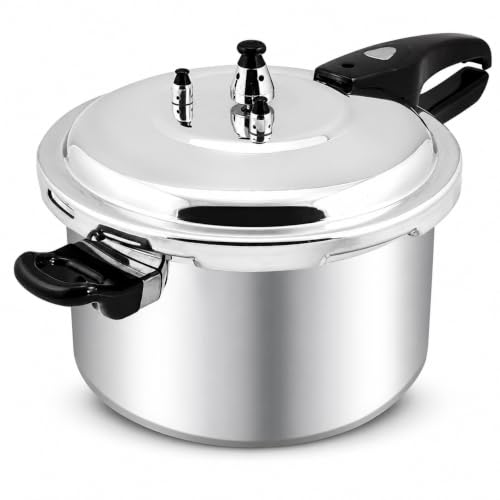


Stovetop pressure cookers come in two overlapping families: everyday cookers sized for weeknight meals, and larger canners that preserve food in jars and double as big-batch cookers. A solo cook tenderizing a small roast, a family simmering a pot of chili, and a gardener putting up a harvest all want something different. The five models below span that range, led by the group’s proven best seller, so you can match the pot to the job.
At a glance
| Model | Standout feature | Price tier | Link |
|---|---|---|---|
| T-fal 22-Quart Pressure Canner | Cans and cooks; includes racks and guide | Premium | |
| Barton 8-Quart Pressure Cooker | Roomy mid-size pot at a low price | Budget | |
| Presto 6-Quart Aluminum Cooker | Classic everyday cooker, 12-year warranty | Mid-range | |
| T-fal Clipso Stainless, 6.3 Quart | One-hand lid, five-point safety system | Premium | |
| IMUSA 7-Quart Aluminum Cooker | Large capacity with dual safety valves | Budget | |
How to choose a stovetop pressure cooker
Sorting a few basics up front saves you from buying a pot that is the wrong size, the wrong material, or the wrong tool for the job you have in mind.
Pressure cooker or pressure canner
They look alike and both build steam pressure, but they do different jobs. A pressure cooker is sized for meals: it tenderizes meat, cooks beans and grains, and builds soups and stews fast. A pressure canner is a larger, taller pot designed to hold jars and reach the sustained pressure that safely preserves low-acid foods. Pressure canning is the only method the US Department of Agriculture recommends for home-canning vegetables, meats, poultry, and seafood, so if preserving is your goal, you need a true canner. The good news: big canners double as large-batch cookers, while a dedicated cooker keeps things simple for everyday meals.
Capacity for your household
Size the pot to how you cook. A 4-quart cooker suits one or two people or a side dish. A 6- to 8-quart pot is the versatile middle, roomy enough for a family meal, a batch of stock, or a pot of chili with leftovers. Anything in the 20-quart-plus range is canner territory, meant for processing many jars at once or cooking for a crowd. Remember that pressure cookers should not be filled to the brim; two-thirds full is the usual limit, and less for foods that foam, so buy a little larger than the meal you picture.
Aluminum or stainless steel
Material shapes the feel, the price, and the care. Heavy-gauge aluminum heats fast and evenly and keeps the price down, which is why so many classic cookers use it; the trade-off is that it can stain, reacts with very acidic foods, and is usually hand-wash only. Stainless steel resists stains and corrosion, often carries a more premium finish, and is frequently dishwasher-safe, though it costs more and can heat slightly less evenly unless it has a layered base. Both cook beautifully; the choice is about upkeep and budget.
Safety systems that matter
Modern pressure cookers are engineered to be safe, and a few features are worth confirming. A secure locking lid keeps the cover sealed while under pressure. A cover-lock indicator, or a lid that will not open until the pressure drops, avoids the classic hazard of opening too soon. Backup safety valves vent excess pressure automatically if the main path is blocked. Cool-touch or heat-resistant handles round it out. Any cooker here covers these bases; just make a habit of reading the manual and keeping the vents clean.
Your stovetop and the regulator
Two practical fit questions remain. First, compatibility: most of these work on gas and electric coil ranges, and models with a magnetic or flat, layered base also work on smooth-top and induction cooktops, so check the base if you cook on induction. Second, how the cooker holds pressure. A weighted regulator jiggles and self-regulates for simple, set-and-forget cooking. A dial gauge shows the exact pressure, which matters for canning and at higher altitudes where processing pressures must be adjusted. Canners favor gauges; everyday cookers often use the simpler weighted design.
Upkeep and long-term reliability
A pressure cooker lasts for years if you look after the parts that do the sealing. The rubber gasket, or sealing ring, is the component that wears; keep it clean, store the lid upside down so it does not compress, and replace it when it hardens or stops sealing crisply. Check that the vent pipe and safety valves are clear before every use, since a blocked vent is the main thing that undermines safe operation. Dry aluminum bodies thoroughly to avoid pitting, and handle stainless models to an occasional deeper clean to keep the base bright. Manufacturers that back their pots with long warranties, such as the 12-year coverage on the Presto, also tend to sell replacement gaskets and regulators, which is worth checking so a small worn part never retires the whole cooker.
T-fal 22-Quart Aluminum Pressure Canner
The best seller of this group is the most versatile piece here: a 22-quart aluminum canner that preserves low-acid foods by the USDA-recommended method and also serves as a large-capacity pressure cooker for big batches. It holds a serious load of jars, up to 24 half-pints or 7 quarts, and offers both pressure and water-bath canning, so it covers meats and vegetables as well as jams and pickles. Three PSI settings, an easy-read gauge, and a beginner-friendly steam-release valve make it approachable, and it ships with two canning racks and a step-by-step guide. Durable, even-heating construction and a secure locking lid make it a confident choice for anyone serious about putting food up.
Pros:
- Large 22-quart capacity for canning and big-batch cooking
- Supports both pressure and water-bath canning
- Three PSI settings with an easy-to-read gauge
- Includes racks and a complete canning guide
Cons:
- Far larger than needed for everyday meals
- Aluminum body is hand-wash only
Best for: home canners and anyone who preserves harvests or cooks in large volumes.
Barton 8-Quart Aluminum Pressure Cooker
The Barton is the affordable workhorse: an 8-quart aluminum pot with enough room for moderate-to-large meals and a price that makes pressure cooking easy to try. It is built from heavy-gauge aluminum alloy for rapid, even heating with no hot spots, cooks up to seventy percent faster than conventional methods, and uses a tight-sealing lid with a heat-resistant handle and a release valve. A magnetic base broadens where it can sit. It leans no-frills rather than fancy, but for beans, soups, chili, poultry, and stews in generous quantities, it delivers the core benefit of pressure cooking without stretching the budget.
Pros:
- Roomy 8-quart size for larger batches
- Heavy-gauge aluminum for fast, even heat
- Heat-resistant handle and secure locking lid
- Budget-friendly entry into pressure cooking
Cons:
- Basic, no-frills feature set
- Aluminum needs hand washing and careful care
Best for: value seekers who want a large everyday cooker without paying premium prices.
Presto 6-Quart Aluminum Pressure Cooker
Few pressure cookers are as trusted as the classic Presto 6-quart, a design that has earned its place in countless kitchens. Chicken, fish, meat, and vegetables cook to perfection quickly, and it excels at tenderizing economical cuts, turning a budget roast into a tender meal. The pressure regulator maintains the correct cooking pressure automatically, so there is little to fuss over, and a cover-lock indicator shows when pressure is present and keeps the lid closed until it is safe to open. It works on regular and smooth-top ranges, includes a rack for cooking several foods at once, and is backed by a lengthy 12-year limited warranty. As a first everyday cooker, it is a reassuringly dependable pick.
Pros:
- Trusted, time-proven everyday design
- Automatic pressure regulator for simple use
- Cover-lock indicator for safe opening
- Long 12-year limited warranty
Cons:
- Aluminum body is not induction-ready
- 6 quarts may be tight for very large families
Best for: everyday cooks who want a dependable, no-nonsense weeknight pressure cooker.
T-fal Clipso Stainless Steel Pressure Cooker, 6.3 Quart
The Clipso is the refined pick, a 6.3-quart stainless steel cooker whose signature is a lid you open and close with one hand, a genuine convenience when your other hand is holding a spoon or a jar of stock. Premium stainless construction shrugs off stains and cleans up easily, and a five-point safety system gives real peace of mind under pressure. An adjustable valve lets you fine-tune steam release, and the 6.3-quart size handles family-sized batches with ease. It comes with a steam basket and recipe booklet, works on induction, and is dishwasher-safe, making it the low-maintenance, higher-end option in this lineup.
Pros:
- One-hand easy-open lid
- Stain-resistant, dishwasher-safe stainless steel
- Five-point safety system and adjustable valve
- Induction-compatible with steam basket included
Cons:
- Premium price
- Stainless can heat less evenly than heavy aluminum
Best for: cooks who want easy handling, low upkeep, and induction compatibility.
IMUSA 7-Quart Aluminum Pressure Cooker
The IMUSA 7-quart is a generous aluminum cooker built around straightforward, safety-first cooking. Its pure aluminum body distributes heat evenly for quick results, a mirror-polished exterior gives it a tidy look, and an automatic pressure regulator paired with dual safety valves supports risk-free opening. Seven quarts is a lot of usable space, well suited to big pots of beans, soups, chili, or tenderized meats with plenty left over. Cool-touch, ergonomic handles make it comfortable to move around the kitchen. It is a practical, wallet-friendly choice for households that regularly cook in quantity and want a simple, reliable pot.
Pros:
- Large 7-quart capacity for big meals
- Automatic regulator with dual safety valves
- Even-heating pure aluminum body
- Cool-touch, ergonomic handles
Cons:
- Aluminum is hand-wash only and not induction-ready
- Simple design without premium extras
Best for: larger households wanting an affordable, high-capacity everyday cooker.
The verdict
Best overall: the T-fal 22-Quart Pressure Canner leads the group as its best seller and its most capable all-rounder, handling both USDA-recommended canning and large-batch pressure cooking in one durable pot. If you preserve food or cook in volume, it is the standout. That said, its size is far more than a weeknight cook needs, so match it to genuine big-batch or canning ambitions.
Best value: the Presto 6-Quart Aluminum Cooker is the smart everyday buy. A time-proven design, automatic pressure regulation, a safe cover-lock, and a 12-year warranty deliver dependable weeknight cooking without a premium price.
Best premium: the T-fal Clipso earns the top-tier nod with its one-hand lid, stain-resistant stainless build, five-point safety system, and induction compatibility, the choice for cooks who want convenience and easy cleanup.
Frequently asked questions
What is the difference between a pressure cooker and a pressure canner?
A pressure cooker is sized for cooking meals fast, while a pressure canner is a larger pot built to safely preserve food in jars at sustained pressure. Canning low-acid foods safely requires a true canner; a cooker is for everyday dishes. Large canners can double as big-batch cookers, but small cookers should not be used for canning.
Can I use these on an induction cooktop?
Some, not all. Models with a magnetic or flat, layered base, like the stainless T-fal Clipso, work on induction. Many classic aluminum cookers are made for gas and electric coil ranges instead. If you cook on induction, confirm the base is compatible before buying.
Are stovetop pressure cookers safe to use?
Yes, when used as directed. Today’s models include locking lids, cover-lock indicators that avoid opening under pressure, and backup safety valves that vent automatically. Keep the vents and gasket clean, do not overfill, and follow the manual, and pressure cooking is very safe.
How much faster is pressure cooking?
Considerably. Depending on the dish, a stovetop pressure cooker can cook up to about seventy percent faster than conventional methods, turning long braises and dried beans into much shorter jobs while locking in flavor and nutrients.
Aluminum or stainless steel, which should I choose?
Aluminum heats fast and evenly and costs less, but stains, reacts with acidic foods, and needs hand washing. Stainless steel resists stains, is often dishwasher-safe and induction-ready, and looks more premium, at a higher price. Choose aluminum for value, stainless for low upkeep and durability.
This article may contain affiliate links; see our Affiliate Disclosure.