Nothing kills a campsite playlist faster than a speaker that dies at dusk or quits after one splash from the lake. A speaker built for the outdoors shrugs off rain, dust, and a drop onto gravel, then plays from the first coffee to the last log on the fire. The trick is reading two numbers correctly: how waterproof it really is, and how many hours it truly lasts.




Outdoor speakers range from pocket-sized companions that clip to a pack to hefty floating boomboxes that run for a day and a half. This guide compares strong picks across that spread, so a backpacker watching every gram, a group filling a campsite with sound, and a weekend by the pool are all covered. The notes below flag where a speaker only resists splashes versus where it survives a full dunk, since that difference decides how carefree you can be near water.
At a glance
| Product | Standout feature | Price tier | Link |
|---|---|---|---|
| CHIFENCHY Portable Speaker | Ultra-light, IPX5, 15-hour battery, LED lights | Budget | |
| Anker Soundcore 2 | IPX7 submersible, 24-hour playtime, BassUp | Mid-range | |
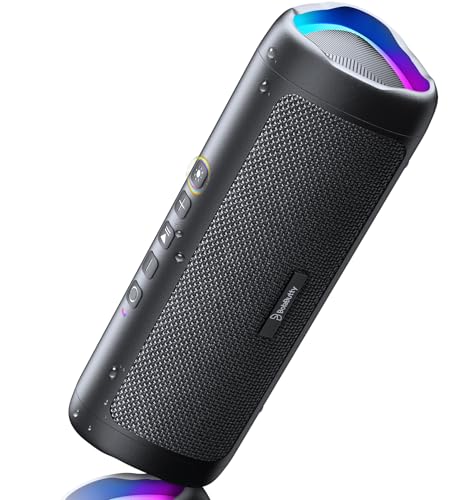
| BolaButty 20W Speaker | Up to 24-hour playtime, TWS pairing, AUX | Budget | |
| Houl Zallee Floating Speaker | IPX7, floats, 90W peak, 32-hour battery, handle | Mid-range | |
| ANCOON 80W Jobsite Speaker | IPX6, shock-resistant, 10000mAh, 20-hour play | Premium | |
How to choose a rugged outdoor speaker
Read the waterproof rating correctly
The IP number is the most important spec, and the last digit is the one that matters for water. IPX4 resists splashes from any direction, fine for a bit of rain but not a dunk. IPX5 handles stronger jets and poolside splashes, covering most campsites. IPX7 is the big step: the speaker survives full submersion in about a meter of water for up to 30 minutes, so a slip into the lake is a shrug rather than a disaster, and some IPX7 models even float. If you will be near open water, aim for IPX7; for a dry-ish campsite or backyard, IPX5 is plenty.
Battery life for multi-day trips
Playtime claims assume moderate volume with the lights off, so take the headline number as a best case. A 15-hour speaker comfortably covers an evening and a morning, while 24 to 32 hours can carry a whole weekend without an outlet, which is the real prize when you are camping off-grid. Turning off beat-synced LEDs and easing the volume stretches runtime a lot. If you camp for several days, prioritize the larger batteries, and note that some double as a power bank to top up a phone.
Loudness and sound in the open air
Outdoors there are no walls to reflect sound, so speakers need more power to fill space. Small units around 15 to 20 watts are great for a tent or a couple of chairs, while 50 to 100 watt peak models with dual drivers and passive radiators throw sound across a campsite with real bass. More power usually means more size and weight, so match the output to your group. Pairing two speakers over TWS for stereo is an easy way to widen the sound without buying one giant unit.
Toughness beyond water
Waterproofing is only part of rugged. Dust, sand, and drops onto rock are the other threats, so look for shock-resistant housings in ABS or metal, sealed ports, and a shape that survives being tossed in a pack. A built-in handle, carabiner, or lanyard makes the speaker easy to hang from a tent, a branch, or a beach umbrella and keeps it off wet ground. Sand-resistant designs that rinse clean are a bonus at the beach.
Connection, range, and extras
Bluetooth 5.0 and later give a stable link out to around 30 to 100 feet, enough to leave your phone at camp while you wander. Handy extras separate these speakers: TWS pairing links two units for stereo, an AUX jack plays from devices without Bluetooth, a built-in mic takes hands-free calls, and LED light shows or lantern modes double as campsite ambiance. Decide which of these you will actually use, since each adds a little cost or drains the battery when running.
Placement and charging on the trail
Where you set a speaker changes how it sounds and how long it survives. Off the ground and up on a rock, a picnic table, or hung from a branch, the sound carries farther and the ports stay clear of mud and puddles, and a hard surface behind the speaker reinforces the bass. For charging, nearly all of these units top up over USB-C, so a single cable and a portable power bank keep them alive across a multi-day trip with no wall outlet in sight. Charge fully before you leave, since a big battery can take a few hours to fill, and store the speaker at a partial charge if it will sit unused for weeks to protect the cells.
CHIFENCHY Portable Waterproof Speaker
The best-selling speaker here wins on portability and price. At just over half a pound and about the size of a soda can, it slips into any bag and hangs from a built-in lanyard on a tent or umbrella. IPX5 waterproofing handles rain, mist, and poolside splashes, and it rinses clean of sand after a beach day, though it is not rated for full submersion. A 15-watt continuous output (20-watt peak) delivers punchy sound for a small group, beat-syncing LED lights set the mood after dark, and up to 15 hours of playtime covers an evening and a morning. Bluetooth 5.3 links quickly, and TWS pairing joins two for 30-watt stereo. For a grab-and-go camp speaker, the value is hard to beat.
Pros
- Ultra-light and compact with a carry lanyard
- IPX5 splash and sand resistance
- Beat-syncing LED light show
- TWS pairing for 30-watt stereo
Cons
- IPX5 only, not rated for submersion
- Small drivers fill a tent, not a big campsite
Best for: backpackers and day-trippers who want a light, affordable speaker that clips anywhere.
Anker Soundcore 2
The Soundcore 2 is the trusted all-rounder, and it steps up the waterproofing to true IPX7, so it survives splashes, waves, and even a brief dunk rather than just spray. Anker’s well-regarded power management squeezes a full 24 hours from its 5,200mAh battery, enough for a long weekend, and dual neodymium drivers with BassUp technology and a spiral bass port deliver surprisingly punchy low end with zero distortion at volume. It skips the light show in favor of a clean, classic design with simple controls, which many campers prefer. Reliable, tough, and long-lasting, it is the safe recommendation for most people heading outdoors.
Pros
- True IPX7, survives a full dunk
- Long 24-hour battery life
- Punchy BassUp low end with no distortion
- Trusted brand with a clean, simple design
Cons
- No LED lights for ambiance
- Modest 12-watt output for very large groups
Best for: campers who want dependable waterproofing and all-weekend battery from a trusted name.
BolaButty 20W Waterproof Speaker
This BolaButty splits the difference between the tiny CHIFENCHY and the big boomboxes, offering 20 watts of well-balanced sound from dual drivers with minimal distortion. IPX5 protection handles splashes, spills, and light rain at the pool, beach, or campsite, and up to 24 hours of playtime (at half volume with the lights off) means a weekend on one charge. Bluetooth 5.3 reaches about 100 feet, TWS links two units for stereo, and the multicolor light show can be switched off to save battery. A built-in mic takes hands-free calls and an AUX jack plays wired sources. It is a versatile, budget-friendly pick that does a bit of everything.
Pros
- Balanced 20-watt dual-driver sound
- Up to 24-hour playtime on a charge
- TWS stereo, AUX input, and hands-free mic
- Lights can switch off to extend battery
Cons
- IPX5 only, no submersion rating
- Top battery figure needs lights off at half volume
Best for: value seekers who want long battery, stereo pairing, and extra inputs.
Houl Zallee Floating Speaker
When you want big sound near water, this Houl Zallee is the standout. It is fully IPX7 waterproof and actually floats, surviving submersion in a meter of water for half an hour, so it is right at home in the pool, on a lake, or in a kayak. Four dedicated drivers, dual tweeters, dual woofers, and dual passive radiators push a hefty 90 watts peak (50 watts RMS) with deep bass and crisp highs, and two can pair for stereo. A 32-hour battery is the longest here, easily covering a multi-day trip, and a rugged ABS-and-metal body with a carry handle takes mud, dust, and bumps in stride. It is the loud, long-lasting choice for groups near water.
Pros
- IPX7 waterproof and floats
- Powerful 90-watt four-driver sound with deep bass
- Longest 32-hour battery in this group
- Rugged build with a carry handle
Cons
- Larger and heavier than compact models
- More speaker than a solo backpacker needs
Best for: groups and water lovers who want loud, floating, all-weekend sound.
ANCOON 80W Jobsite Speaker
Built like a tool, the ANCOON is made to survive the garage, the construction site, and the campsite alike. Its IPX6 rating fends off powerful water jets and it is shock-resistant for rough handling, while an 80-watt peak output with reinforced magnets and deep-bass technology cuts through ambient noise so music stays clear even in a noisy setting. A large 10,000mAh battery runs over 20 hours, six LED light modes add a party atmosphere, and TWS pairing doubles the sound with a second unit. Bluetooth 5.3 keeps the connection stable. For anyone who wants one tough speaker for work and weekends, it delivers volume and durability in equal measure.
Pros
- IPX6 rating with a shock-resistant build
- Loud 80-watt output that cuts through noise
- Large 10000mAh battery for 20-plus hours
- Six light modes and TWS stereo pairing
Cons
- IPX6 resists jets but not full submersion
- Big and heavy for backpacking
Best for: those who want one rugged, loud speaker for both the jobsite and camping.
The verdict
Best Overall: the CHIFENCHY Portable Speaker. As the best-seller it hits the sweet spot for most campers: genuinely pocketable, IPX5 splash-proof, 15 hours of playtime, and a light show, all at a budget price. For grab-and-go trips it is the easy pick.
Best Value: the Anker Soundcore 2. Stepping up to true IPX7 waterproofing and 24-hour battery from a trusted brand, at a modest price, makes it the smartest all-around buy for serious outdoor use.
Best Premium: the Houl Zallee Floating Speaker. IPX7, floating, 90 watts of four-driver sound, and a 32-hour battery make it the loud, long-lasting choice for groups and anyone near water.
Frequently asked questions
What does IPX7 mean versus IPX5? IPX5 resists splashes and jets but not submersion. IPX7 means the speaker survives being underwater in about a meter for up to 30 minutes, so it handles a dunk in the lake or pool that IPX5 would not.
How long do these actually play? Rated playtime assumes moderate volume with lights off, from around 15 hours on the compact models to 32 hours on the biggest battery. Loud volume and running LEDs shorten that, so expect real-world figures a bit below the headline.
Are they loud enough for a campsite? Small 15 to 20 watt speakers suit a tent or a few chairs, while 80 to 90 watt peak models fill a whole campsite with bass. Pairing two speakers over TWS widens the sound for a larger group.
Can I use one speaker to charge my phone? Some larger models with big batteries double as a power bank, letting you top up a phone off-grid. Check the spec, since compact speakers usually keep all their charge for playback.
Will a floating speaker really survive the lake? An IPX7 floating model is designed for exactly that, staying at the surface and surviving brief submersion. Still rinse and dry it after use in salt or sandy water to keep the ports clean.
This article may contain affiliate links; see our Affiliate Disclosure.