Read the front of any cheap sleeping bag and you will find the words cold weather. Read the temperature rating on the same listing and you will usually find something like 50 degrees F. Both statements are printed on the same product. Understanding why is most of what you need to buy a good budget bag, and it is the difference between a lovely night and a miserable one.


The good news is that car camping is the forgiving case. You are not counting grams, you can bring a blanket, and a thick pad under you does more for warmth than another twenty on the bag. Every pick below is a synthetic three-season bag, machine washable, with a compression sack, and every one of them will serve you well in the conditions it is plainly rated for.
At a glance
| Product | Standout feature | Price tier | Link |
|---|---|---|---|
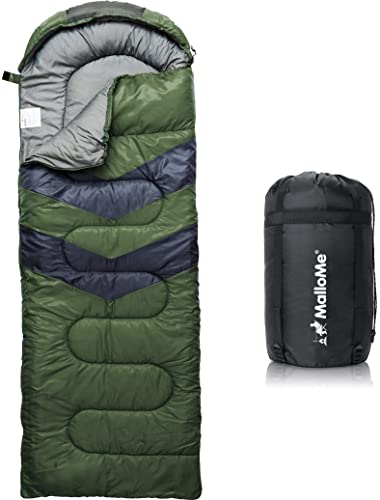
| MalloMe Sleeping Bag | Rated 50 degrees F to 77 degrees F, fits a 6ft adult, about 3lbs, wipe-clean shell | Mid-range | |
| PTEROMY Sleeping Bag | Published comfort and limit ranges; inner pocket; 1.35kg | Budget | |
| JEAOUIA Sleeping Bag | Foot zipper to vent your feet without opening the bag | Budget | |
| SOULOUT 3-4 Season Bag | Thickest insulation here; roomy envelope cut; water-resistant shell | Premium | |
| Elevon Sleeping Bag | Cheapest here; dual zipper sliders; 210T waterproof shell | Budget | |
How to choose a budget sleeping bag
Comfort rating and limit rating are different promises
This is the part worth reading twice. A comfort rating is the temperature at which a typical sleeper will actually be comfortable. A limit rating is roughly where a sleeper will survive the night curled up and not enjoying it. PTEROMY publishes both, quoting a comfort range of 50 degrees F to 80 degrees F and a recommended limit of 40 degrees F to 90 degrees F, which is unusually real for this price. When a bag advertises cold weather and rates 50 degrees F comfort, both are technically true and only one is useful. Budget bags are three-season bags. Plan around the comfort figure and take everything below it as marketing.
The pad matters more than the bag
The most useful thing to know about sleeping warm, and it is not on any of these listings. Insulation works by trapping air, and the insulation underneath you is crushed flat by your own body weight, so it does almost nothing. Cold comes up from the ground. A decent insulated sleeping pad will do more for a cold night than upgrading from any bag here to any other, and for car camping there is no reason not to have one. Buy the cheap bag and a good pad rather than the reverse.
Envelope or mummy shape
These are rectangular envelope bags, and for car camping that is the right choice. They give room to roll over, they unzip flat into a quilt on a warm night, and two of the same model usually zip together into a double. Mummy bags are warmer for their weight because there is less air to heat, but they are restrictive and that matters more when you are not carrying the thing. SOULOUT sells its generous envelope cut as a feature, and for a car camper it genuinely is.
Synthetic fill, and why it is right here
Every bag here uses a hollow synthetic fiber fill rather than down, and for this use that is the better answer regardless of price. Synthetic keeps insulating when damp, which matters in a tent full of condensation, it costs a fraction of down, and it goes in a washing machine, which every maker here mentions. Down is lighter and packs smaller and is the reason serious backpackers pay for it. For car camping the advantages barely register.
The details that decide the night
A drawstring hood is the single most effective feature at the cold end, because a lot of heat leaves through your head, and JEAOUIA and PTEROMY both call it out. A foot zipper, on the JEAOUIA, lets you vent your feet without opening the whole bag, which sounds trivial until you are too warm at 2am and too lazy to fix it properly. A two-way zipper does something similar. And an inner pocket, on the PTEROMY, keeps a phone from ending up under your hip.
Size and packed size
Check the length against the tallest person using it. MalloMe and Elevon both fit a 6ft adult; JEAOUIA is fair that it suits campers up to 5 feet 11. A bag you do not fit in is a bag with cold spots. Packed size matters less in a car, but it is still worth knowing: the YANLIFY-style bags compress to around 39 by 26 by 10cm, and everything here includes a compression sack.
MalloMe Sleeping Bag
One of the highest-selling sleeping bags anywhere, and it is straightforward about what it is: temperature rated 50 degrees F to 77 degrees F, which makes it a spring, summer, and autumn bag and a lovely one. It fits a 6ft adult and weighs around 3lbs, light enough that it also does duty for hiking and backpacking without being a specialist. The waterproof outer shell wipes clean with a damp cloth, which is the feature you appreciate the first time a bag meets a muddy tent floor, and it machine washes when that is not enough. The same model covers adults, kids, and teenagers, so a family can buy matching bags that zip together or stack in the boot.
Pros
- Fair, clearly published 50 degrees F to 77 degrees F rating
- Fits a 6ft adult at around 3lbs
- Waterproof shell wipes clean; machine washable for the rest
- Light enough to double for backpacking
- Enormously popular, so spares and matching bags are easy
Cons
- Not a cold weather bag despite the listing’s wording
- Costs more than several bags here without more insulation
Best for: the default pick for car camping from spring through autumn, and families buying several.
PTEROMY Sleeping Bag
The one that tells you the truth, which at this price is worth a lot. It publishes a comfort range of 50 degrees F to 80 degrees F and separately a recommended limit of 40 degrees F to 90 degrees F, so you know both where you will sleep well and where you will merely survive. Almost nothing else in this bracket separates the two. Construction backs it up: double S-shaped stitching to stop the fill migrating into cold spots, hollowfiber filling, and a shell that is both water-resistant and windproof, with a spun cotton inner that feels better against skin than slick polyester. Thoughtful touches run through it, with an adjustable drawstring for head and neck and an inner Velcro pocket for a phone. At 1.35kg with a compression bag, it is the lightest here.
Pros
- Publishes both comfort and limit ratings; rare clarity at this price
- Lightest here at 1.35kg, with a compression bag included
- Double S-shaped stitching resists fill migration and cold spots
- Windproof as well as water-resistant
- Drawstring hood and an inner Velcro pocket
Cons
- The 40 degrees F limit is survival, not comfort; do not plan around it
- Spun cotton inner takes longer to dry than polyester if it gets wet
Best for: anyone who wants to know what they are actually buying, and the best all-round value here.
JEAOUIA Sleeping Bag
The design detail here is the zipper at the foot, and it is more useful than it sounds. Being slightly too warm is the commonest complaint on a summer night, and the usual fix is unzipping the side, which then lets a draft along your whole body. Opening your feet instead vents heat from exactly where it builds up and leaves the rest of you covered. Beyond that it is a well-judged three-season bag: a polyester shell that is waterproof and breathable, a drawstring hood to keep your head warm, and a pack weight of 3.3lbs compressing to between 7.9 and 14.2 inches. It measures 31.5 by 86.6 inches and JEAOUIA states plainly that it fits campers up to 5 feet 11, which is the kind of specificity worth rewarding.
Pros
- Foot zipper vents heat without opening the whole bag
- Drawstring hood for the cold end of the range
- Waterproof, breathable polyester shell
- Real about the height it fits
- Compresses small for the price
Cons
- Too short for anyone over about 5 feet 11
- No published comfort and limit ratings
Best for: warm-natured sleepers and summer camping, if you are under six feet.
SOULOUT 3-4 Season Sleeping Bag
The warmest pick here, and the one to take if your camping runs into the shoulder seasons. It is filled with high-loft insulation rather than the thinner fill in the summer bags, and loft is what actually holds warmth, so it works through spring, autumn, and cooler summer nights rather than tapping out the moment the temperature drops. The envelope is generously sized for adults and teenagers, giving genuine room to roll over, which is exactly what you want when you are not carrying it anywhere. A durable water-resistant outer repels light rain, moisture, and the morning dew that soaks a bag left near a tent door, and the interior is lined with a soft, skin-friendly fabric. The compression sack is waterproof, which the cheaper bags do not bother with.
Pros
- Thickest, highest-loft insulation here: genuinely warmer
- Rated across three to four seasons rather than summer only
- Roomy envelope cut for adults and teenagers
- Waterproof compression sack, not just a stuff sack
- Soft lining rather than slick polyester
Cons
- Most expensive pick here
- More insulation means more bulk; a poor backpacking choice
Best for: shoulder season car camping and anyone who sleeps cold.
Elevon Sleeping Bag
The cheapest bag here and a perfectly sound one. A waterproof 210T polyester outer wraps a highly elastic hollow fiber fill, it weighs about 3lbs, and at 31.5 by 86.6 inches it fits a 6ft adult, which several pricier bags do not. The feature worth noting is the dual zipper slider: you can open the bag from either end or from anywhere in the middle, which means venting from the top or the bottom, getting in without wrestling, and adjusting airflow at 3am without sitting up. It suits adults, teenagers, and children, and folds compactly into the supplied carry bag. At this price, buying several for a family is not really a decision.
Pros
- Cheapest here, and still fits a 6ft adult
- Dual zipper sliders: vent or enter from any position
- Waterproof 210T polyester outer
- About 3lbs, with a carry bag included
- Cheap enough to buy several for a family
Cons
- No published temperature rating of any kind
- Least insulation here; a warm weather bag in practice
Best for: a spare bag, a guest bag, kids, or a first bag for occasional summer trips.
The verdict
Best Overall: MalloMe Sleeping Bag. By a wide margin the most popular bag here, and deservedly. It publishes its 50 degrees F to 77 degrees F rating rather than hiding behind cold weather wording, fits a 6ft adult at 3lbs, wipes clean, and machine washes. For car camping from spring to autumn it is exactly enough bag and no more, which is the right answer.
Best Value: PTEROMY Sleeping Bag. Cheaper than the MalloMe, lighter at 1.35kg, and the only bag here that publishes both a comfort and a limit rating. Add double stitching against cold spots, a windproof shell, a drawstring hood, and an inner pocket, and it is arguably the smartest buy on this list.
Best Premium: SOULOUT 3-4 Season Sleeping Bag. The one with real loft, and the only pick that will follow you into the shoulder seasons. Take it if you camp beyond summer or sleep cold.
Two notes. If you run warm, the JEAOUIA’s foot zipper is worth more than any rating on this page. And whatever you buy, spend the difference on an insulated sleeping pad; it will keep you warmer than any upgrade here.
Frequently asked questions
Why do cheap bags say cold weather but rate 50 degrees F?
Because both are on the box and only one is measured. Cold weather is a description; the temperature range is a specification. When you see 50 degrees F comfort, that is a three-season bag whatever the title says. The real ones, like PTEROMY, publish a comfort range and a separate limit, and the limit is where you survive rather than sleep. Buy for the comfort number.
What temperature rating do I need for car camping?
For spring through autumn in most places, a bag rated around 50 degrees F comfort is genuinely enough, which covers everything here. If you camp in the shoulder seasons or sleep cold, take the SOULOUT’s higher loft. And remember car camping means you can throw a blanket on top, which is the cheapest warmth upgrade there is.
Down or synthetic?
Synthetic, for this use, and every bag here is. It keeps insulating when damp, which matters in a condensation-soaked tent, it survives a washing machine, and it costs a fraction of down. Down is lighter and packs smaller, which is why backpackers pay for it. Carrying a bag ten feet from a boot makes those advantages irrelevant.
How do I stay warmer without buying a warmer bag?
Put an insulated pad underneath you. The fill under your body is crushed flat by your weight and insulates almost nothing, so cold comes up from the ground no matter what you paid for the bag. A pad, a hat, and dry clothes to sleep in will beat spending twice as much on a bag, and a drawstring hood pulled closed does more than most people expect.
Can I wash these?
Yes, and every maker here says so. MalloMe suggests wiping the waterproof shell with a damp cloth for ordinary dirt and machine washing when it is worse. Wash on a gentle cycle, and the important part is drying it fully before storage, since synthetic fill that gets stored damp will smell and lose loft. Store it loose rather than compressed in its sack.
This article may contain affiliate links; see our Affiliate Disclosure.