A full-size shop vac is a wonderful thing right up to the moment you need to get under a car seat, up a stepladder, or into the cupboard where it lives. Most household messes are a cup of sawdust or a spilled drink, and hauling a fifty-pound drum across the garage to deal with either one is how a vacuum ends up unused behind the lawnmower.


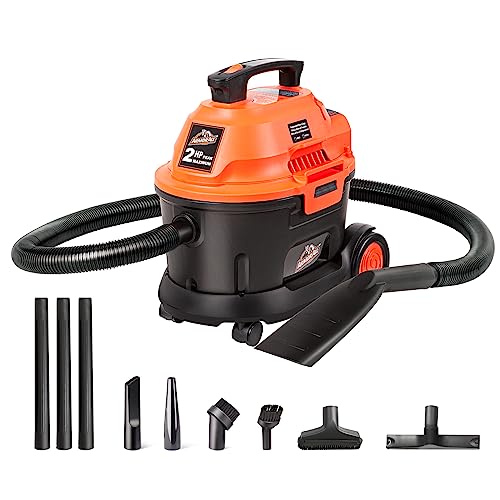

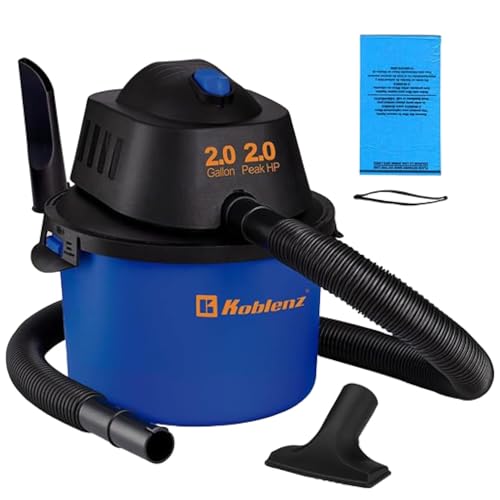
Small wet-dry vacs live in the 1.5 to 2.5 gallon range, weigh less than a bag of groceries, and earn their place by being grabbed rather than dragged. The ones below suit car interiors, workshop benches, kitchen spills and the awkward corners a full-size machine cannot reach. What separates a good one is fair airflow, a hose that stays connected, and somewhere sensible for the attachments to live.
At a glance
| Product | Standout feature | Price tier | Link |
|---|---|---|---|
| CRAFTSMAN CMXEVBE17250 2.5 Gallon Wet Dry Vac | 2.5 peak HP, blower mode, filter bag and tools included | Mid-range | |
| Armor All AA155 1.5-Gallon Wet/Dry Vacuum | Smallest and lightest; wall mountable; onboard tool storage | Budget | |
| Armor All AA255W 2.5 Gallon Utility Vac | 13 accessories, 12 ft cord, 6 ft hose, wheeled base | Premium | |
| Vacmaster VOM205P 2.5-Gallon Wet/Dry Vacuum | 6 lbs, wall mountable, 100 air watt motor | Mid-range | |
| Koblenz WD-2L 2 Gallon Wet Dry Vacuum | 60 CFM airflow, Twist-N-Lock hose, five-year warranty | Budget | |
How to choose a small shop vac
Peak horsepower is a marketing number
Every one of these machines advertises two or two and a half peak horsepower, and none of them draws anything close to that from a household socket in normal use. Peak HP describes a brief burst at motor stall, not what happens when you are picking up drywall dust. It is a useful rough sorting signal between a toy and a real vacuum, and nothing more. The numbers that describe actual cleaning are airflow, measured in CFM, and sealed suction, measured in inches of water lift. Airflow moves light debris along the hose; water lift is what pulls a heavy chip or a puddle up in the first place. Manufacturers publish these far less often than horsepower, which tells you something.
Match the tank to your actual mess
The gap between 1.5 and 2.5 gallons sounds trivial and is not. A 1.5-gallon tank is a genuine grab-and-go tool for a car footwell or a single spill, and you will empty it more than you expect once real debris is involved. A 2.5-gallon tank handles a bench full of sawdust or a wet floor without three trips to the bin, at the cost of being noticeably larger on a shelf. Wet pickup shrinks the useful capacity further, since you cannot fill a tank to the brim with liquid and still carry it.
Wet pickup has rules
This is where small vacs get killed. Sucking water through a dry paper filter or a filter bag ruins it and can send fine spray through the motor. Every wet-dry vac expects you to remove the paper element or fit the foam sleeve before liquids, and to empty and dry the tank afterwards. It takes a minute. Skipping it is the single most common reason a cheap vac loses suction and starts smelling. Check the machine you are buying actually includes the wet filter rather than selling it separately.
Reach is hose plus cord, not hose alone
A four-foot hose sounds fine until the socket is behind you. Total reach is what matters: hose length plus power cord decides how often you unplug and reposition. That ranges widely here, from a six-foot cord with a four-foot hose at the compact end to a twelve-foot cord with a six-foot hose at the top. If you clean cars in a driveway, reach is the difference between doing the whole interior from one spot and shuffling the unit around the car four times.
The hose connection you will fight or thank
Cheap vacs use a friction-fit hose that pushes into the port. It works, and it also pops off when you tug the hose from under a seat. A locking collar, where the hose twists and latches, costs a little more and stays put. Standard 1-1/4 inch accessories are the small-vac norm and they are easy to replace or add to; the narrower bore keeps air speed high, which is exactly what you want for crevices, though it will clog on wood offcuts and leaves.
Where it lives when you are done
A small vac gets used in proportion to how easy it is to grab. Wall mounting gets it off the floor and keeps the hose from becoming a pile. Onboard storage for the crevice tool and nozzles matters more than it sounds, because loose attachments migrate into drawers and vanish. Cord wrap is the third piece of the same idea. Nearly every model here also converts to a blower, which is a genuinely useful trick for clearing a garage floor or a windshield without a second machine.
CRAFTSMAN CMXEVBE17250 2.5 Gallon Wet Dry Vac
The clear best seller of the group, and it is easy to see why: it takes the 2.5-gallon size that suits most jobs, keeps the weight low enough to carry one-handed, and asks the mid-range price rather than the premium one. The rated 2.5 peak HP is the highest here, it converts to a blower, and it comes with a five-foot friction-fit hose, crevice tool, utility nozzle and a filter bag in the box. The 1-1/4 inch accessory standard means replacements and extras are easy to find. A carry handle and cord wrap keep it tidy on a shelf.
- Pros: Strongest peak HP rating in this group; 2.5-gallon tank suits both small spills and bench cleanup; blower conversion; filter bag, crevice tool, utility nozzle and hose included; standard 1-1/4 in fittings; carry handle and cord wrap for storage.
- Cons: Five-foot hose is mid-length, so you will move it around a car; friction-fit hose can pull loose under tension; not compatible with the brand’s car cleaning kit.
Best for: The default choice for a home, garage or workshop that needs one small vac to do everything.
Armor All AA155 1.5-Gallon Portable Wet/Dry Vacuum
The smallest tank here, which is the entire point. This is the vac you keep by the back door or bolted to a garage wall for the mess that has just happened, rather than the one you plan a Saturday around. Two peak HP through a tough polypropylene tank handles wet and dry, it converts to a blower, and the balanced top handle means it hangs comfortably from one hand while the other holds the hose. Six accessories come along and store on the powerhead itself, so nothing wanders off.
- Pros: Lowest price and smallest footprint; wall mountable; blower capable; attachments store on the powerhead; durable polypropylene tank; genuinely one-handed to carry and use.
- Cons: 1.5-gallon tank fills fast on real debris; the 6 ft cord and 4 ft hose give the shortest reach of the group; fewer accessories than the bigger models.
Best for: Cars, boats and apartments, or as a second vac that lives where the mess happens.
Armor All AA255W 2.5 Gallon Wet/Dry Utility Vac
The kit is what you are paying for. Thirteen accessories arrive with this one, including three extension wands, a deluxe car nozzle, a detail brush, a round dust brush, a floor brush and squeegee head, a crevice tool, a blower adapter, and both the reusable cloth filter and the foam wet filter. That last pair matters: the wet filter is in the box rather than an extra purchase. A twelve-foot cord and a six-foot hose give roughly eighteen feet of working reach, so a whole car interior is one setup. It rides on a wheeled base and still has a top handle for stairs.
- Pros: 13 accessories including three wands and a car nozzle; both cloth dry filter and foam wet filter included; longest reach here at 12 ft cord plus 6 ft hose; wheeled base plus carry handle; onboard hose, cord and nozzle storage; blower conversion.
- Cons: Premium price for a 2.5-gallon machine; 2 peak HP is below the CRAFTSMAN despite costing more; the wheeled base adds bulk on a shelf.
Best for: Detailing cars properly, and anyone who would rather buy the tools once than accumulate them.
Vacmaster VOM205P 2.5-Gallon Wall Mountable Wet/Dry Vacuum
Six pounds, and that number does most of the arguing. It is the only vac here that quotes a real airflow figure rather than hiding behind horsepower alone: a 100 air watt motor, on a 2.5-gallon tank, with fourteen feet of combined hose and cord reach. It mounts on a wall to free the floor, carries six accessories including a crevice tool on board, and converts to a blower. For a workshop where the vac needs to hang above the bench and come down one-handed, the weight and the mount are the whole story.
- Pros: Lightest here at 6 lbs; wall mountable to free floor space; publishes a real 100 air watt motor rating; 14 ft of cleaning reach; onboard hose, cord and accessory storage; blower conversion; balanced top handle.
- Cons: Six accessories is a modest kit next to the AA255W; no wheels, so it is carried rather than rolled; 2 peak HP rather than 2.5.
Best for: Garage and workshop walls, ladders, and anyone who cleans above waist height.
Koblenz WD-2L 2 Gallon Wet Dry Vacuum
Two details lift this above its price. The first is the Twist-N-Lock hose, which latches into the port instead of relying on friction, so it does not part company with the machine when you drag it out from under a seat. The second is the five-year warranty, from a long-established appliance maker rather than a name that appeared last week. Between them sits a 2.0 peak HP motor moving a published 60 CFM through a 2-gallon polypropylene tank, with ten feet of reach, a crevice tool, utility nozzle and filter bag, and hooks and compartments to store all of it on the unit. A rear port turns it into a blower.
- Pros: Locking hose that stays connected; publishes 60 CFM airflow rather than horsepower alone; five-year warranty; 2-gallon tank sized between grab-and-go and bench work; everything stores on board; blower mode via rear port; fits on a shelf or in a boot.
- Cons: 4 ft hose means the 10 ft reach comes mostly from the cord; 2-gallon tank splits the difference and may not satisfy either extreme; smaller accessory set.
Best for: Car interiors and kitchen spills where a hose popping off mid-job is the thing you want to avoid.
The verdict
Best overall: the CRAFTSMAN CMXEVBE17250. It is far and away the strongest seller here, and the specification backs the popularity: the highest peak HP rating of the group, the more useful 2.5-gallon tank, blower conversion, a full starter kit of tools, and standard fittings, all at a mid-range price rather than a premium one.
Best value: the Koblenz WD-2L. A locking hose, a published airflow figure and a five-year warranty are three things the budget tier usually withholds. The Armor All AA155 takes the value slot instead if absolute smallness is the priority.
Best premium: the Armor All AA255W, for the thirteen-piece kit, the wet filter included, and the longest reach in the group. The Vacmaster VOM205P is the pick if it needs to hang on a wall and weigh nothing.
Frequently asked questions
Can these really pick up water?
Yes, within reason. All of them are rated for wet pickup, which means liquid goes into the tank rather than through the motor. Remove the paper filter or filter bag first and fit the foam sleeve if one is supplied. A couple of gallons of tank is a modest puddle, not a flooded basement, and you should empty and dry the tank before it goes back on the shelf.
Why does my vac lose suction after a while?
Usually a clogged filter, and occasionally a full tank tripping the float. Fine dust blinds a filter faster than anything else, so tap it out or wash it as the instructions allow. After that, check the hose for a blockage and the seal between the powerhead and the tank. Suction loss on a healthy small vac is nearly always one of those three.
Do I need filter bags, or is the filter enough?
The filter alone is enough for chips and general debris. Bags earn their keep with fine dust such as drywall or ash, where they stop the powder from blinding the filter and let you lift the whole mess out without a cloud when you empty it. For wet work, no bag.
Is one of these enough for a woodshop?
For a bench, a mitre saw and general tidying, yes. For a dust extraction system plumbed to a table saw or a planer, no. Small vacs have narrow hoses and small tanks by design, and a machine throwing continuous shavings will fill one in minutes. Many people run a small vac for cleanup alongside a larger extractor for the big tools.
How loud are they?
Loud. Small wet-dry vacs use high-speed motors with little sound insulation, and the compact ones are often shriller than a full-size drum because there is less body to absorb it. For extended sessions, ear protection is a reasonable idea, the same as any power tool.
This article may contain affiliate links; see our Affiliate Disclosure.