The all-in-one hub this page is looking for does not exist on it. One product here speaks Z-Wave. Everything else speaks Thread. Nothing speaks both. That is not a gap in the roundup, it is the actual state of the market, and it means the first question is not which hub is best but which of two ecosystems you are joining.



A hub exists to translate. Your devices talk Zigbee, Thread or Z-Wave, which are radio protocols that phones cannot hear, and the hub turns them into something Matter understands so Alexa, Siri, Google and SmartThings can all see the same light switch. Which radios a hub has is therefore the entire specification.
At a glance
| Hub | Standout feature | Price tier | Link |
|---|---|---|---|
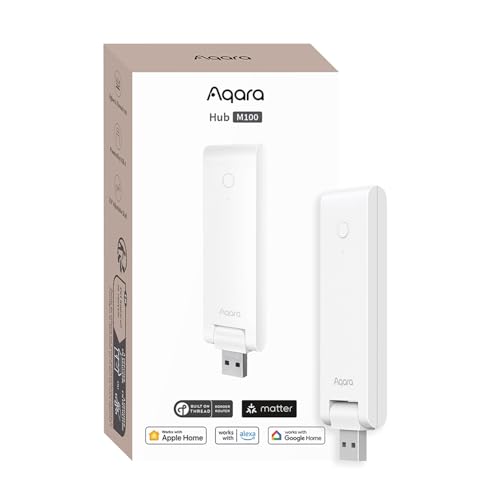
| Aqara M100 | Cheapest here; runs off a USB-A port | Budget | |
| Jinvocloud Wired | States its limits in its own first line | Budget | |
| Aqara M200 | IR blaster and Power over Ethernet | Mid-range | |
| Zemismart M1 Pro | Automations keep running with the internet down | Mid-range | |
| Tuya Hub M | Brings an existing Tuya setup into Matter | Mid-range | |
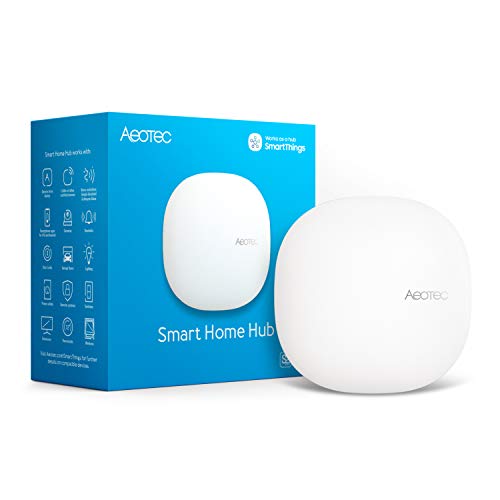
| Aeotec Smart Home Hub | The only Z-Wave hub here; the best seller | Premium | |
| Aqara M3 | Local edge automation; the flagship here | Premium | |
How to choose a smart home hub
Z-Wave and Thread are a fork in the road
This is the decision everything else follows from. Aeotec is the only hub here that speaks Z-Wave, which is the protocol behind a great many door locks, sensors and older devices, and it does Zigbee and Matter alongside it. Every other hub on this page is a Thread border router with Zigbee, and none of them mentions Z-Wave at all. So if you already own Z-Wave hardware, or you are buying a Z-Wave lock, this page has exactly one answer. If you are starting fresh, Thread is the newer path and the rest of this list opens up.
Matter is a language, not a radio
Worth understanding because the marketing blurs it. Matter is the standard that lets your devices appear in Alexa, Apple Home, Google and SmartThings without a separate app for each brand. It does not travel through walls by itself. Thread, Zigbee and Z-Wave are the radios that do. That is why every hub here calls itself a Matter controller and then lists which radios it actually has. A Matter bridge is the hub translating its own radio devices into Matter so other platforms can see them.
A hub is what makes devices work when the internet does not
The strongest argument for buying a hub at all is local control, and three brands here make it directly. Zemismart says it plainly: automations keep running when the internet goes down, because the hub executes them itself. Aqara calls the M3 an edge hub and prioritizes local control for the same reason. Aqara’s M100 supports local execution for Zigbee and Matter devices. Without that, a broadband outage means your lights stop responding to your motion sensor, which is the moment people discover what they actually bought.
An IR blaster reaches what Matter cannot
Your air conditioner and your television almost certainly do not speak Zigbee, Thread or anything else on this page. They speak infrared, the same as their remotes. The Aqara M3, the M200 and the Zemismart all build in a 360 degree IR blaster, and the Aqara units go further with feedback and learning, meaning the hub knows what state the appliance is actually in rather than just firing a command and hoping. That is the difference between an automation you trust and one you check.
Read the notes, because two brands wrote good ones
Jinvocloud opens its listing with a note rather than a boast: this product does not support devices with WiFi and Bluetooth protocols, and the Type-C port is for power only. That is an unusual and useful thing to lead with, and it saves somebody an unpleasant discovery. It is also the sort of limitation that tells you what a hub really is. Where a listing is vague about which protocols it speaks, assume it speaks fewer than you hoped.
Wired beats wireless for the thing everything depends on
A hub is the single point everything routes through, so it is the worst device in the house to leave on a marginal Wi-Fi signal. Aeotec supports both Ethernet and Wi-Fi. The Aqara M200 goes further with Power over Ethernet, so one cable carries both data and power and the hub can live where the signal is good rather than where a socket is. The M3 offers wired and wireless too. The M100 is the outlier, running from a USB-A port on a power bank, a wall adapter or a router.
Aqara M100
The cheapest way into a proper hub, and it is not a cut-down one. It is a Matter controller and a Thread border router with Aqara Zigbee support, which is the same core as its expensive stablemates, and it supports local execution of automations for Zigbee and Matter devices so your lights still answer your sensors when the broadband drops. The Matter bridging brings Aqara’s own features across. The clever part is the power: a universal USB-A port, so it runs from a power bank, a wall plug, or the spare port on your router, and lives wherever the signal is best.
Pros:
- Cheapest hub here by a wide margin
- Matter controller and Thread border router, like the flagships
- Local automation for Zigbee and Matter devices
- Runs from any USB-A port, including a router or power bank
Cons:
- No Z-Wave
- No IR blaster and no Ethernet
- Depends on Wi-Fi for a device everything routes through
Best for: a first hub, on a spare USB port, for very little.
Jinvocloud Wired
The most accurate listing on the page, opening with what it will not do: no support for devices using WiFi or Bluetooth protocols, and the Type-C port is for power only. Knowing that before you order is worth more than another bullet point. What it does do is Thread and Zigbee 3.0 into Matter over a wired connection, with a built-in Zigbee transmitter Jinvocloud says gives better signal penetration through walls. Cross-platform support lets Tuya Zigbee-standard devices run on third-party platforms, which is the point of a bridge. It is a focused tool, described accurately.
Pros:
- Leads with its limitations rather than burying them
- Thread and Zigbee 3.0 bridged into Matter
- Built-in Zigbee transmitter for wall penetration
- Wired, which is right for a hub everything depends on
Cons:
- No WiFi or Bluetooth device support, by its own statement
- No Z-Wave and no IR blaster
- Barely sells; an unknown brand
Best for: a wired Zigbee and Thread bridge, with no surprises.
Aqara M200
The sensible middle of Aqara’s range, and it fixes the one thing the cheap hub cannot. Power over Ethernet means a single cable carries data and electricity, so the hub goes where the network is strong instead of where a socket happens to be, which on the device your whole house routes through is the right priority. Dual-band Wi-Fi across 2.4 and 5 GHz is there as the alternative. It is a Matter controller and Thread border router with Aqara Zigbee, and it adds the 360 degree IR blaster with feedback and learning, so your air conditioner joins the system.
Pros:
- Power over Ethernet; one cable for data and power
- 360 degree IR blaster with feedback and learning
- Matter controller, Thread border router and Aqara Zigbee
- Dual-band Wi-Fi as a fallback
Cons:
- No Z-Wave
- Costs more than double the M100 for IR and Ethernet
- Sells modestly
Best for: a wired hub with the air conditioning brought in.
Zemismart M1 Pro
The clearest statement of what a hub is for: automations keep running when the internet goes down, because the M1 Pro executes them locally rather than asking a server in another country whether your hallway light should come on. That single sentence is the real case for owning one of these at all. It brings Zigbee and Thread together under Matter with a Tuya Zigbee radio, adds a 360 degree IR blaster for the appliances that only speak infrared, and offers dual-band Wi-Fi alongside a 100 Mbps Ethernet port. Sensible, complete, and almost unknown.
Pros:
- Runs all automations locally; survives an internet outage
- 360 degree IR blaster built in
- Zigbee and Thread bridged to Matter
- Dual-band Wi-Fi plus a 100 Mbps Ethernet port
Cons:
- No Z-Wave
- Effectively no sales; a little-known brand
- Tuya Zigbee, so it suits that ecosystem best
Best for: automations that do not care whether the broadband is up.
Tuya Hub M
Aimed squarely at people who already own a pile of Tuya and Smart Life devices and want them to appear in Apple Home or Alexa without an app each. It is a standard Matter gateway supporting Thread border routing, with both bridging and controller functions, so Tuya Zigbee and Bluetooth devices come into Matter and standard Matter over Thread devices can join. Colorpanda describes it as an upgrade to an existing Tuya hub, improving connection stability, which is a specific and modest claim. Wired or dual-band Wi-Fi across 2.4 and 5 GHz.
Pros:
- Brings an existing Tuya or Smart Life setup into Matter
- Both bridge and controller functions
- Thread border router with standard Matter support
- Wired or dual-band Wi-Fi
Cons:
- No Z-Wave
- Little point unless you own Tuya devices
- Sells very poorly
Best for: a Tuya house that needs to talk to everything else.
Aeotec Smart Home Hub
The best-selling hub here and the only one on this page that speaks Z-Wave, which makes it a category of one rather than a competitor. Z-Wave is the protocol behind a great many door locks and sensors, and if you own any, nothing else here can hear them. It works as a SmartThings hub, doing Zigbee and acting as a Matter gateway alongside, so thousands of devices from major brands connect and automate through the SmartThings app on Android, iOS or iPadOS, with the popular voice assistants supported. Setup takes minutes over Wi-Fi or Ethernet.
Pros:
- The only Z-Wave hub here; the best-selling hub too
- Z-Wave, Zigbee and Matter gateway together
- Works as a SmartThings hub with a mature app
- Wi-Fi or Ethernet setup in minutes
Cons:
- Does not claim to be a Thread border router
- No IR blaster
- Ties you to the SmartThings platform
Best for: anyone who owns Z-Wave, which nothing else here reaches.
Aqara M3
Aqara’s flagship, and it does everything the range does at once. It is a Matter controller and Thread border router with Aqara Zigbee, bridged so other platforms see the lot. It is an edge hub, which is Aqara’s term for executing automations on the device rather than in the cloud, so the house keeps working during an outage. The 360 degree IR blaster has feedback and learning, so it knows the actual state of your air conditioner rather than guessing. Wired and wireless connectivity both. It is the most expensive thing here and the most complete Thread-side hub.
Pros:
- Edge hub; local automation without the cloud
- 360 degree IR blaster with state feedback and learning
- Matter controller, Thread border router and Zigbee
- Wired and wireless connectivity
Cons:
- The most expensive hub here; over five times the M100
- No Z-Wave
- Sells behind the Aeotec despite the specification
Best for: a Thread and Zigbee house that must work offline.
The verdict
Answer the protocol question first, because it decides the rest. If you own Z-Wave devices, this page has one hub. If you are on Thread and Zigbee, you have six, and the differences come down to local control, IR and how it connects.
Best overall: Aeotec Smart Home Hub. The best-selling hub here and the only one that speaks Z-Wave, which puts it in a class of one for anybody with a Z-Wave lock or sensor. It handles Zigbee and acts as a Matter gateway alongside, so thousands of devices land in a single mature app with the major voice assistants supported, and it sets up over Wi-Fi or Ethernet in minutes. It does not claim Thread border routing, which is the trade.
Best value: Aqara M100. The cheapest hub on this page and not a token one: a Matter controller and Thread border router with Zigbee, and local automation so the lights still answer the sensors when the broadband drops. It powers from any USB-A port, which means it can live on your router where the signal is best rather than tethered to a wall socket. No Z-Wave, no IR, no Ethernet.
Best premium: Aqara M3. The most complete hub on the Thread side. It runs automations locally as an edge hub, so an internet outage does not stop your house working, and its 360 degree IR blaster has feedback and learning, meaning it knows what your air conditioner is actually doing rather than firing commands blind. Wired and wireless both. It costs over five times the M100 and it is the one that needs the least babysitting.
FAQ
Can one hub do Matter, Thread, Zigbee and Z-Wave?
Not on this page. Aeotec does Z-Wave, Zigbee and Matter but does not claim Thread. Every other hub here does Thread, Zigbee and Matter and none mentions Z-Wave. Decide which side you are on before you shop, because your existing devices have already decided for you.
What is Matter, exactly?
A language, not a radio. It lets devices appear in Alexa, Apple Home, Google and SmartThings without a separate app each. It does not travel through walls; Thread, Zigbee and Z-Wave do. That is why every hub here calls itself a Matter controller and then lists which radios it actually carries.
Why do I need a hub at all?
So the house works when the internet does not. Zemismart says it directly: automations keep running during an outage because the hub executes them itself. Aqara calls the same thing edge or local automation. Without it, a broadband problem means your motion sensor stops turning on your lights.
What does the IR blaster do?
Reaches your air conditioner and television, which speak infrared and nothing else on this list. The Aqara M3 and M200 and the Zemismart all have a 360 degree blaster, and the Aqara units add feedback and learning so the hub knows the appliance’s real state rather than assuming.
Should the hub be wired?
Ideally, since everything routes through it and marginal Wi-Fi is the last thing it needs. Aeotec takes Ethernet or Wi-Fi, the Aqara M200 supports Power over Ethernet so one cable does both, and the Jinvocloud is wired by design. The M100 is USB-powered and Wi-Fi only.
This article may contain affiliate links; see our Affiliate Disclosure.