Most of the bivy sacks on this page are emergency blankets sewn into a bag shape, and that is a completely different object from a shelter you sleep in. Mylar keeps your body heat in by not letting anything through, which is exactly why it saves lives in a crisis and exactly why you wake up wet in it. One product here publishes the number that separates the two.





A real bivy is a waterproof breathable shell over your sleeping bag: rain stays out, your body’s moisture gets out. An emergency bivy is a sealed foil bag that does the first job brilliantly and the second not at all. Both belong in a pack. Only one of them is a shelter.
At a glance
| Bivy | Standout feature | Price tier | Link |
|---|---|---|---|
| Sierra Madre Emergency | Cheapest here; 6 ounces of mylar | Budget | |
| Leberna 2-Pack | Best seller here; two bags, 84 inches long | Budget | |
| Vital Gear Bug Bivy | Mesh, not waterproof; under a pound | Budget | |
| Yundxi | 70D ripstop; 0.75 lbs in the summer version | Mid-range | |
| 3F UL Gear Tyvek | Tells you not to use it on its own | Mid-range | |
| AquaQuest Pharaoh | The only one publishing a breathability figure | Premium | |
| Outdoor Research Helium | Waterproof and insect proof together | Premium | |
How to choose a bivy sack
Breathability is the number that decides whether you wake up dry
You give off moisture all night. In a waterproof bag with nowhere for it to go, it condenses on the inside and lands back on your sleeping bag, and a wet down bag stops insulating. So the specification that matters is moisture vapor transmission, and exactly one product here publishes it: AquaQuest quotes 10,000 gr per square meter per day alongside a 10,000 mm waterproof rating. Two numbers, both stated, describing both directions. Everything else on this page says waterproof and leaves the other half of the sentence out.
Emergency bivy or actual shelter
Mylar is a sealed foil. It reflects your body heat back, which is why Sierra Madre quotes 90% reflection and why these things genuinely save people, and it passes no moisture whatsoever. That makes an emergency bivy a superb thing to carry and a miserable thing to plan around. Leberna, Sierra Madre and the other foil bags here are insurance, weighing six ounces, costing very little, and living in the lid of your pack for the night you did not intend to have. They are not a shelter for a trip.
Read the notes, because one brand wrote a very good one
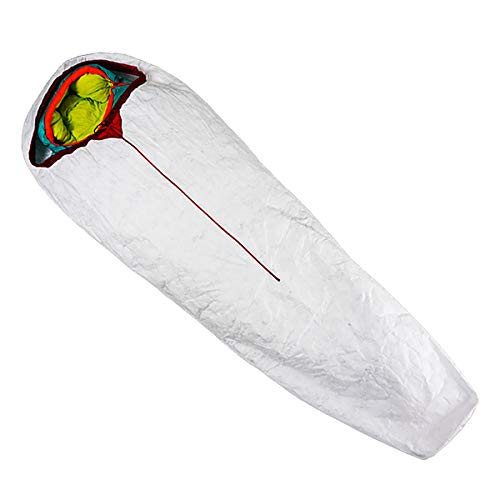
3F UL Gear’s listing includes a warning most brands would never print: use with a sleeping bag, not alone, and it is recommended to be used with tents or tarps, because its main function is avoiding condensation. That is completely real and it explains what Tyvek is for. Tyvek breathes exceptionally well and is not a rain shell, so it belongs inside a tent as a barrier between your bag and the floor, not out under the sky. A brand telling you what its product is not is worth listening to.
Insects and rain are two different problems
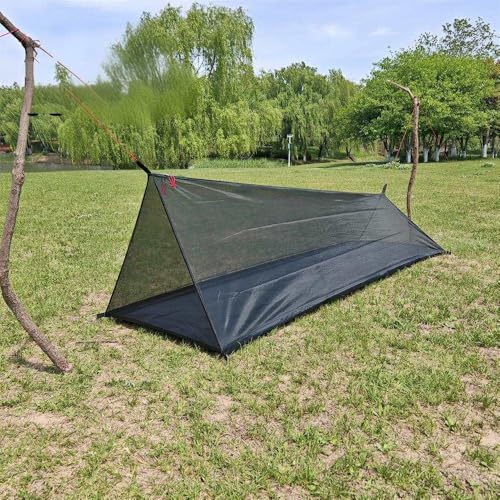
Vital Gear’s bug bivy is no-see-um mesh with a waterproof floor, which stops mosquitoes, ticks and flies and keeps ground damp out, and it does nothing whatsoever about rain falling on you. That is by design: you pitch it under a tarp, and Vital Gear says so. Outdoor Research is the only product here that does both at once, waterproof and insect proof in one shell, which is why it costs what it costs. Work out which of the two is actually keeping you awake.
Fabric weight tells you what it survives
Both AquaQuest and Yundxi build from 70D, nylon in the AquaQuest and ripstop polyester in the Yundxi, which is a substantial fabric that will take being dragged over rock and gravel night after night. That is the point of a bivy: it is your groundsheet and your tent at once, so the floor gets no protection from anything. Compare that to a 10D ultralight tent fly, which lives above you and never touches the ground. A bivy is the wrong place to save fabric weight.
Weight, plainly compared
The foil bags win outright at six ounces and they are not competing. Among real bivies, AquaQuest is 1.1 lbs and packs into a built-in cylindrical stuff sack. Yundxi offers 1.06 lbs for the heat-reflective winter version and 0.75 lbs for the summer one, which is a rare and useful choice to be given. Vital Gear is under a pound. Anything around a pound is doing well for a shelter you can sleep in, and it is still more than a foil bag you hope never to open.
Sierra Madre Emergency
The cheapest thing here and one of the best-judged purchases on the page, provided you understand it. Six ounces of mylar reflecting 90% of your body heat back at you, packing down small enough to disappear into a pack lid and stay there for years. Sierra Madre is right that this is tougher than a flimsy space blanket and reusable, fold it up and put it back. It is waterproof and windproof because foil is. It does not breathe, at all, which means it is the thing you get into when the night has gone wrong, and not the thing you sleep in on purpose.
Pros:
- Cheapest item here by a wide margin
- Six ounces; reflects 90% of body heat
- Tougher and reusable, unlike a thin space blanket
- Waterproof and windproof; packs to nothing
Cons:
- Mylar does not breathe; condensation is assured
- An emergency item, not a shelter to plan around
- Sold under more than one listing at different prices
Best for: the pack lid, for the night you did not intend to have.
Leberna 2-Pack
The best-selling item here, and it is a two-pack, which is the right way to buy these: one for your pack and one for the car, or one each. The size is the standout, 84 inches long by 36 inches wide, which is genuinely big enough for a tall person to get fully inside rather than the toe-pinching foil bags usually sold at this price, and the head cover is 21 inches wide so you can cover your head completely. Each comes with its own drawstring carry bag. Mylar thermal construction, with all the same properties and all the same limits.
Pros:
- The best-selling item on this page; two in the pack
- 84 by 36 inches; room for a tall person
- 21 inch head cover; you can cover your head fully
- Each has its own drawstring carry bag
Cons:
- Mylar; no breathability whatsoever
- No weight published
- Emergency use only, whatever the word bivy suggests
Best for: two emergency bags, sized properly, for very little.
Vital Gear Bug Bivy
A different problem entirely, solved well. This is no-see-um mesh with a waterproof floor, so it stops mosquitoes, ticks and flies while airflow and visibility stay excellent, and the tear-resistant floor keeps ground moisture out. It does nothing about rain, and Vital Gear is upfront about the answer: pitch it under a tarp, or with stakes and trekking poles, in minutes. Under a pound and packs small. In midge country in summer, this is the shelter that lets you sleep under the stars rather than sealed inside something, and it is the cheapest real shelter here.
Pros:
- No-see-um mesh stops midges, ticks and flies
- Waterproof, tear-resistant floor against ground damp
- Under a pound; pitches with stakes, poles or a tarp
- Cheapest genuine shelter on this page
Cons:
- No rain protection at all; needs a tarp above it
- Mesh gives no warmth and no wind shelter
- Sells poorly
Best for: sleeping out in midge season, under a tarp you already carry.
Yundxi
The only bivy here that lets you pick a season, and that is a more useful choice than it sounds. The red version adds heat-reflective material inside for extra warmth in winter and weighs 1.06 lbs; the army green summer version drops that and comes in at 0.75 lbs, the lightest real shelter on this page. Both are 70D ripstop polyester, which is a substantial fabric for something that spends every night lying on gravel, and both pack into a built-in cylindrical stuff sack. It sits well below the premium bivies while using comparable fabric weight.
Pros:
- Two versions: heat-reflective for winter, lighter for summer
- 0.75 lbs in summer trim; the lightest real shelter here
- 70D ripstop polyester; tough enough to lie on rock
- Built-in stuff sack
Cons:
- No waterproof rating or breathability figure published
- Sells poorly
- Polyester rather than the nylon of the premium options
Best for: a real bivy at a real price, in the season you actually walk.
3F UL Gear Tyvek
The most accurate listing on this page, and the clarity is the feature. 3F UL Gear tells you outright: use it with a sleeping bag, not alone, and use it with a tent or a tarp, because its job is avoiding condensation. That is exactly right. Tyvek breathes remarkably well and is not a rain shell, so it belongs between your sleeping bag and the ground inside a shelter, keeping the bag clean and dry from below. Two sizes, 180 by 80cm at 130g or 230 by 90cm at 200g, with both weights published. It packs to 16 by 8.5cm.
Pros:
- States plainly that it is not a standalone shelter
- Tyvek breathes exceptionally; avoids condensation
- Two sizes with both weights published: 130g and 200g
- Packs to 16 by 8.5cm; keeps your bag clean
Cons:
- Not a shelter; needs a tent or tarp above it
- No rain protection whatsoever
- Costs more than some real bivies here
Best for: keeping a down bag dry inside a tent, and nothing else.
AquaQuest Pharaoh
The only product on this page that answers both halves of the question. Waterproof to 10,000 mm, and moisture vapor transmission of 10,000 gr per square meter per day, which is the number that decides whether the night’s condensation leaves or lands on your sleeping bag. Nobody else here publishes it. The shell is 70 D nylon, substantial enough to be your tent and your groundsheet at once, wrapping your bag and pad completely. It weighs 1.1 lbs and packs into a built-in cylindrical stuff sack. No poles, no pitching, no time: you get in.
Pros:
- The only breathability figure on this page: 10,000 gr per square meter per day
- 10,000 mm waterproof; both directions stated
- 70 D nylon; tough enough to be the groundsheet too
- 1.1 lbs with a built-in stuff sack; no setup at all
Cons:
- Expensive next to the polyester bivies
- No insect protection
- Sells poorly against the cheap emergency bags
Best for: real nights out in rain, with the numbers on the table.
Outdoor Research Helium
The only shelter here that solves rain and insects at the same time, which on this page is a category of one: everything else makes you choose. It is waterproof and seam-taped, which matters because a bivy’s seams sit directly in the water running off it, and mesh handles both the bugs and the breathability. The clamshell opening with internal fly fasteners means you can get in and out without dismantling anything, and close it from inside when the weather turns. Built for backcountry travel, staying agile and light. It is by far the most expensive thing here.
Pros:
- Waterproof and insect proof together; nothing else here is both
- Seam-taped, where a bivy’s seams sit in running water
- Clamshell opening with internal fly fasteners
- Mesh design for breathability; built for backcountry use
Cons:
- Far and away the most expensive item here
- Publishes no weight, waterproof rating or breathability figure
- Sells modestly
Best for: rain and midges on the same night, from a name that knows both.
The verdict
The best-selling item here is a two-pack of foil emergency bags, which tells you what most people are actually buying and it is not a shelter. Decide first whether you want insurance in your pack lid or something to sleep in.
Best overall: AquaQuest Pharaoh. The only bivy on this page that publishes both numbers that matter: 10,000 mm waterproof and 10,000 gr per square meter per day of moisture vapor transmission. That second figure is what decides whether your night’s condensation leaves or lands back on your sleeping bag, and everybody else stays silent on it. The 70 D nylon is tough enough to be tent and groundsheet at once, at 1.1 lbs, with no pitching at all.
Best value: Leberna 2-Pack. The best seller here, and buying two is the right instinct: one in the pack and one in the car. At 84 by 36 inches with a 21 inch head cover it is properly sized where cheap foil bags usually pinch, and each has its own carry bag. It is mylar, so it does not breathe and never will. This is insurance for the night that goes wrong, not a plan.
Best premium: Outdoor Research Helium. The only shelter here that stops rain and insects at once, which everything else makes you choose between. It is seam-taped, and a bivy’s seams sit directly in the water running off it, so that is the right thing to do properly. The clamshell opening with internal fasteners means getting in and shutting the weather out without leaving the bag. It publishes no numbers at all, which at this price is the one thing to note.
FAQ
Can I sleep in an emergency mylar bivy?
You can survive a night in one, which is the point of it. Mylar is a sealed foil that reflects your heat back, and it passes no moisture, so your own condensation collects inside and soaks your sleeping bag. Carry one for the night you did not plan; do not plan around it.
What is the number I should look for?
Moisture vapor transmission, because a bivy has to keep rain out and let your breath and sweat out. AquaQuest publishes 10,000 gr per square meter per day alongside 10,000 mm waterproof. It is the only product here that gives you the second half of that sentence.
Why does one listing tell me not to use it alone?
Because 3F UL Gear is being straight with you. Tyvek breathes beautifully and stops no rain, so it belongs inside a tent or under a tarp, keeping your sleeping bag off the wet ground. Its own listing says use it with a sleeping bag, not alone, which is more than most brands manage.
Do I need bug protection or rain protection?
Whichever is keeping you awake. Vital Gear’s mesh stops midges and ticks and does nothing about rain, so it goes under a tarp. AquaQuest stops rain and nothing else. Outdoor Research does both, which is what the price buys.
How light should a bivy be?
Around a pound is doing well for something you sleep in: AquaQuest is 1.1 lbs and Yundxi offers 0.75 in its summer version. Do not chase lower with the fabric, because a bivy is its own groundsheet and lies on gravel every night, which is why 70D is the sensible weight here.
This article may contain affiliate links; see our Affiliate Disclosure.