The best thinking in a home office happens standing up, marker in hand — not buried in a browser tab. A whiteboard turns a blank wall into working memory: the sprint plan, the family calendar, the diagram that would take twenty minutes to draw in software and takes forty seconds in ink.





Home-office boards come in four species: wall-mounted melamine (cheapest, most common), tempered glass (the ghosting-proof upgrade), tripod easels (movable, presentation-friendly), and full rolling stands (double-sided acreage on casters). Size, surface chemistry, and whether the board must move decide the pick — and the two VIZ-PRO best sellers set the baseline everything else answers.
| Board | Standout features | Price | Link |
|---|---|---|---|
| VIZ-PRO 36×24 Silver | Lacquered magnetic surface, aluminium frame — the best seller | Budget | |
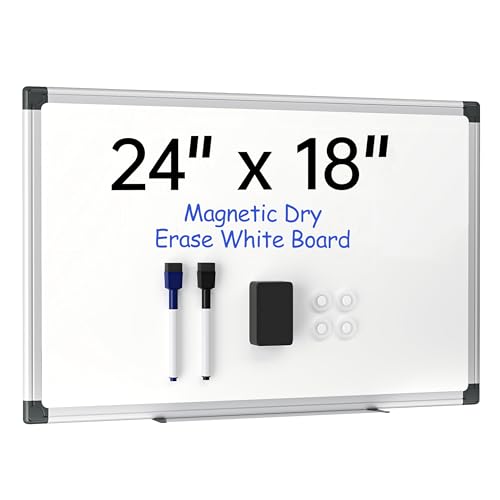
| VUSIGN 24×18 | Markers, magnets, eraser, and mounting kit all included | Budget | |
| WALGLASS 24×18 | Double-sided, 4 markers + 8 magnets + tray in the box | Budget | |
| VIZ-PRO 36×24 Black | Same proven surface in a black anti-scratch frame | Budget | |
| maxtek Tripod Easel | Height-adjustable 36×24, flipchart hooks, portable | Mid-range | |
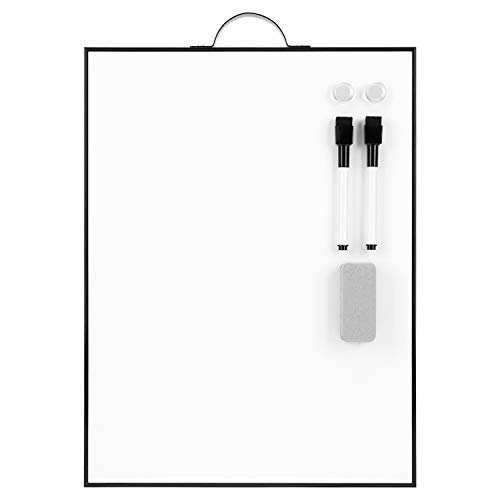
| TSJ 16×12 Portable | Handle-carry lap board with markers and eraser | Budget | |
| Neatsure 48×36 Rolling | Double-sided flip board on locking casters | Mid-range | |
| maxtek 48×36 Rolling | Baked 2x stain-resistant surface, double-sided, FSC packing | Mid-range | |
| TSJ Glass 36×24 | Frameless tempered glass, magnetic, never ghosts | Mid-range | |
How to choose a home-office whiteboard
Four decisions: surface chemistry, size against your wall and webcam, mounted versus mobile, and what ships in the box.
Surface chemistry decides year-two happiness
Cheap melamine boards ghost — old ink shadows that no eraser removes — within months of heavy use. The boards here fight it three ways: VIZ-PRO’s lacquered surface and maxtek’s triple-baked coating resist staining far longer than bare melamine; and tempered glass (TSJ’s frameless panel) simply cannot ghost — the ink sits on glass and wipes to new, indefinitely. Daily-use boards deserve at least a lacquered surface; a board you rewrite hourly deserves glass.
Size to the job, and to the webcam
A 24×18 handles a weekly to-do list; 36×24 is the home-office sweet spot — big enough for a real diagram, small enough for any wall; 48×36 suits sprint boards and teaching. One modern consideration: if the board lives behind you on video calls, it is now a permanent broadcast — position it off-camera or embrace it as a visible thinking surface.
Wall, easel, or wheels
Wall boards cost least per square inch and hold position forever — all the framed picks here hang horizontal or vertical. The tripod easel folds flat, travels between rooms, and adds flipchart hooks for paper pads. Rolling stands are the serious option: both 48×36 units here are double-sided — flip the panel and the writing area doubles — with locking casters, at the cost of floor space. Renters take note: easels and rolling boards need zero wall holes.
Magnetic backing and the accessory question
Every board here is magnetic — the surface doubles as a pinboard for notes and photos without tape. The accessory spread varies wildly: VUSIGN and WALGLASS ship complete starter kits (markers, magnets, erasers, trays), while VIZ-PRO ships essentially bare. Factor a marker-and-eraser purchase into any bare board’s real price, and buy decent markers — half of all “board won’t erase” complaints are actually dried-out ink.
VIZ-PRO 36×24 Magnetic Board, Silver
The best-selling board in this comparison is the category’s reference: a specially lacquered magnetic writing surface that wipes clean and resists scratching, in an anodized aluminium frame with ABS corners hiding the screw mounts. It hangs horizontal or vertical, and the 36×24 size fits over a desk without dominating the room. Simple, proven, and cheap enough to buy two.
Pros:
- Lacquered surface erases cleaner than bare melamine for years
- Either-orientation mounting hardware included
- Tidy aluminium frame with concealed fixings
- The volume best seller — enormous proven base
Cons:
- No markers, magnets, or eraser in the box
- Remember to peel the protective film before first use
Best for: the standard home-office board — the default that rarely disappoints.
VUSIGN 24×18 with Full Kit
VUSIGN’s compact board wins on completeness: two markers, four magnets, an eraser, and the mounting kit all ship in the box, so the board works the minute it leaves the packaging. The silver aluminium frame and magnetic surface mirror the bigger boards’ construction at a list-and-reminders size — and at the group’s lowest price.
Pros:
- Everything included — writes out of the box
- Lowest price on the list
- Right size for task lists and kitchen-command duty
- Holds notes magnetically with included magnets
Cons:
- Too small for diagram-heavy work
- Included markers are starter-grade
Best for: the first whiteboard — lists, reminders, and zero extra purchases.
WALGLASS 24×18 Double-Sided
WALGLASS doubles the small board: two scratch-resistant writing faces — hang it or hand-hold it flipped — plus the most generous kit here: four colored markers, eight magnets, a movable marker tray, and an eraser. The aluminium frame keeps it light enough to lift off the wall and pass around, which the second side quietly encourages.
Pros:
- Two writing surfaces on one small board
- Richest accessory bundle in the group
- Movable tray relocates to where you write
- Light enough to use as a lap board
Cons:
- Wall-mounted, the second side sits unused
- Compact footprint limits big diagrams
Best for: households that want one small board doing wall duty and lap duty both.
VIZ-PRO 36×24, Black Frame
The same proven VIZ-PRO surface — smooth magnetic lacquer, easy dry wipe — framed in anti-scratch black aluminium that reads more studio than schoolroom. For offices where the silver frame clashes or the wall already carries black shelving and monitor arms, this is the aesthetic answer at a few dollars’ difference.
Pros:
- Identical writing surface to the best seller
- Black frame suits darker office aesthetics
- Horizontal or vertical mounting
- Anti-scratch frame finish
Cons:
- Slight premium over the silver version
- Same bare box — bring your own markers
Best for: the standard board, color-matched to a modern desk setup.
maxtek Tripod Easel 36×24
The easel option puts the board on steel tripod legs with rubber feet and scale markings, adjusting from seated-sketch height to standing-presentation height in seconds. The triple-baked surface resists staining, flipchart hooks take paper pads for permanent notes, and the whole thing folds flat against a wall when the room needs to be a room again. Markers, magnets, and an eraser ship along.
Pros:
- No wall holes — renter and flex-space friendly
- Height adjusts with measurement markings
- Flipchart hooks add paper-pad capability
- Baked surface erases cleanly long-term
Cons:
- Tripod claims permanent floor space when open
- Less rigid than a wall-mounted panel while writing
Best for: presentations, tutoring, and rooms where the board must appear and disappear.
TSJ OFFICE 16×12 Portable
The smallest board here is built to be carried: a reinforced black frame with a molded handle, sized to sit on a lap or lean on a keyboard tray. Two markers, two magnets, and an eraser come along. It is the brainstorming scratchpad, the video-call prop for holding up a diagram, and the desk-side capture surface that saves the big board for big thinking.
Pros:
- Handle makes it genuinely portable
- Solid narrow frame survives being carried about
- Complete mini-kit included
- Doubles as a video-call show-and-tell surface
Cons:
- Sixteen inches limits it to notes and single ideas
- Not meant for wall mounting
Best for: lap-scale thinking and desk-side capture next to a main board.
Neatsure 48×36 Rolling Board
The Neatsure turns twelve square feet of magnetic, stain-resistant surface into a movable wall: four locking 360-degree casters roll it between rooms, and a push-button flip doubles the writing area on the reverse face. Assembly needs no DIY experience, and the frame keeps the big panel from twisting mid-write. For sprint boards, homeschool timetables, and war-room planning, this is the acreage play.
Pros:
- Double-sided: 48×36 twice over
- Locking casters hold it steady while writing
- Button-flip rotation is effortless
- Tool-light assembly
Cons:
- Claims real floor footprint
- Costs several wall boards
Best for: planning-heavy work that outgrew every wall board.
maxtek 48×36 Rolling Board
maxtek’s rolling board attacks the ghosting problem at the factory: a 365°F baking process the maker rates at double the stain resistance, on both faces of a flip-rotating 48×36 panel. Heavy-duty framing, four universal casters, corner protectors, and FSC-certified packaging round out the group’s most surface-focused big board.
Pros:
- Baked surface built for years of daily erasing
- Double-sided flip design
- Sturdy frame with protected corners
- Rolls and locks anywhere
Cons:
- Same floor-space demand as any rolling board
- Modest premium over the Neatsure
Best for: heavy daily users who erase and rewrite constantly.
TSJ OFFICE Glass Board 36×24
The endgame surface: tempered glass that appears to float frameless on the wall, writes silk-smooth, and cannot ghost — ink never penetrates glass, so the tenth year erases like the first day. Steel backing keeps it magnetic (four high-power magnets included, ordinary fridge magnets need not apply), and the concealed standoff mounting is simpler than it looks.
Pros:
- Ghosting is physically impossible on glass
- Frameless float looks genuinely premium
- Magnetic despite the glass, with strong magnets included
- Wipes to factory-new indefinitely
Cons:
- Needs the included strong magnets — weak ones slide
- Heavier, and mounting is a two-person job
Best for: the buy-once board for design-conscious offices and heavy rewriters.
Verdict
Best Overall: VIZ-PRO 36×24 Silver. The category best seller: a lacquered surface that outlasts bare melamine, the right size for real work, and a price that makes the decision easy.
Best Value: VUSIGN 24×18. A complete working whiteboard — board, markers, magnets, eraser, mounts — for the price of a sandwich. Nothing else here is usable this fast for this little.
Best Premium: TSJ Glass 36×24. Tempered glass erases perfectly forever and looks like office furniture rather than office supplies — the last board you buy for that wall.
FAQ
Why does my whiteboard ghost, and can I fix it?
Ink pigment settles into the microscopic pores of worn melamine. Fixes escalate: fresh markers first, then isopropyl alcohol or dedicated board cleaner, then the trick of writing over old ghosts with fresh marker and erasing immediately. Prevention is a better surface — lacquered, baked, or glass.
Are all these boards really magnetic?
Yes — every board in this guide has a magnetic writing surface. Glass boards need the strong magnets included with them; standard framed boards hold ordinary magnets fine.
What markers should I use?
Low-odor dry-erase markers, capped tightly after use, stored horizontal. Never permanent markers — though if it happens, writing over the permanent ink with dry-erase ink and wiping usually lifts it. Replace markers at the first sign of faint lines; most erasing problems are ink problems.
How do I mount a board on drywall?
All the framed boards include hardware; use the supplied anchors in hollow drywall or hit studs where possible. Glass boards weigh more — anchor every mounting point properly and enlist a second pair of hands for positioning.
Wall board or rolling board for a home office?
Wall if the board has a permanent home and the wall to give — more surface per dollar, zero footprint. Rolling if you need double-sided area, move between rooms, rent without drilling rights, or want the board out of sight when work ends.
This article may contain affiliate links; see our Affiliate Disclosure.