Regular earbuds and a pillow do not mix: a hard shell pressing into your ear canal at 2 a.m. defeats the entire point of falling asleep to rain sounds. Sleep earbuds solve the geometry — sub-4-gram shells that sit flush inside the ear, soft silicone that a pillow presses against without pressing back, and batteries that outlast the night.


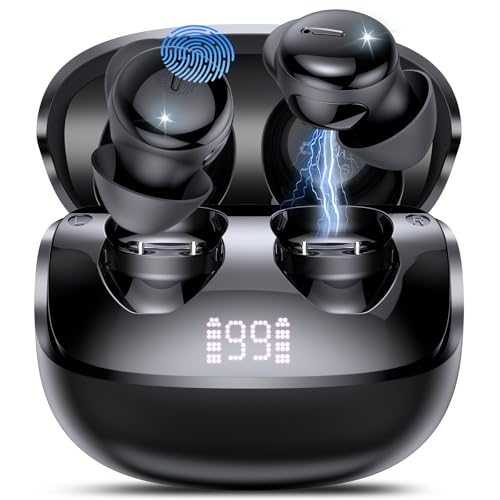
The field runs from a best-selling featherweight general earbud that side sleepers adopted, through purpose-built micro buds with sleep modes and onboard white noise, up to a clinically validated dedicated sleep system. Comfort geometry, battery-versus-the-night math, and how each design handles noise decide the fit — literally.
| Earbuds | Standout features | Price | Link |
|---|---|---|---|
| TOZO A1 | 3.7g buds, BT 5.3, 32h with case — the volume best seller | Budget | |
| L8 Pro Sleep | Touch-screen case, BT 5.4, 48h total, IPX7 | Budget | |
| Ozlo Sleepbuds | Clinically proven, sleep detection, in-ear alarm | Premium | |
| Tumbler Mini | Low-profile fit, digital display case, 12-month warranty | Budget | |
| Ertuly T33 | Hybrid ANC to 98%, sleep mode, BT 6.0, 48h | Mid-range | |
| Hearprotek Neckband | Double-flange tips, 25h battery, unloseable in bed | Budget | |
| Invisible IPX6 | Skin-soft tips with caps, 3D sound, swim-grade waterproofing | Budget | |
| sunvito Micro | BT 6.0, near-invisible profile, 200mAh case | Budget | |
| Nsiucion Mini | Ultra-thin flush fit, 13mm drivers, cheapest entry | Budget | |
| White-Noise Buds | Onboard sleep sounds, sleep mode, sub-3g, 48h case | Budget | |
How to choose sleep earbuds
Sleeping in earbuds is a different engineering problem from wearing them on a train. Four specs matter more than sound quality.
Side-sleeper geometry: flush or nothing
The killer spec is protrusion. A bud that sticks past the outer ear becomes a pressure point the moment your head meets the pillow — the reason general-purpose earbuds fail at night. The purpose-built designs here (L8 Pro, Tumbler, sunvito, Nsiucion, the white-noise buds) sit entirely inside the concha; Ozlo goes further with squishy silicone that molds flat. Weight compounds comfort: sub-4-gram buds effectively vanish, and several here are under 3 grams.
Blocking noise: passive, active, or masking
Three strategies. Passive isolation — soft tips sealing the canal — handles most snoring and street noise, and every bud here provides it. Active noise cancellation (Ertuly T33’s hybrid dual-mic system, rated to 98%) electronically counters low rumble like traffic and HVAC. Masking — playing white noise or sleep sounds over the offending noise — is what the onboard white-noise buds and Ozlo’s science-backed sound library do, and it works even against irregular noise ANC cannot predict, like a partner’s snore pattern.
Battery math against a full night
A night is seven to nine hours; many micro buds run four to six on a charge. That gap matters if you play audio all night, and not at all if you fall asleep to a 45-minute timer. All-night streamers should shortlist the 8-to-10-hour designs (Ertuly, L8 Pro, Ozlo, Hearprotek’s 25-hour neckband); timer users can buy on comfort alone. Sleep modes — a four-tap toggle on the Ertuly, dedicated modes on several others — mute notifications and touch controls so a midnight head-shift does not skip tracks or call anyone.
The lose-it-in-the-blankets problem
Micro buds have a failure mode nobody advertises: falling out at 3 a.m. and vanishing into the bedding. The neckband design (Hearprotek) makes loss physically impossible — the wire that runs behind your neck is the retrieval system — at the cost of a wire. Cases with digital battery displays (Tumbler, L8 Pro’s full touch screen) at least tell you both buds came home in the morning.
TOZO A1
The best seller of the group is not a dedicated sleep bud — it is a 3.7-gram general earbud so small and light that side sleepers adopted it en masse. Bluetooth 5.3 pairs the moment the case opens, the OrigX-tuned drivers handle podcasts and rain tracks warmly, and the case stretches battery life to 32 hours. A 32-preset EQ app tunes the sound; the price makes it a low-risk experiment.
Pros:
- 3.7g and genuinely small — comfortable for most side sleepers
- 32-hour total battery with the case
- Doubles as a full daytime earbud
- Proven at enormous sales volume
Cons:
- No sleep mode — touch controls stay live all night
- Protrudes slightly more than dedicated sleep designs
Best for: one pair for day and night — the pragmatic first try.
L8 Pro Sleep Earbuds
The L8 Pro is the gadget-lover’s sleep bud: a polished, contoured micro shell for side sleeping, driven from a charging case with a full touch screen — battery levels, EQ modes, controls — no phone required. Bluetooth 5.4, 48 hours of total playtime, USB-C fast charging, five EQ modes, and IPX7 waterproofing round out a spec sheet that undercuts its ambitions in price.
Pros:
- Touch-screen case controls everything bedside
- Contoured shell disappears under a pillow
- 48-hour total battery, fast USB-C top-ups
- IPX7 survives sweat and rinsing
Cons:
- Screen case is bulkier than minimalist pucks
- Newer brand without a long record
Best for: feature-per-dollar hunters who want bedside control without the phone.
Ozlo Sleepbuds
The category’s flagship, built by the team that created Bose’s original Sleepbuds: clinically proven sleep technology, ultra-soft silicone that molds flat for side sleeping, biometric sensors that detect when you drift off and automatically fade your audio into masking sounds, and an in-ear alarm that wakes you without waking a partner. The smart case bridges streaming for up to 10 hours. Deliberately no microphone — these do one job.
Pros:
- Clinical validation for faster, longer sleep
- Auto-switch to masking when sensors detect sleep
- Private in-ear alarm spares the partner
- The most pillow-proof comfort in the group
Cons:
- Costs more than every other pick combined… nearly
- No calls, no daytime double duty
Best for: serious sleep investment — chronic strugglers who want the engineered answer.
Tumbler Mini Sleep Earbuds
The Tumbler’s low-profile shells nestle fully into the ear — nothing for the pillow to lever against — while 13mm drivers deliver surprisingly full audio from the tiny housings. The tumbler-shaped case shows battery digits, slips into any pocket, and adds charges to the buds’ four-hour runtime. A 12-month warranty backs the group’s second-cheapest ticket.
Pros:
- Genuinely flush side-sleeper fit
- Digital battery display on the case
- Full 13mm-driver sound despite the size
- Bargain price with a real warranty
Cons:
- Four hours per charge — timer listeners only
- Tiny buds are easy to misplace outside the case
Best for: fall-asleep-to-a-timer listeners on a strict budget.
Ertuly T33 ANC
The T33 brings active cancellation to the sleep-bud price class: dual-microphone hybrid ANC rated to 98%, aimed squarely at traffic rumble and droning HVAC. Four taps engage a sleep mode that silences interruptions, Bluetooth 6.0 auto-pairs instantly, and the LED-display case stretches total playtime to 48 hours — with eight hours in the buds themselves, enough for a full night of masking.
Pros:
- Real hybrid ANC at a mid-tier price
- Eight-hour bud battery covers whole nights
- Dedicated tap-activated sleep mode
- Latest Bluetooth 6.0 connection
Cons:
- ANC shines on steady rumble, less on sharp sounds
- Slightly larger shells than the micro designs
Best for: urban bedrooms where traffic and building hum are the enemy.
Hearprotek Neckband
Hearprotek takes the wired-together road: two-layer flange tips in soft silicone sit low in the canal, the featherweight buds hang on a bulletproof-tough wire behind your neck, and a 250mAh battery runs 25-plus hours — multiple nights per charge. Nothing can fall into the blankets, in-line controls sit findable in the dark, and Bluetooth 5.4 keeps the stream steady.
Pros:
- Impossible to lose a bud in the bedding
- 25+ hour battery spans several nights
- Double-flange tips seal gently but well
- Rugged wire survives nightly tangling
Cons:
- A wire at the neck is a texture some sleepers reject
- Less invisible than true micro buds
Best for: sleepers who have already lost one true-wireless bud in the sheets.
Invisible IPX6 Sleep Buds
These lean on materials: proprietary skin-soft silicone tips with matching caps sit at the canal entrance rather than deep inside it, so ears stay comfortable through all-day or all-night wear. The 5.3 binaural chip delivers 3D surround from either bud used solo, and IPX6 waterproofing survives swimming — overkill for sleep, insurance for everything else.
Pros:
- Softest tip system in the budget field
- Shallow fit avoids canal pressure entirely
- Solo-bud use for one-ear sleepers
- Swim-grade IPX6 build
Cons:
- Shallow seal blocks less noise than deep tips
- Modest battery per charge
Best for: pressure-sensitive ears that reject deep-seal designs.
sunvito Micro Buds
The sunvito buds chase invisibility: an ultra-compact in-ear profile that disappears from view — useful for sleep, and frankly for open-plan offices too — running the latest Bluetooth 6.0 for quick, stable pairing. The 200mAh case keeps multiple recharges on hand, and noise-isolating tips do the passive blocking.
Pros:
- Near-invisible in the ear
- Current-generation Bluetooth 6.0
- Light enough to forget while wearing
- Discreet double duty at work
Cons:
- Micro size means micro per-charge battery
- Fiddly for large fingers
Best for: maximum discretion, asleep or at the desk.
Nsiucion Mini Buds
The price floor of the category still covers the essentials: ultra-thin shells that sit flush for side sleeping, 13mm drivers with real bass, IPX4 sweat resistance, four hours per charge with a case recharge in reserve, and a 12-month warranty. As a first test of whether sleep earbuds suit you at all, the cost of being wrong is a lunch.
Pros:
- Cheapest entry to the category
- Flush profile under the pillow
- Proper 13mm-driver sound
- Year of warranty regardless of price
Cons:
- Four-hour runtime rules out all-night audio
- Basic case, basic controls
Best for: the trial run before committing real money.
White-Noise Sleep Buds
These sub-3-gram buds carry their own soundtrack: pre-installed white noise and soothing sleep sounds play without any app, phone, or streaming — tap into sleep mode and the masking runs standalone all night. Bluetooth 5.4 handles normal audio when wanted, the case banks 48 hours, and the zero-pressure fit tolerates tossing and turning.
Pros:
- Onboard white noise needs no phone at all
- Under 3 grams per bud
- Sleep mode kills notifications with one tap
- 48-hour case for travel weeks
Cons:
- Built-in sound library is fixed
- Newer product line
Best for: white-noise sleepers who want the phone out of the bedroom entirely.
Verdict
Best Overall: TOZO A1. The best seller wins on the real math: light enough for most side sleepers, good enough for all-day use, and cheap enough that a dedicated sleep bud can come later if you need one.
Best Value: White-Noise Sleep Buds. Sub-3 grams, onboard masking sounds, a sleep mode, and a 48-hour case at a budget price — the most sleep-specific engineering per dollar here.
Best Premium: Ozlo Sleepbuds. Clinically validated, sensor-driven, partner-sparing — the only pick engineered end-to-end around the night itself.
FAQ
Is it safe to sleep with earbuds in?
Generally yes with soft, low-profile designs at moderate volume. Keep levels low (masking needs surprisingly little volume), clean tips regularly to protect ear hygiene, and give ears occasional nights off. Anyone with ear conditions should ask their doctor first.
Will these block a snoring partner?
Sealed tips reduce snoring substantially; masking finishes the job — steady white noise covers the irregular snorts that isolation alone lets through. The combination of a good seal plus masking sound is the proven recipe; ANC helps most with steady low rumble, not snoring.
What if the battery dies mid-night?
Either buy per-charge runtime that covers your night (eight hours or more), or use a sleep timer so audio stops after you drift off — on a timer, even four-hour buds never hit empty while you are using them.
Why not just use my regular earbuds?
Protrusion and pressure. Standard buds lever against the pillow and ache within an hour on your side. If you sleep on your back, your regular buds may be fine — side sleepers need the flush designs this guide exists for.
How do I stop losing a bud in the bed?
Check the seal before sleep (a well-seated bud rarely walks), or choose the neckband style where loss is impossible. In the morning, cases with battery displays confirm both buds returned — and a phone’s find-my-earbud feature covers the rest.
This article may contain affiliate links; see our Affiliate Disclosure.