Espresso is the only brew method that will punish a grinder in public. A drip machine forgives an uneven grind; a portafilter turns it into a sour, gushing mess in twelve seconds flat. This is why the grinder, not the machine, is where a home espresso setup is usually won or lost, and why the cheapest ones fail at exactly one thing: the fine end of the dial.



A note on what is not here. Plenty of popular, perfectly good burr grinders are built for drip and French press, and they will technically reach a fine setting without ever giving you the control espresso needs. The picks below are limited to grinders with enough steps at the fine end to actually dial a shot in, spanning a hand grinder that costs less than a bag of good beans up to a programmable machine that grinds straight into the portafilter.
At a glance
| Product | Standout feature | Price tier | Link |
|---|---|---|---|
| SHARDOR Conical Burr Espresso Grinder | 51 settings, 40mm conical burr, portafilter cradle, anti-static | Mid-range | |
| CEVING Mini Manual Grinder | 40 external settings, conical ceramic burr, 325g total | Budget | |
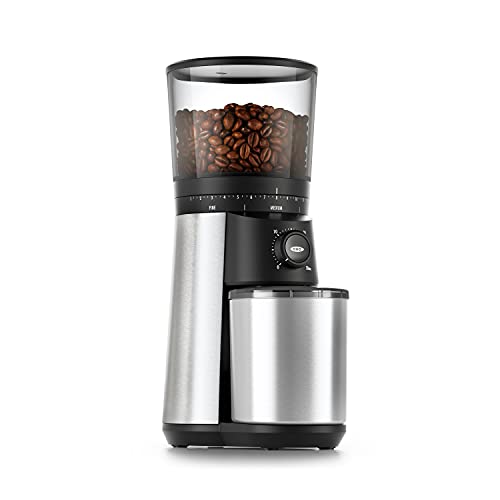
| OXO Brew Conical Burr Grinder | 15 settings plus micro-adjustments, 12oz UV-blocking hopper | Mid-range | |
| SHARDOR Burr Grinder, 32 Sizes | 32 settings and a 40-second digital timer, compact body | Budget | |
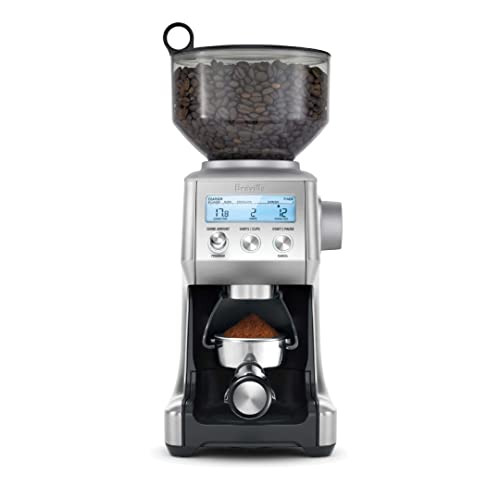
| Breville Smart Grinder Pro | 60 settings, dosing in 0.2s steps, grinds into the portafilter | Premium | |
How to choose an espresso grinder
Step count is the espresso specification
Every burr grinder spans coarse to fine. What matters for espresso is how many stops sit inside the narrow fine band where a shot actually works, because dialling in means nudging one notch and tasting again. A grinder with 18 steps across its whole range might offer you three inside espresso territory, and the gap between two of them is the difference between a choked shot and a gusher, with nothing usable between. Fifty-one steps, or sixty, gives you somewhere to go. This single number explains most of the price difference here, and it is why grinders that are excellent for drip can be useless for espresso.
Conical or flat burrs
Both produce a far more uniform grind than any blade grinder, which is the real dividing line. Between the two, conical burrs turn more slowly and generate less heat, which protects the oils that carry the aroma, and they tend to be quieter. Flat burrs can produce a very consistent particle size and are common at lower prices. For espresso specifically, the larger the burr the better it handles the load: a 40mm conical burr, as on both the SHARDOR espresso model and its lookalikes, is a meaningful step up from the small burrs in cheap machines.
Dose by time, and why 0.2 seconds matters
Most grinders in this bracket dose by running for a set time rather than weighing anything. That is fine, as long as the timer is fine-grained enough. A grinder that adjusts in whole seconds moves your dose by roughly a gram or two per press, which is a lot when a double shot is eighteen grams. The Breville adjusts in 0.2 second increments, which is precise enough to actually hit a number; the SHARDOR models give you 40 or 60-second timers with adjustment. If you own scales, none of this matters much, since you will weigh anyway.
Static, and the mess nobody warns you about
Fine espresso grounds carry a static charge, which means they cling to every plastic surface, clump, and jump out of the container in a small gray cloud when you pull it out. It is genuinely annoying every single morning. Anti-static finish appears on the better picks here for exactly this reason, and it is one of those features you do not think to want until you have spent a week wiping your counter. A portafilter cradle helps too, by letting the grounds fall directly where they are going instead of being transferred twice.
Hand grinders are a real answer, with a real cost
A manual grinder with a decent conical burr will produce an espresso-fine grind for a fraction of any machine price, and it does it silently, without a plug, anywhere. The cost is your arm. Grinding fine is dramatically harder work than grinding coarse, because the burrs are close together and fighting every bean, so an espresso dose takes real effort rather than a gentle few turns. For one or two coffees a day, many people happily accept that. For a household making six, nobody does.
Hopper size and what else you brew
Espresso wants beans ground fresh per shot, so a huge hopper is not the advantage it appears; beans sitting in a clear plastic tube go stale in light and air. OXO addresses that with a UV-blocking tint on a 12-ounce hopper, which is a sensible answer if the grinder also handles your French press. If espresso is all you make, a small hopper you fill as you go is arguably better practice.
SHARDOR Conical Burr Espresso Grinder
This is the cheapest machine here that takes espresso seriously rather than listing it as one of many options. The 40mm stainless steel conical burr is sized to minimize grinding heat and protect the oils in the bean, and 51 grind settings give you somewhere to move when a shot runs fast. The portafilter cradle is the feature that reveals who designed it: you grind directly into the basket rather than into a container and then transferring, which saves a step and a mess every single morning. Anti-static technology keeps the grounds chamber from throwing dust across the counter, and a residual grounds cleaner deals with what stays behind. The touchscreen sets 1 to 12 cups or an electronic timer up to 60 seconds.
Pros
- 51 settings: enough resolution to genuinely dial a shot
- Large 40mm stainless conical burr, chosen to keep heat down
- Portafilter cradle grinds straight into the basket
- Anti-static chamber and a residual grounds cleaner
- Timer to 60 seconds plus a 1 to 12 cup selector
Cons
- Time-based dosing, so scales are still worth having
- Less established than OXO or Breville
Best for: a home espresso setup where the grinder budget is a fraction of the machine’s, and it still has to work.
CEVING Mini Manual Coffee Grinder
The most popular grinder in this group, and the cheapest route to a genuinely fine, uniform grind. The clever part is where the adjustment lives: 40 settings on an external dial, rather than the internal nut most hand grinders make you disassemble the thing to reach. That turns dialling in from a chore into a twist, which for espresso is the difference between actually adjusting and giving up. The conical ceramic burr grinds more uniformly than a blade and runs cooler than steel, protecting flavor. At 325g and roughly 6.7 by 2.3 by 7.4 inches it goes camping, traveling, or to the office. It holds 30g of beans, which is a double shot and a bit, and it comes apart into three main parts for cleaning.
Pros
- 40 external settings; adjust without dismantling anything
- Conical ceramic burr: uniform grind, less heat than steel
- Costs less than a bag of good beans
- 325g and pocketable; no power needed anywhere
- Three main parts, so cleaning is trivial
Cons
- Grinding espresso-fine by hand is genuinely hard work
- 30g capacity means one or two shots per fill
Best for: one or two coffees a day, travel, and anyone testing whether they care about fresh grinding before spending real money.
OXO Brew Conical Burr Coffee Grinder
The all-rounder, and the pick if espresso is one of several things you brew. Stainless steel conical burrs give uniform grounds, and while the headline is 15 settings, the important words are the ones after it: plus micro-adjustments, which is what puts extra stops inside the espresso band where 15 alone would be too blunt. It runs from fine for espresso out to coarse for French press and cold brew, so one grinder covers a household with different tastes. One-touch start remembers your last setting, so the espresso drinker and the cafetiere drinker are not resetting the dial past each other every morning. The 12-ounce hopper is large and removable, with a UV-blocking tint that shields beans in a sunny kitchen, which is a genuinely thoughtful detail.
Pros
- Micro-adjustments add real resolution inside the espresso range
- Covers espresso through French press and cold brew properly
- Remembers your last setting; one-touch start
- UV-blocking tint protects beans from light
- Well-regarded brand with a strong reputation for build
Cons
- 15 main settings is fewer stops than the espresso-focused picks
- No portafilter cradle, so you transfer grounds by hand
Best for: a household brewing several ways, where espresso is important but not the only thing.
SHARDOR Burr Coffee Grinder with 32 Grind Sizes
The budget electric, and it earns the place on one number: 32 grind settings, which is roughly double what grinders at this price usually offer and enough to leave you options at the fine end rather than a cliff. The metal flat burr produces uniform grounds, and an adjustable 40-second electronic timer gives precise, repeatable grinding, stopped with a single press. The body is deliberately compact, which matters on a counter already hosting an espresso machine. Cleaning is properly considered too, with a removable upper burr, hopper and chamber, a dedicated chamber cleaning button, and a brush included. It is not pretending to be a Breville; it is the sensible floor.
Pros
- 32 settings at a genuinely budget price
- Adjustable 40-second timer for repeatable doses
- Removable upper burr, hopper, and chamber; brush included
- Compact footprint next to an espresso machine
Cons
- Flat burr and no anti-static finish; expect some mess
- No portafilter cradle
Best for: a first electric grinder, or pairing with an entry-level espresso machine without doubling the cost.
Breville Smart Grinder Pro
The one that stops being a compromise. Sixty settings on a programmable conical burr grinder is enough resolution that you can chase a shot rather than jump over it, and the dosing is where it separates itself: a precision digital timer adjustable in 0.2 second increments, which is fine enough to actually land on a dose instead of bracketing it. It grinds directly into the portafilter, an airtight container, a gold tone filter basket, or a paper filter, so it slots into whatever you brew with rather than dictating it. Pre-programmed settings give you a sensible starting point at any coarseness, which shortens the frustrating first week with a new bag of beans considerably. This is the most expensive pick here by a distance, and it is the only one an experienced espresso drinker would call sufficient without qualification.
Pros
- 60 settings: the most resolution here by a clear margin
- Dosing in 0.2 second steps, precise enough to hit a target
- Grinds into portafilter, container, gold filter, or paper
- Pre-programmed settings shorten the learning curve
- Well-established name in home espresso
Cons
- Costs more than the other four picks combined
- Larger footprint than the compact grinders
Best for: anyone serious about espresso who would rather buy once than upgrade twice.
The verdict
Best Overall: SHARDOR Conical Burr Espresso Grinder. The best balance here by some distance. Fifty-one settings and a 40mm conical burr give you real control at the fine end, the portafilter cradle removes a daily annoyance, and the anti-static chamber removes another, all for well under half the Breville. If you own an espresso machine and want a grinder worthy of it without matching its price, this is the pick.
Best Value: CEVING Mini Manual Coffee Grinder. The most popular grinder here and the cheapest plain answer. Forty external settings and a conical ceramic burr will genuinely reach espresso fine. You will work for it, and for a coffee or two a day that is a fair trade for the money saved.
Best Premium: Breville Smart Grinder Pro. Sixty settings and 0.2 second dosing is the difference between adjusting a shot and guessing at one. Buy it if espresso is a daily ritual rather than an occasional handle.
Two real caveats. If you brew several ways in one house, the OXO’s micro-adjustments and UV hopper make it the better companion than any espresso specialist. And if the espresso machine itself was cheap, put the SHARDOR 32 beside it rather than spending more on the grinder than the machine.
Frequently asked questions
Why will my burr grinder not make good espresso?
Almost always because it does not have enough steps in the fine range, not because it cannot grind fine. Dialling in espresso means moving one notch and tasting, and a grinder with 15 or 18 stops across its whole span may offer three inside espresso, with a choked shot on one and a gusher on the next. Count the settings, and look for micro-adjustment if the headline number is low.
Is a hand grinder good enough for espresso?
A good one is, and the CEVING’s conical ceramic burr with 40 external settings qualifies. The real catch is effort: grinding fine forces the burrs close together, so an espresso dose is real work rather than a lazy few turns. Fine for one or two a day. Miserable for a household of four.
Conical or flat burrs for espresso?
Conical burrs turn slower, run cooler, and are usually quieter, which protects the aromatic oils. Flat burrs are consistent and common at lower prices. For espresso the burr size matters as much as the shape, since a larger burr handles the fine grind with less heat and less strain. Either beats a blade grinder by a distance that is not worth discussing.
Do I need scales if the grinder has a timer?
Ideally yes. Time-based dosing drifts as beans age, as the hopper empties, and as the grind setting changes, so the same five seconds gives a different weight next week. A timer fine enough to matter helps, which is why the Breville’s 0.2 second steps stand out, but a cheap set of scales will do more for your espresso than a more expensive grinder will.
What is anti-static and why should I care?
Fine espresso grounds hold a static charge and stick to everything, clumping in the chamber and puffing out as gray dust when you remove it. Anti-static finish, on the SHARDOR espresso model here, largely stops that. It sounds trivial in a listing and it is the sort of thing you notice every single morning once you live with the alternative.
This article may contain affiliate links; see our Affiliate Disclosure.