The moment a home espresso setup stops feeling like a compromise is when you can pull a shot and steam milk at the same time. A single-boiler machine makes you wait, brewing then heating up to steam while your espresso cools; a dual boiler runs both at once, at their own ideal temperatures. That simultaneous brew and steam is the leap from good coffee to genuinely cafe-fast lattes, and you no longer need a professional budget to get there.



A great affordable dual boiler holds a stable brew temperature, steams strongly enough for silky microfoam, and matches your appetite for hands-on control. The picks differ in whether they froth automatically or with a manual wand, whether a grinder is built in, and how much barista control they hand you. The five below suit a latte-drinking household wanting one-touch ease, an aspiring home barista, and a coffee lover ready to dial in every variable.
At a glance
| Product | Standout feature | Price tier | Link |
|---|---|---|---|
| AIRMSEN 20 Bar Dual Boiler | One-touch, automatic frother, touchscreen | Budget | |
| Chefman Crema Deluxe | Double boiler, built-in grinder, steam wand | Mid-range | |
| Gevi Dual Boiler | 58mm portafilter, grinder, full accessory kit | Mid-range | |
| Kismile Dual Boiler | Dual LED display, pressure gauge, cup warmer | Mid-range | |
| COWSAR 20 Bar Dual Boiler | Commercial-grade, PID, 1-degree tuning | Premium | |
How to choose a dual-boiler espresso machine
Dual boiler is the headline, but a few other choices decide whether a machine matches your skills and your mornings. Here is what to weigh.
What a dual boiler actually gives you
A dual-boiler machine has one boiler for brewing and a separate one for steam, each held at its own ideal temperature. The practical payoff is twofold: you can pull a shot and steam milk at the same instant, so a latte comes together in one smooth motion, and the brew temperature stays rock-steady instead of dipping and spiking. That stability is what makes shots consistent cup after cup, which is the single biggest reason enthusiasts move up from a single boiler.
Automatic frother or manual steam wand
This is the fork that shapes your experience. An automatic frother textures milk at the touch of a button, which is fast, foolproof, and perfect if you want a good latte without learning a skill. A manual steam wand hands you control over the microfoam, letting you pour latte art and dial the texture, at the cost of a short learning curve. Decide plainly whether you want cafe drinks with zero effort or the hands-on barista craft, because it changes which machine is right.
Built-in grinder and portafilter
Fresh grounds make or break espresso, so a built-in conical burr grinder that doses straight into the portafilter is a big convenience, and the machines with 30-plus grind settings let you dial in any bean. Portafilter size matters too: a 58mm commercial-style portafilter, the size cafes use, distributes coffee evenly and opens up a world of compatible accessories, while smaller pressurized baskets are more forgiving for beginners. If you want to grow into the hobby, look for a real grinder and a 58mm head.
Temperature control and pressure
PID temperature control is the feature that keeps the brew water within a degree or two of your target, and it is worth prioritizing for consistency. On pressure, ignore the marketing: a 15 or 20-bar rating is the pump’s maximum, but espresso actually extracts best around 9 bars, and pre-infusion, gently wetting the puck before full pressure, is what smooths the shot. A pressure gauge or display helps you see what is happening and adjust, which speeds up learning.
Tank, accessories, and upkeep
Little things shape daily use. A larger removable water tank means fewer refills for a busy household, and a bundled kit, tamper, milk pitcher, baskets, and cleaning tools, saves buying extras. A cup warmer, hot-water outlet, and descaling reminder are handy bonuses. Whatever you choose, plan to descale on schedule and keep the group head and wand clean, since maintenance is what keeps a dual boiler tasting its best for years.
Match the machine to your time and skill
The happiest buyers are clear about how they will actually use the machine. If your mornings are rushed and you mainly want a reliable latte, a one-touch machine with an automatic frother rewards you every day and never feels like a chore. If you enjoy the ritual, the tamping, the timing, the little adjustments, a semi-automatic with a manual wand and a real grinder turns coffee into a hobby you look forward to. There is no wrong answer, only a mismatch: a barista machine bought by someone with no time to learn it gathers dust, while a one-touch model can feel limiting to a tinkerer. Picture a typical weekday morning with the machine before you buy, and let that scene, not the spec sheet alone, guide the choice.
AIRMSEN 20 Bar Dual Boiler
The best-selling dual boiler here is also the easiest to live with, and the most affordable. Separate 1350-watt brew and 1000-watt frothing boilers work together to pull a shot and texture milk at once, so a cappuccino or latte is ready in seconds from a full touchscreen, with single or double shots at a tap. Its automatic milk frother does the steaming for you, no wand technique to learn, and detaches for easy cleaning, while a 20-bar Italian pump with pre-infusion draws out the coffee’s oils. A roomy 60-ounce tank and a stainless body round it out. For one-touch cafe drinks with zero learning curve, it is the value standout.
Pros:
- Genuine dual boiler at the lowest price
- Automatic frother, no wand skill needed
- Full touchscreen, one-touch drinks
- Large 60-ounce water tank
Cons:
- Automatic frother offers less control than a wand
- No built-in grinder
Best for: households wanting effortless lattes with no learning curve.
Chefman Crema Deluxe
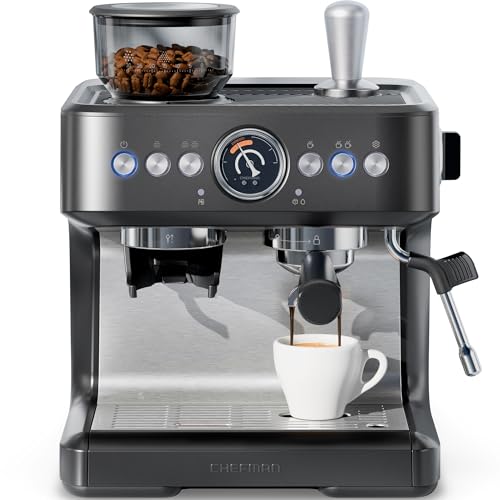
The Chefman is the name-brand semi-automatic that bridges convenience and craft. Its double boiler lets you froth milk and brew espresso simultaneously, and a built-in conical burr grinder with 30 settings doses fresh grounds straight into a 58mm portafilter, the cafe-standard size with single and double baskets. A manual steam wand textures milk for latte art, the 15-bar pump with customizable shot temperature and volume pulls everything from a ristretto to a lungo, and a big 3-liter reservoir keeps the drinks flowing. It even bundles a pitcher, tamper, and cleaning tools. For an aspiring home barista who wants real control from a trusted brand at a fair price, it is a smart pick.
Pros:
- Double boiler with a manual steam wand
- Built-in 30-setting burr grinder
- 58mm portafilter, single and double baskets
- Large 3-liter tank, accessories included
Cons:
- Manual steaming has a learning curve
- Larger footprint on the counter
Best for: aspiring home baristas wanting grinder-to-cup control.
Gevi Dual Boiler
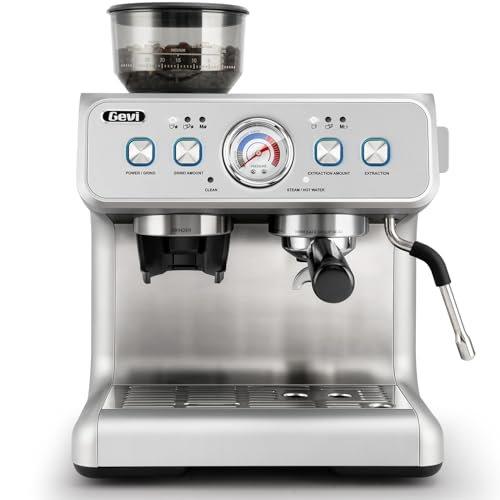
The Gevi is a well-equipped starter for the home barista, pairing a dual boiler with a built-in grinder and a generous accessory kit. A 58mm commercial portafilter and 31 grind settings give you room to dial in shots, while an advanced pressure system and combined NTC and PID temperature control keep extraction and milk frothing steady for balanced flavor and fine microfoam. A professional steam wand handles cappuccinos, lattes, and flat whites, and the compact stainless body suits smaller kitchens. The box includes a frothing pitcher, portafilter, four filters, tamper, and cleaning tools, plus a warranty with lifetime support. For everything you need to start in one purchase, it is a strong value.
Pros:
- Dual boiler with built-in grinder
- 58mm portafilter and 31 grind settings
- NTC and PID temperature control
- Complete accessory kit and warranty
Cons:
- Compact tank needs more frequent refills
- Steam wand rewards practice
Best for: beginners wanting a complete grinder-and-machine starter.
Kismile Dual Boiler
The Kismile leans into feedback and control, with dual LED screens and a pressure gauge that show grind time, brew status, and pressure so you can see and refine every shot. Its dual boiler heats fast and holds temperature steady under PID control for consistent extraction, and a built-in conical burr grinder with 30 settings feeds a 58mm portafilter. Single and double buttons adjust extraction, grind, and pre-infusion, one knob switches between strong steam and hot water for frothing or tea, and a cup warmer and descaling reminder add polish. A full toolkit is included. For someone who enjoys watching the numbers and tweaking toward the perfect cup, the extra readouts make it a satisfying machine.
Pros:
- Dual LED displays and a pressure gauge
- PID dual boiler with a burr grinder
- 58mm head, adjustable pre-infusion
- Cup warmer, hot water, descaling reminder
Cons:
- More controls to learn than a one-touch machine
- Priced above the simplest options
Best for: tinkerers who like data and dialing in each shot.
COWSAR 20 Bar Dual Boiler
The COWSAR is the premium enthusiast’s pick, built with commercial-grade parts for people who take the craft seriously. Its dual-boiler, PID-controlled double heat system holds a stable brew temperature in the ideal range and steams simultaneously, and it lets you fine-tune pre-infusion, bloom, and brew temperature in single-degree steps for a truly personalized shot. A pressure gauge and display show the extraction and a live second-by-second count so you can monitor and adjust, a 58mm head and manual steam wand deliver cafe-quality lattes and flat whites, and it is ETL certified. It costs the most here and demands more of you, but it rewards a dedicated home barista with the most control.
Pros:
- Commercial-grade build and stable PID temperature
- Single-degree tuning of temperature and pre-infusion
- Pressure gauge and extraction timer
- 58mm head with a manual steam wand
Cons:
- The priciest and most involved option
- No built-in grinder in this configuration
Best for: dedicated home baristas wanting maximum control.
The verdict
Best Overall: the AIRMSEN 20 Bar is the most popular for good reason. Its true dual boiler brews and froths at once, the touchscreen and automatic frother make a latte effortless with no skill to learn, and it costs the least, which makes it the easiest recommendation for most homes that just want great cafe drinks fast.
Best Value: the Chefman Crema Deluxe steps up to a manual steam wand and a built-in grinder from a trusted brand at a moderate price, giving aspiring baristas real bean-to-cup control without overspending.
Best Premium: the COWSAR 20 Bar is the one for the dedicated, with commercial-grade parts, single-degree temperature tuning, and a pressure gauge for total command of the shot. If you love readouts and tinkering, the Kismile’s dual displays shine, and the Gevi is the most complete beginner starter kit.
Frequently asked questions
Why is a dual boiler better than a single boiler? A dual boiler has separate boilers for brewing and steaming, each at its own temperature, so you can pull a shot and steam milk at the same time and the brew temperature stays stable. A single boiler must switch between the two, making you wait and letting the temperature drift, which is slower and less consistent for milk drinks.
Do I need a manual steam wand, or is an automatic frother fine? It depends on your goals. An automatic frother makes a good latte at the touch of a button with no skill required, ideal for convenience. A manual steam wand gives you control over the microfoam and lets you pour latte art, but it takes practice. Choose the wand if the craft appeals to you, the automatic if you just want the drink.
Is a built-in grinder worth it? For most people, yes. Freshly ground coffee makes a noticeably better espresso, and a built-in burr grinder that doses into the portafilter is convenient and saves buying a separate grinder. If you already own a good grinder, a machine without one can be a better value, since you are not paying twice.
Does a higher bar rating mean better espresso? No. A 15 or 20-bar figure is the pump’s maximum pressure, but espresso extracts best at around 9 bars, so a higher number is mostly marketing. What matters more is stable temperature from PID control and gentle pre-infusion that wets the puck before full pressure. Judge machines on those features, not the bar rating.
How much maintenance does a dual boiler need? Regular but simple upkeep keeps it performing: descale on a schedule to clear mineral build-up, especially with hard water, wipe and purge the steam wand after each use, and periodically backflush or clean the group head per the manual. A machine with a descaling reminder helps, and staying on top of it protects both flavor and the machine’s lifespan.
This article may contain affiliate links; see our Affiliate Disclosure.