A thermostat measures the temperature of one wall and then heats your entire house to suit it. That is why the back bedroom is freezing and the lounge is stifling, and no amount of smart scheduling fixes it, because the problem is not when the heat arrives. It is where.




Only one product on this page actually controls where the air goes. The rest are thermostats, and a thermostat is not a zoning system: it is a single sensor and a single decision for the whole house. Two of them get closer by adding room sensors, which lets the thermostat at least know that the back bedroom exists. Here is the real hierarchy.
At a glance
| Product | Standout feature | Price tier | Link |
|---|---|---|---|
| Honeywell Home T5 | Cheapest here; geofencing rather than guessing | Budget | |
| Emerson Sensi | Fits the old footprint; will not sell your data | Budget | |
| Google Nest Thermostat | One of the best-selling smart home products anywhere | Budget | |
| Flair Smart Vent | The only product here that controls airflow per room | Mid-range | |
| ecobee Essential | Works with Siri, Alexa and Google; 85 percent of systems | Mid-range | |
| Sensi Touch 2 | Takes room sensors to balance the house | Mid-range | |
| ecobee Enhanced | Radar occupancy preheats before you arrive | Premium | |
| ecobee Premium | Ships a room sensor; 95 percent compatibility | Premium | |
How to choose
A thermostat is not a zoning system
This is the thing to understand before you spend. A smart thermostat measures one spot, usually a hallway wall, and runs the boiler or the air handler until that spot is happy. Every other room gets whatever it gets. Scheduling, geofencing and learning all make that single decision better timed; none of them make it a different decision per room. Flair is the only product here doing actual zoning, by putting a motorized vent in each room and opening or closing it. Everything else is one sensor with a good app.
Room sensors are the halfway house, and they work
Two brands here take the middle route. Sensi’s Touch 2 is compatible with Sensi Room Sensors to balance temperatures across the house, sold separately. ecobee’s Premium ships a SmartSensor in the box, so the thermostat can read the bedroom and act on it rather than on the hall. That does not redirect the air, but it does mean the system heats until the room you care about is right instead of the wall the thermostat happens to hang on. For most houses, that fixes most of the complaint.
The C wire question decides whether this is a job or a project
Old thermostats often have no common wire, and smart ones need constant power. Google says its Nest works without a C wire in most homes, and then names the exceptions plainly: heating only, cooling only, and zone-controlled systems among them. That last one is worth reading twice given what you are shopping for. ecobee’s answer is a Power Extender Kit that adds the C wire behind the scenes. Check your wiring and run the brand’s compatibility checker before you buy anything.
Compatibility percentages are the most useful number here
ecobee publishes them and they differ across its own range: 85 percent of systems for the Essential, 90 for the Enhanced, 95 for the Premium. That is not marketing, it is a genuine hardware difference in what each unit can drive, and it means the cheapest ecobee is likelier to be the wrong one for an unusual system. Every brand here has an online compatibility checker. Use it, because a thermostat that cannot talk to your boiler is a wall ornament.
Savings claims cluster suspiciously
Sensi says about 23 percent on HVAC energy. ecobee says up to 23 percent on the Essential and up to 26 on the others. Honeywell is the outlier and the more believable one, quoting 8 to 16 percent for customers who actually use the scheduling. All of these are conditional on your habits, your house and what you were doing before, and the plain reading is that a smart thermostat saves real money if you previously left the heating on and forgot about it, and very little if you did not.
Presence detection: phone, radar or nothing
Three approaches. Honeywell uses geofencing, which tracks your phone leaving the area, cheap and effective and dependent on your phone. Nest turns itself down when it decides you have gone. ecobee’s Enhanced and Premium use built-in radar occupancy to preheat or precool before you arrive, which is the most sophisticated and needs nobody to carry anything. Sensi keeps it simple and adds a privacy promise instead: it says it will not sell your personal information to third parties, which nobody else on this page mentions.
Honeywell Home T5
The cheapest thermostat here and the most accurate about what it does. Honeywell quotes 8 to 16 percent saved by customers who use the scheduling heavily, which is a narrower and far more credible claim than the round numbers elsewhere. You get seven-day flexible scheduling or geofencing, whichever suits: program it, or let it notice your phone leaving and back off. Auto home and away handles the rest, and it is Energy Star certified with monthly energy reports and personalized tips. A touchscreen, Alexa ready, and it may qualify for utility rebates.
Pros:
- Cheapest thermostat here
- The most credible savings claim on the page, and it says who it applies to
- Seven-day scheduling or geofencing; your choice
- Energy Star certified with monthly reports; rebate eligible
Cons:
- No room sensor support at all
- Geofencing depends on carrying your phone
- No compatibility percentage published
Best for: one real thermostat, cheaply, with no illusions about zoning.
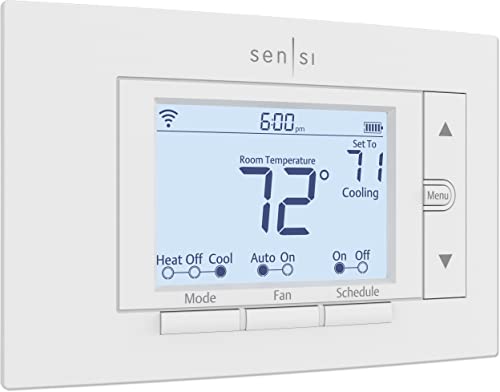
Emerson Sensi
The one that respects two things nobody else here mentions: your wall and your data. It looks and feels like a thermostat, with buttons, and it fits the same space as the traditional unit it replaces, so you are not patching and repainting a rectangle of plaster. And Sensi states plainly that it will not sell your personal information to third parties, which on a device that knows when your house is empty is not a small promise. Energy Star certified with about 23 percent quoted, a built-in level and app-guided DIY installation, plus maintenance alerts on your HVAC.
Pros:
- Fits the same footprint as a traditional thermostat; no wall patching
- States it will not sell your personal information
- Built-in level and step-by-step app installation
- Maintenance alerts and usage reports on your HVAC
Cons:
- No room sensor support on this model
- Buttons rather than a touchscreen
- No compatibility percentage published
Best for: a straight swap that does not redecorate your hallway.
Google Nest Thermostat
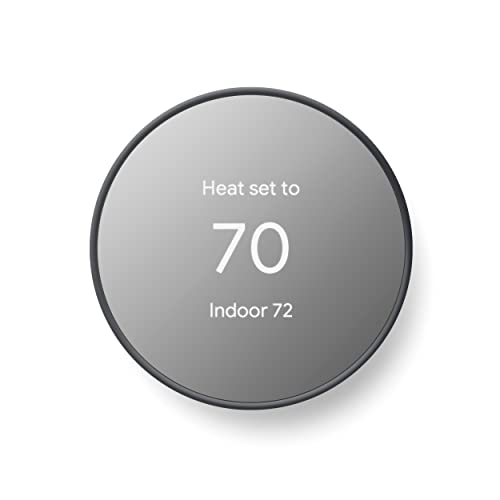
One of the best-selling smart home products on the market, and it is easy to see why: it is cheap, it looks good, it works without a C wire in most homes, and it turns itself down when you leave so you are not heating an empty house. Schedules build in the Google Home app, anyone in the family can change the temperature from anywhere, and Savings Finder suggests tweaks. Energy Star certified. Read Google’s own caveat carefully though, because it names zone-controlled systems among those that may need a C wire after all.
Pros:
- Among the best-selling smart home products available
- Works without a C wire in most homes
- Turns itself down when the house empties
- Savings Finder suggests schedule improvements
Cons:
- Google names zone-controlled systems as a C wire exception
- No room sensor support
- Google ecosystem; no Apple Home
Best for: a Google household with a straightforward single-zone system.
Flair Smart Vent
The only product here that does what this page is actually about. It is a motorized replacement for the vent already in your floor, wall or ceiling, and it opens and closes to send air where it is wanted, which is the definition of zoning. It works alongside whatever thermostat you own, smart or not, and Flair’s software runs seven-day schedules per room. Installation is genuinely a drop-in: no drilling, no wiring, take the old vent out and put this in. Be clear on the system cost though, because Flair says it plainly: you need a Flair Bridge, sold separately, and a temperature sensor in every room you are controlling.
Pros:
- Actual room-by-room airflow control; nothing else here does this
- Works with your existing thermostat, smart or traditional
- Seven-day schedules per room
- Drop-in install; no drilling or wiring
Cons:
- Needs a Flair Bridge and a sensor per room, all sold separately
- You need one vent per room, so the cost multiplies
- Only works with central ducted systems
Best for: genuinely fixing the cold bedroom, if you have ducts and a budget.
ecobee Essential
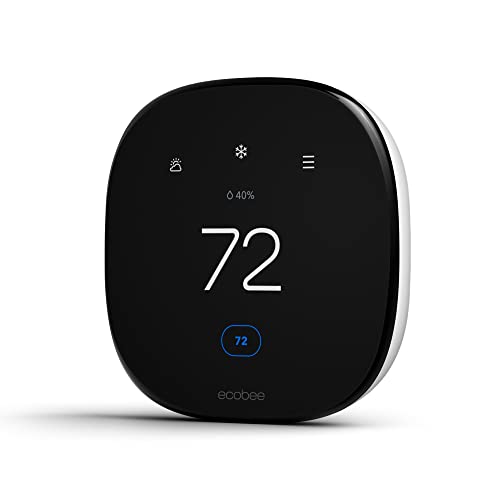
The entry point to ecobee, and its real advantage is that it is not tribal: it works with Siri, Alexa and Google alike, which no other thermostat here manages. A color touchscreen or the app sets the temperature, it adjusts to your schedule automatically, and it tracks your consumption so the savings are visible rather than asserted. ecobee quotes up to 23 percent and, more usefully, publishes its compatibility at 85 percent of systems with a checker on its site. No C wire is not a problem thanks to the Power Extender Kit. Free software upgrades keep it current.
Pros:
- Works with Siri, Alexa and Google; the only one here that does
- Publishes 85 percent compatibility, with a checker
- Power Extender Kit solves a missing C wire
- Color touchscreen; free software upgrades
Cons:
- 85 percent is the lowest compatibility in ecobee’s range
- No room sensor included
- No radar occupancy at this level
Best for: a mixed-ecosystem household on a normal system.
Sensi Touch 2
The cheapest way to get a thermostat that knows about other rooms. It works with Sensi Room Sensors to balance temperatures throughout the house, sold separately, which is the halfway house between one sensor and real zoning: the system still heats everything, but it heats until the room that matters is right. A color touchscreen, Energy Star certification with about 23 percent quoted, Bluetooth-guided DIY installation, HVAC maintenance alerts, and the same privacy promise as its cheaper sibling about not selling your data.
Pros:
- Takes room sensors to balance the house
- Color touchscreen; Bluetooth-guided install
- Will not sell your personal information
- HVAC maintenance alerts and usage reports
Cons:
- Room sensors are sold separately
- Sells well behind the ecobee and Nest options
- No compatibility percentage published
Best for: balancing a house without replacing every vent in it.
ecobee Enhanced
The middle ecobee, and the upgrade is radar. Built-in occupancy sensing preheats or precools before you arrive rather than starting when you walk in, which is the difference between coming home to a warm house and coming home to a house that has started thinking about it. It learns your temperature preferences and your schedule, and adjusts for humidity, which matters more to comfort than the number on the wall suggests. Compatibility rises to 90 percent, up to 26 percent quoted savings, and control from a phone, tablet or watch.
Pros:
- Radar occupancy preheats before you arrive
- 90 percent compatibility, published
- Adjusts for humidity, not just temperature
- Learns your preferences and schedule
Cons:
- No room sensor included, unlike the Premium
- Twice the price of the Essential
- No air quality monitoring at this level
Best for: a house that should be warm the moment you open the door.
ecobee Premium
The only thermostat here that arrives already knowing about a second room, because a SmartSensor is in the box rather than on the accessories page. That sensor prompts the thermostat to make decisions based on where you actually are, which is the closest a single thermostat gets to zoning. Compatibility is the highest here at 95 percent. It adds a built-in air quality monitor that flags poor air, suggests fixes and reminds you about the furnace filter, and it connects to ecobee’s wired doorbell camera for a live view and two-way talk from the wall. Metal siding, a large display, built-in radar.
Pros:
- A room sensor is included, not an extra
- 95 percent compatibility; the highest here
- Built-in air quality monitor with filter reminders
- Radar occupancy; works with Siri, Alexa and Google
Cons:
- Most expensive product on this page
- Still one system decision; it is not true zoning
- More sensors for more rooms cost more again
Best for: the best a single thermostat can do about an uneven house.
The verdict
Best overall: ecobee Premium. If the problem is that one room is always wrong, this is the most a thermostat alone can do about it: a SmartSensor comes in the box, so the system heats until the room you are in is right rather than the hallway. It has the highest compatibility here at 95 percent, radar occupancy, an air quality monitor, and it works with Siri, Alexa and Google. It is the most expensive thing on this page and it is still one decision for the whole house.
Best value: Google Nest Thermostat. One of the best-selling smart home products anywhere, cheap, good looking, works without a C wire in most homes, and it backs off when the house empties. Read Google’s own exception list before you order: zone-controlled systems are named among those that may need a C wire after all. For a straightforward single-zone home on Google, nothing here is better value.
Best premium: Flair Smart Vent. The only product on this page that answers the actual question, by opening and closing a motorized vent in each room so the air goes where it is wanted. It works with the thermostat you already own and installs without tools. The real catch is the system: a Bridge and a sensor per room, all sold separately, and a vent for every room you want to control. It is the real answer and it is not the cheap one.
FAQ
Will a smart thermostat fix my cold bedroom?
On its own, no. It measures one wall and heats the whole house until that spot is happy, and a better schedule does not change where the air goes. Room sensors help, because the thermostat can then aim at the bedroom instead of the hall. Only Flair’s motorized vents actually redirect the airflow.
What is a C wire and do I need one?
It is a common wire supplying constant power, and smart thermostats want it. Google says Nest works without one in most homes, then lists exceptions including heating-only, cooling-only and zone-controlled systems. ecobee ships a Power Extender Kit that solves it. Check your wiring before you buy, not after.
Which ecobee should I get?
Look at the compatibility figures, because they differ: 85 percent for the Essential, 90 for the Enhanced, 95 for the Premium. If your system is unusual, the cheapest one is likeliest to be wrong. The Premium is also the only one including a room sensor, which is the feature that matters for an uneven house.
Are the savings claims real?
Conditionally. Sensi and ecobee quote around 23 to 26 percent; Honeywell quotes a narrower 8 to 16 percent for customers who actually use the scheduling, which is the more believable framing. If you previously left the heating running and forgot, you will save. If you were already careful, you will save much less.
What does Flair actually cost?
More than one vent. Flair states it clearly: the system needs a Flair Bridge, sold separately, and every room you control needs a temperature sensor as well as a vent. So the price you see is per vent, and a three-bedroom house is several of everything. It is also the only thing here that genuinely zones.
This article may contain affiliate links; see our Affiliate Disclosure.