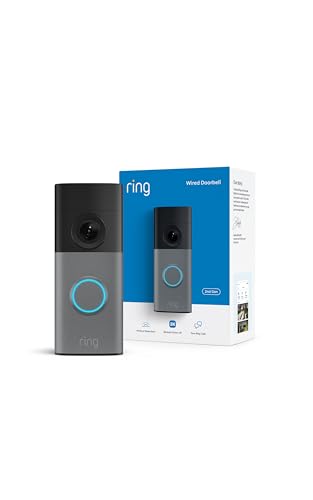
Ring sells a 1080p wired doorbell and a 2K wired doorbell for the same money. That is the easiest decision on this page and people still get it wrong, because the older one sits there looking identical. The harder question is what happens after you buy: on nearly every doorbell here, the features you saw advertised need a monthly plan.




Hardwiring is the easy part and the right call: connect to the wiring behind your existing bell and it never needs charging. What separates these is where the video lives, what the alerts can tell you without a plan, and how wide the lens sees. One doorbell here answers the storage question completely differently from the other seven.
At a glance
| Doorbell | Standout feature | Price tier | Link |
|---|---|---|---|
| Blink Wired 2K+ | Cheapest here; IP65 and person detection | Budget | |
| Ring Wired Doorbell (2K) | One of the best-selling products anywhere | Budget | |
| Ring Video Doorbell Wired (1080p) | The older model, at the same price | Budget | |
| Arlo Video Doorbell 2K | Works with Alexa, Google and Apple Home | Budget | |
| Tapo D225 | The only one with free local storage | Mid-range | |
| Ring Wired Doorbell Plus | True color video in low light | Mid-range | |
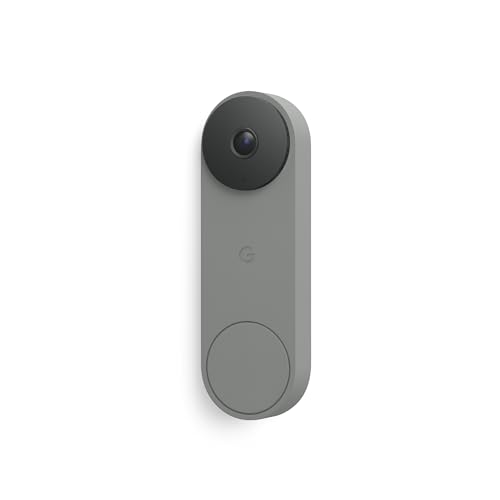
| Google Nest Doorbell | 2K HDR, and it tells you who is at the door | Premium | |
| Ring Wired Doorbell Pro | 4K with 10x zoom and 3D motion detection | Premium | |
How to choose a wired doorbell
The subscription is the real price
Read the brackets. Ring’s video descriptions and AI alerts require a subscription, on the cheap model and the expensive one alike. Google’s Gemini features and detailed notifications need a Google Home Premium plan, and so does searching your history. Arlo’s package detection, person and vehicle recognition and 60-day history all sit behind Arlo Secure after a one-month trial. None of it is hidden and all of it recurs. The hardware price is the smaller number.
One doorbell here keeps your video without paying anyone
Tapo records to a microSD card of up to 512GB inside the doorbell, with no plan, and its person, package and vehicle detection is free rather than unlocked. Cloud storage is optional. Everywhere else, the footage lives on somebody’s server and stops being yours when the card expires. Local storage has its own trade: take the doorbell, take the card. Decide which risk you mind more.
Do not buy the older Ring by accident
Ring lists a 1080p wired doorbell and a 2K wired doorbell at the same price. The 2K model adds meaningfully sharper video and up to 6x enhanced zoom, which is the difference between seeing that someone is at your door and seeing who. The 1080p version is a good doorbell that has been overtaken by its own replacement, and it is still selling because it looks the same in a thumbnail. If the prices are level, there is no argument.
Resolution matters less than zoom and light
Everything here is 2K except the old Ring at 1080p and the Pro at 4K, and the differences you notice are elsewhere. Enhanced zoom turns a face at the gate into information: 4x on the Ring Plus, 6x on the standard 2K, 10x on the Pro. Low light is where doorbells earn their money, since that is when you care. Ring’s Low-Light Sight keeps true color with only ambient light; Tapo uses a spotlight that fires on motion.
Check what wired means for that brand
Ring, Blink and Nest run off your doorbell wiring permanently, with no battery. Arlo and Tapo are wire-or-battery designs, and Arlo calls hardwiring trickle charging, which tells you the battery is still in there while the wire tops it up. More flexible if your wiring is awkward, and one more component that ages. Tapo wants 8 to 24 volts, which is standard.
Field of view is where you see the parcel
A doorbell aimed at faces misses a box on the step. Tapo and Arlo both publish 180 degrees of head-to-toe view; Blink markets one without giving the number; Ring says wide-angle. That vertical coverage is the whole reason package detection works.
Ecosystem, and who is locked out
Arlo is the open one, working with Alexa, Apple Home and Google Home. Ring and Blink are Alexa’s, Nest is Google’s, and each is excellent inside its own house and a stranger outside it. Nest also does something nobody else mentions: a green LED telling anyone at your door when it is recording.
Blink Wired 2K+
The cheapest doorbell here by a clear margin and a strong seller, and the specification list has no obvious hole in it: constant hardwired power, 2K video with a head-to-toe view that catches deliveries as well as faces, two-way audio with noise cancellation, person detection so the alerts mean something, and night vision that holds true color before switching to black and white in near darkness. It is IP65 rated for rain, dust and worse. For in-home chimes you need an Alexa device or a Blink Chime, sold separately.
Pros:
- Cheapest doorbell here, and a strong seller
- 2K with head-to-toe view; catches parcels on the step
- Person detection, so alerts are not every passing cat
- IP65 rated; two-way audio with noise cancellation
Cons:
- Needs an Alexa device or a separate chime for indoor alerts
- Alexa ecosystem only
- No field of view figure published
Best for: an Alexa house wanting a proper 2K doorbell for very little.
Ring Wired Doorbell (2K)
One of the best-selling products on the market, in any category, which is a reasonable answer to most questions about it. Retinal 2K with up to 6x enhanced zoom, live view and two-way talk, real-time motion alerts, and it runs off your existing doorbell wiring so it never needs charging. It pairs with Alexa for custom notifications on an Echo Dot or video on an Echo Show. Note the pattern that runs through Ring’s whole range: scrolling back through history and the AI-powered alerts both want a compatible subscription.
Pros:
- Among the best-selling products available anywhere
- 2K with up to 6x enhanced zoom at a budget price
- Permanent hardwired power; nothing to recharge
- Deep Alexa integration with Echo devices
Cons:
- History and AI alerts need a subscription
- No field of view or IP rating published
- Alexa ecosystem only
Best for: the safe default, if you are happy paying monthly.
Ring Video Doorbell Wired (1080p)
Ring’s previous wired doorbell, still selling well, and still perfectly good: 1080p HD, two-way talk, advanced motion detection that alerts you before anyone rings, night vision with sharp contrast, and a hardwired install with the toolkit in the box. It runs on standard 2.4 GHz wifi and has customisable privacy settings. The problem is not the doorbell, it is the shelf next to it: Ring’s newer 2K model costs the same money and adds resolution and 6x zoom. Buy this one only if it is genuinely cheaper on the day.
Pros:
- Proven, strong-selling doorbell with a toolkit included
- Advanced motion detection alerts before anyone rings
- Customisable privacy settings; standard wifi
- Same easy hardwired install as the rest of the range
Cons:
- 1080p, where the same money buys Ring’s 2K model
- No enhanced zoom
- Same subscription requirements as the newer models
Best for: nothing, unless it is discounted below the 2K version.
Arlo Video Doorbell 2K
The one that does not care which phone you own: it works with Alexa, Apple Home and Google Home, so it fits whatever house you already have rather than choosing for you. The camera is 2K with a head-to-toe view, package detection, person and vehicle recognition, custom activity zones to stop the street setting it off, privacy zones to block what you should not be filming, and a remote siren. Power is your choice, wire-free on the battery or hardwired for trickle charging. The advanced detection features run on Arlo Secure after the included one-month trial.
Pros:
- Works with Alexa, Apple Home and Google Home
- Head-to-toe 2K with package, person and vehicle detection
- Activity zones and privacy zones both supported
- Wire-free or hardwired; integrated siren
Cons:
- The detection features need Arlo Secure after the trial
- Hardwiring trickle charges a battery rather than replacing it
- Sells well behind the Ring and Blink models
Best for: a mixed household where nobody agrees on an ecosystem.
Tapo D225
The one that breaks the model. Footage saves to a microSD card of up to 512GB inside the doorbell, with no subscription, and the person, package and vehicle detection is included rather than unlocked later. Cloud storage exists if you want it. Around that sits a 2K QHD image across a 180 degree head-to-toe field of view, a spotlight that fires on motion for full color night video, and a Ring Call feature that phones you so you can answer the door without opening an app. A modular indoor chime and angled wedges come in the box, and it takes 8 to 24 volt wiring or a battery.
Pros:
- Free local recording to microSD; no subscription needed
- Person, package and vehicle detection included, not unlocked
- 180 degree head-to-toe view; spotlight for color night video
- Indoor chime and mounting wedges included
Cons:
- The card is inside the doorbell, so theft takes the footage too
- The microSD card is not included
- Sells behind the big-brand doorbells
Best for: owning your own video and paying nobody a monthly fee.
Ring Wired Doorbell Plus
The middle Ring, and the feature it adds over the standard 2K is the one you will actually use: Low-Light Sight keeps true color video with only a little ambient light, before falling back to crisp black and white in total darkness. Given that most of what you want to see happens after dark, color is not cosmetic. Retinal 2K with 4x enhanced zoom, video descriptions telling you what moved rather than that something did, hardwired power, and a choice of four finishes so it does not look like a gadget bolted to your door frame.
Pros:
- Low-Light Sight holds true color after dark
- Retinal 2K with 4x enhanced zoom
- Video descriptions say what moved, not just that something did
- Four finishes to match the house
Cons:
- 4x zoom is less than the cheaper 2K model’s 6x
- Video descriptions require a subscription
- Costs two and a half times the standard 2K
Best for: a dark porch where color at night is worth the money.
Google Nest Doorbell
The smartest doorbell here, and the one whose intelligence is most clearly rented. It shoots 2K HDR, the sharpest Nest has managed, with night vision and a wide view, permanently wired. It alerts on people, packages, vehicles and animals, and with a premium plan it recognizes faces, sends notifications as specific as a person carrying flowers, and lets you search your own history conversationally. Google also takes privacy seriously in a visible way: encrypted video, two-step verification, and a green LED that tells whoever is at the door when it is recording.
Pros:
- 2K HDR, Nest’s sharpest doorbell video
- Alerts on people, packages, vehicles and animals
- Encrypted video, two-step verification and a visible recording LED
- Conversational search of your video history
Cons:
- The interesting features all need a Google Home Premium plan
- Google ecosystem only
- Expensive before the subscription starts
Best for: a Google household that will pay for the clever bits.
Ring Wired Doorbell Pro
The flagship, and the only 4K doorbell here. Retinal 4K with wide-angle coverage and up to 10x enhanced zoom means you can actually read something at the end of a drive rather than guess at it. Low-Light Sight keeps color after dark. The feature that separates it from the rest of the Ring range is 3D Motion Detection, which pinpoints where on your property something moved rather than reacting to any change in the frame, so you get fewer useless alerts about the pavement. Live view with two-way talk and Audio+, four premium finishes, and a DIY hardwired install.
Pros:
- The only 4K doorbell here, with 10x enhanced zoom
- 3D Motion Detection pinpoints where motion happened
- Low-Light Sight for true color at night
- Audio+ two-way talk; four premium finishes
Cons:
- Most expensive doorbell here by a distance
- Video descriptions still need a subscription
- 4K video leans hard on your upload bandwidth
Best for: a long drive or a business front, where detail at distance matters.
The verdict
Best overall: Ring Wired Doorbell (2K). It is one of the best-selling products available anywhere, it costs the same as Ring’s outgoing 1080p model, and it gives you Retinal 2K with 6x enhanced zoom and permanent power off your existing wiring. If your house already has an Echo in it, nothing here is simpler or better value. Go in knowing the deal: the history and the smart alerts want a subscription, indefinitely.
Best value: Blink Wired 2K+. The cheapest doorbell on this page and it is not a stripped one: 2K with a head-to-toe view that sees the parcel as well as the courier, person detection so alerts mean something, two-way audio with noise cancellation, and an IP65 body. You will need an Alexa device or a Blink chime for indoor alerts. For the money, that is a remarkably complete doorbell.
Best premium: Ring Wired Doorbell Pro. The only 4K camera here, with 10x zoom for reading detail at a distance, Low-Light Sight for color after dark, and 3D Motion Detection that reacts to where something moved rather than to everything that moves. It costs the most and it is the one worth stretching for if your door is set back from the road. And if the subscription is the thing you object to, the Tapo is on this page for exactly that reason.
FAQ
Do I have to pay a subscription?
On seven of these eight, effectively yes, for anything beyond a live view and a basic alert. Ring’s history and AI alerts, Google’s Gemini features and face recognition, and Arlo’s package and person detection all sit behind plans. Tapo is the exception: it records to a microSD card in the doorbell with no plan and includes its detection features.
Which Ring should I buy?
Not the 1080p one, if the 2K one costs the same, which it currently does. The 2K adds real resolution and 6x zoom. Move up to the Plus if your porch is dark and color at night matters, and to the Pro if you need 4K, 10x zoom and motion detection that knows where things moved.
Does wired mean no battery?
For Ring, Blink and Nest, yes: they run off your doorbell wiring and there is nothing to charge. Arlo and Tapo are wire-or-battery designs, and Arlo describes hardwiring as trickle charging, so the battery is still in there. That is more flexible if your wiring is awkward, and it is one more thing that ages.
Why does field of view matter more than resolution?
Because parcels are on the ground. A tall, head-to-toe view is what lets a doorbell see a box on the step rather than just the person who left it, and it is what makes package detection work at all. Tapo and Arlo both publish 180 degrees; most brands say wide-angle and leave it there.
Will it work with my phone and speakers?
Check before you buy, because most of these choose for you. Ring and Blink are Alexa, Nest is Google, and each works beautifully inside its own house. Arlo is the open one, supporting Alexa, Apple Home and Google Home, which matters if the household is not unanimous.
This article may contain affiliate links; see our Affiliate Disclosure.