One set here fits 25.4mm standard weight plates, says its own title. Three bullets later the same listing tells you to max out its capacity with 45 lb Olympic plates. An Olympic plate has a two-inch hole. It will not go onto a one-inch sleeve, and no amount of pushing will change that. The single fact determining whether your plates fit this product is contradicted inside its own listing.




At a glance
| Product | Loadable length and capacity | Price tier | Link |
|---|---|---|---|
| Vikingstrength | Chains, not sleeves. No capacity published | Budget | |
| EVERYMATE Set of 2 | 350 lb. Publishes its own weight and stored size | Budget | |
| LoGest | No capacity, no length, no grip size. No numbers | Budget | |
| Titan Mini | 10in loadable, 600 lb. Title and bullets disagree on plates | Mid-range | |
| Philosophy Gym | 14in loadable, 550 lb. The longest sleeves here | Mid-range | |
| Titan 60in | 12in loadable, 500 lb, 32mm grip. Six figures published | Premium | |
| REP Fitness | 1,000 lb, and no sleeve length to check it against | Premium | |
How to choose
Capacity means nothing without sleeve length
A weight rating tells you what the steel survives. Loadable sleeve length tells you what will physically go on it, and only the second one is a limit you will actually meet. Run the numbers: a 45 lb cast iron plate is roughly an inch and a bit thick, so 500 lbs is eleven plates and wants about a foot of sleeve. Swap to rubber bumper plates at two inches each and those same eleven plates need nearly two feet. So a set rated 500 lbs with 12 inches of sleeve hits its rating only on thin steel plates, and gets about half that on bumpers. One product here claims 1,000 lbs and publishes no sleeve length at all, which makes the claim impossible to check and, on any normal set of plates, impossible to reach.
Grip diameter is the whole exercise
You are carrying weight to train your hands. How thick the bar is under your fingers decides how hard that is, and the spread here is enormous: 28mm at one end, a two-inch rubber grip at the other, which is roughly double. Those are not the same exercise. Yet most listings never say. One premium set sells you its thick handle diameter as a headline feature and declines to tell you the diameter. Where a listing prints millimeters, someone measured. Where it prints thick, nobody did.
Smooth, knurled or rubber
Three surfaces, three different intentions. Smooth steel is hardest to hold, which is either the point of grip training or the reason 500 lbs lands on your foot, depending on your view. Knurling bites and holds, so you train the carry rather than the clinging. Rubber is kindest to your hands over long sets and gives up some feedback. Notice that one brand here sells a smooth full-size set and a knurled upright set and never explains the difference to you, and that most rivals just say non-slip.
Check the plate hole before anything else
Two-inch Olympic plates and one-inch standard plates are different products with different holes, and they do not interchange. Almost everything here is two-inch Olympic. One is not, and its own listing cannot keep the story straight, promising standard plates in the title and Olympic plates in the bullets. Whatever else you compare, confirm this first, because getting it wrong makes the handles furniture.
The same sentence, from fifty-five dollars to three hundred
Read enough of these and the copy starts repeating. One sentence about being expertly crafted from heavy-duty steel to withstand your most challenging workouts for years to come appears in four listings from three different brands, across a five-fold price range. A paragraph about working your glutes, quads, calves, upper back, shoulders and core all at once, using one simple movement, appears word for word under two brands. Two more share a line about core training in the comfort of your home. The products that do not share text are, with one exception, the products that publish real dimensions.
Handle height decides your clearance
The handles sit above the bar, and how far above sets how much room the plates have before they hit the floor and how far you have to bend to pick them up. Exactly one listing here publishes it, at 7.25 inches. Another gives you two options at 8 or 16 inches from the ground on an upright frame. Everyone else leaves you to judge it from a photograph.
Know when it is not the same product
One item here is not loadable handles at all. It is a pair of grips on steel chains that you loop around plates or, as its own listing puts it, other heavy objects. There are no sleeves, no collars, no capacity rating and nothing to compare against the rest of this page. It is a legitimate and very cheap way to carry heavy things. It is simply answering a different question.
Vikingstrength
A fifth of the price of anything serious here, and it earns that by being a different thing: two grips on stainless chains that wrap around plates or any heavy object, rather than poles with loadable sleeves. That makes it the only item on this page that will pick up something which is not a weight plate, and the only one that folds into a gym bag without argument. T-bar row handles are included at no extra cost, which is a genuine bonus. It publishes no capacity, no chain rating and no grip diameter, and it promises fat loss and rapid muscle gain.
Pros:
- By far the cheapest thing here
- Chains grip anything heavy, not just plates
- T-bar row handles included; fits in a gym bag
- A workout app is included free
Cons:
- Chains, not sleeves; not comparable to the rest of this page
- No capacity, chain rating or grip diameter published
- Promises fat loss and reduced injury risk
Best for: carrying heavy things that are not weight plates.
EVERYMATE Set of 2
The most plainly specified cheap set here. It tells you the capacity is 350 lbs rather than reaching for a bigger number, gives its own weight at 7.5 lbs each, publishes the stored footprint down to the hundredth of an inch, and names its grip as two-inch rubber. That grip is worth understanding: two inches is roughly double a standard bar and dramatically harder to hold, which is either exactly what you came for or a surprise. It is powder-coated alloy steel, clips are included, plates are not, and it appears on this page twice under identical bullets.
Pros:
- Publishes capacity, its own weight and stored dimensions
- Names the grip: two-inch rubber, roughly double a standard bar
- Powder-coated alloy steel; clips included
- Says plainly that plates are not included
Cons:
- 350 lbs is the lowest rating here
- No loadable sleeve length published
- Listed twice on this page with identical bullets
Best for: a light set that tells you what it is.
LoGest
Heavy-duty steel, rubber handles, clip collars included, two-inch Olympic plates, portable. That is the whole listing and there is not a single number in it: no capacity, no loadable length, no grip diameter, no weight, no dimensions. Its durability bullet is also the sentence that shows up under three other brands on this page, one of them costing five times more. What you can tell is that it takes standard Olympic plates and includes the collars, which some rivals do not, and that it sits mid-way on price.
Pros:
- Clip collars included in the box
- Rubber grips; standard two-inch Olympic compatibility
- Light enough to move between rooms
Cons:
- Publishes no capacity, length, grip size or weight
- Its durability bullet appears under three other brands
- Costs more than a rival that publishes everything
Best for: little, given what else is on this page.
Titan Mini
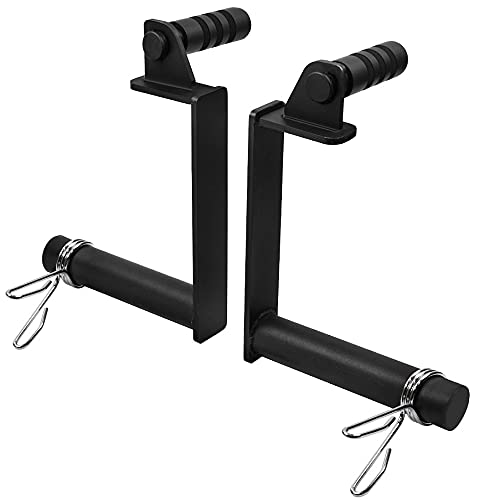
Genuinely well specified, and genuinely confused about the one thing that matters. The title says 25.4mm sleeves, which is one inch, which is standard plates. Bullet three says to max out its capacity with 45 lb Olympic plates, which have two-inch holes and will not fit. Those cannot both be true and the difference decides whether your existing plates are usable. What is not in dispute: 10 inches of loadable sleeve, a 28mm grip, a 600 lb rating, a flat back so it loads without rolling, and a size that goes in a bag.
Pros:
- Publishes loadable length, sleeve diameter, grip and capacity
- 28mm grip; the most standard bar feel here
- Flat-back design loads and unloads without rolling
- Small enough to store or travel with
Cons:
- Title says 25.4mm standard; bullets say Olympic plates
- 10 inches of sleeve is the shortest published here
- A 600 lb rating that 10 inches of sleeve cannot reach on real plates
Best for: nobody, until the plate question is settled.
Philosophy Gym
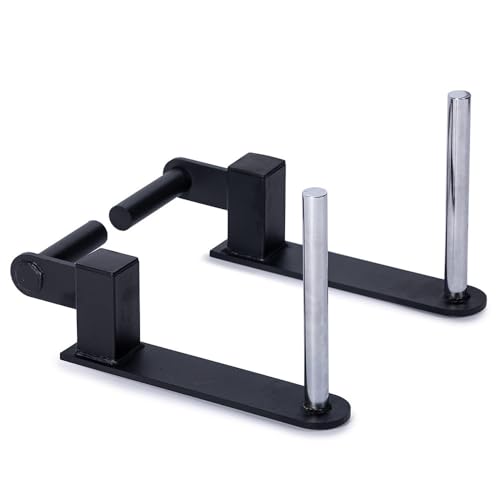
Fourteen inches of loadable room on each end, which is the longest published on this page and two inches more than a set costing more. That is the number that decides how much weight actually goes on, and more sleeve is the only way to reach a high rating on rubber bumper plates. It is also the only listing here that publishes handle height, at 7.25 inches above the bar, which sets your clearance and how far you bend. Add 64 inches of pole, 14 lbs each, a 550 lb rating and a two-inch diameter that takes cast iron, bumpers or grip plates.
Pros:
- 14 inches of loadable sleeve per end; the longest here
- The only listing publishing handle height above the bar
- 550 lb rating, with a sleeve length to check it against
- 14 lbs each; takes cast iron, bumper or grip plates
Cons:
- No grip diameter published
- Shares two bullets word for word with a rival brand
- 64 inches long; it lives on the floor, not in a bag
Best for: the most sleeve, at the best price for it.
Titan 60in
Six published figures in one bullet: 17 lbs per pole, 60 inches long, 5.5-inch handles, a 32mm grip, 12 inches of loadable sleeve, 500 lbs each. That is more measurement than anything else here offers, and the 32mm grip in particular is the spec that lets you know exactly how this will feel before it arrives. Two things to weigh. The handles are smooth, not knurled, which trains grip harder and holds worse. And 12 inches of sleeve reaches 500 lbs only on thin steel; on rubber bumpers you will run out of pole long before you run out of rating.
Pros:
- Six published figures: weight, length, handle, grip, sleeve, capacity
- A 32mm grip, published; you know the feel in advance
- 17 lbs per pole; solid without being unmanageable
- 60 inches of pole with 5.5-inch handles
Cons:
- Smooth handles; hardest to hold, at 500 lbs
- 12 inches of sleeve cannot reach 500 lbs on bumper plates
- Two of its bullets appear under other brands
- Dearer than a rival with 14 inches and 550 lbs
Best for: knowing every dimension before you buy.
REP Fitness
A 1,000 lb capacity, which is double anything else here, and no loadable sleeve length anywhere in the listing to tell you whether 1,000 lbs would go on. Twenty-two 45 lb plates is eleven a side, needing roughly 13 inches of sleeve in thin steel and closer to 22 in rubber. Without a figure the rating cannot be checked. Its grip bullet does the same thing, selling a thick handle diameter that challenges your forearms while never saying how thick. Neutral grip, two-inch Olympic sleeves, heavy-duty steel, compact storage.
Pros:
- A 1,000 lb rating; double anything else here
- Neutral grip with a genuinely thick handle
- Standard two-inch Olympic; no adapters or specialty plates
- Compact to store for a full-size set
Cons:
- No loadable sleeve length; the rating cannot be checked
- Sells thick handle diameter and never gives the diameter
- No weight, length or dimensions published at all
- The second-highest price here
Best for: the biggest number, and no way to verify it.
The verdict
Weight ratings are the headline and sleeve length is the reality. Every set here promises more pounds than its own pole will physically hold in rubber plates, and the ones that publish a sleeve length at least let you work out where the ceiling really is.
Best overall: Philosophy Gym. Fourteen inches of loadable sleeve on each end is the most on this page, two inches more than a set costing more, and sleeve length is the limit you actually hit rather than the one printed on the box. It is also the only listing that tells you how high the handles sit above the bar, which decides your clearance and how far you bend to start. A 550 lb rating with a published length to test it against beats a 1,000 lb rating with nothing.
Best value: EVERYMATE Set of 2. A third of the price of the serious sets and the only cheap listing that behaves like a spec sheet: 350 lbs, 7.5 lbs each, stored dimensions to the hundredth of an inch, and a grip named as two-inch rubber rather than described as comfortable. It rates itself lower than rivals do, which on this page reads as a company doing arithmetic rather than marketing. Know that a two-inch grip is roughly double a normal bar, and that it is on this page twice.
Best premium: Titan 60in. Six numbers in a single bullet, including the 32mm grip and the 5.5-inch handle length, so nothing about how it feels is a surprise. Buy it for that transparency rather than the rating, because 12 inches of sleeve will not take 500 lbs of rubber bumper plates and the listing does not pretend otherwise once you read it properly. The smooth handles are a choice; they train your grip harder and hold you less.
FAQ
Why does loadable sleeve length matter more than capacity?
Because it is the limit you meet first. A 45 lb cast iron plate is about an inch thick and a rubber bumper is about two, so 500 lbs needs roughly a foot of sleeve in steel and nearly two feet in bumpers. Capacity is what the steel survives; length is what fits.
Can I really load 1,000 lbs?
Not without knowing the sleeve length, and the listing claiming it does not give one. Twenty-two 45 lb plates is a lot of inches, and no set here publishes enough sleeve to take that in rubber.
What grip diameter should I want?
28mm feels like a normal bar. Two inches is roughly double and much harder to hold, which is either the training effect you want or an unwelcome surprise. Most listings here never say, including one that sells thickness as its feature.
Will my plates fit?
Check the sleeve diameter, not the marketing. Two-inch Olympic and one-inch standard plates do not interchange. One product here says standard in the title and Olympic in the bullets, so settle that before ordering.
Smooth or knurled handles?
Knurled holds better and lets you train the carry. Smooth is harder to hang onto, which builds grip and also drops the load sooner. Rubber is easiest on the hands. Only one brand here tells you which it sells.
This article may contain affiliate links; see our Affiliate Disclosure.