Read the tag on most “eco-friendly” suitcases and the recycled content turns out to be the lining – a few square feet of fabric inside a shell made from ordinary virgin plastic. The gap between a bag built from recycled material and a bag that merely contains some is wide, rarely explained, and the entire point of choosing carefully. One suitcase here is made from coffee grounds, which is either marketing or genuinely clever depending on how closely you read.



What separates a genuinely sustainable suitcase from a marketing exercise is where the recycled material sits and how long the bag survives. A case built from recycled bottles that cracks after four trips is worse for the planet than a virgin-plastic bag that lasts twenty years – which makes the warranty an environmental specification, not just a consumer one. These five span carry-on to large checked, soft shell to hard, and they are fair to differing degrees about what exactly is recycled.
At a glance
| Product | Standout feature(s) | Price tier | Link |
|---|---|---|---|
| Ricardo Beverly Hills Avalon Carry-On | 100% rPET construction; expandable; 20-inch carry-on | Budget | |
| bugatti Nashville 24″ | Hard shell from recycled water bottles; 20% expansion; TSA lock | Mid-range | |
| NINETYGO Carry On | Coffee-ground-infused polycarbonate; top opening; 10-year warranty | Mid-range | |
| ANTLER Soft Stripe Medium | Fully recycled polyester; 5.29 lbs; lifetime warranty | Premium | |
| Travelpro Maxlite Air V2 | Recycled-bottle ECOFAB lining; 8 wheels; lifetime warranty | Premium | |
How to choose recycled luggage without being sold a story
Ask which part is recycled
This is the whole game. Ricardo says 100% rPET – the shell itself. ANTLER says fully recycled polyester. bugatti builds its hard shell from recycled plastic water bottles. Travelpro, by contrast, is precise in a way that rewards close reading: the recycled content is the ECOFAB lining, while the polycarbonate shell is described only as durable. That is not misleading – it is stated plainly – but it means the environmental claim covers a small fraction of the bag. When a listing says “eco-friendly” without naming the component, assume it is the lining.
rPET and recycled polyester, decoded
rPET is recycled polyethylene terephthalate – the plastic used for drink bottles, shredded, melted and spun into fiber. Recycled polyester is the same idea and often the same feedstock; the terms overlap heavily. The practical news is good: the resulting fabric performs essentially like virgin polyester in a suitcase, so you are not trading durability for conscience. Hard shells are a different problem, because a bottle-derived shell has to hold structure under a baggage handler, which is why hard-shell recycled content is rarer and worth noting when it appears.
The longest-lasting bag is the greenest one
Manufacturing dominates a suitcase’s footprint, so the single most effective thing you can do is buy one bag and keep it for twenty years. That makes warranty a sustainability spec. ANTLER and Travelpro both offer lifetime warranties; NINETYGO gives ten years. A recycled bag with a two-year life is a worse environmental choice than a conventional bag you never replace. Travelpro goes further with a promise covering airline damage repair for a year after registration, which addresses the way suitcases actually die.
Soft shell or hard shell
Soft shells absorb impact, squeeze into overhead bins, and usually have exterior pockets for the things you need without opening the case. Hard shells resist crushing and water and cannot be slashed. In recycled terms, soft-shell fabric is where the technology is most mature – which is why the Ricardo and the ANTLER, both soft, make the strongest whole-bag recycled claims here.
Weight is a spec you pay for at every check-in
Airline allowances are absolute, so every pound of empty suitcase is a pound of belongings you cannot bring. The ANTLER weighs 5.29 pounds for a 27-inch medium case with 74 liters of capacity, which is genuinely light for the size. The Travelpro’s 28-inch checked case is 10.9 pounds – the difference is more than five pounds of packing allowance before you put a single shirt in.
The parts that break first
Wheels and handles fail long before fabric does. Double spinner wheels spread load across two contact points and survive curbs better than singles – the Ricardo, ANTLER, bugatti and NINETYGO all use doubles, and the Travelpro runs eight wheels. Handle wobble is the other tell: NINETYGO publishes an aluminum telescoping handle with under 15mm of wobble tolerance, which is an unusually specific claim in a category that usually says “sturdy”.
Ricardo Beverly Hills Avalon Softside Carry-On
The best seller of this group and the cheapest bag in it – a rare combination, and the recycled claim is the strongest here. Ricardo builds the Avalon from 100% rPET, meaning the bag itself is recycled plastic rather than a conventional case with a token green lining. At 20 inches it is a carry-on, so it sidesteps checked bag fees and the baggage system that destroys suitcases. Quiet 360-degree dual spinner wheels handle airport floors and rougher ground, the telescoping handle is comfortable, and exterior pockets swallow a passport and a laptop without unzipping the main compartment. Inside, adjustable compression straps and large zip-mesh pockets do the organizing, and the case expands when a trip grows.
- Pros: 100% rPET construction, the clearest whole-bag recycled claim here; cheapest option by a wide margin; the only product in this group with a meaningful sales record; carry-on sized; dual 360-degree spinner wheels; expandable; compression straps and zip-mesh pockets; quick-access exterior pockets.
- Cons: No warranty length stated, which matters most in a category where longevity is the point; carry-on capacity only; soft shell offers less crush protection than the hard-shell options.
Best for: anyone who wants the highest recycled content for the least money, in the size that avoids the hold entirely.
bugatti Nashville Collection 24-Inch
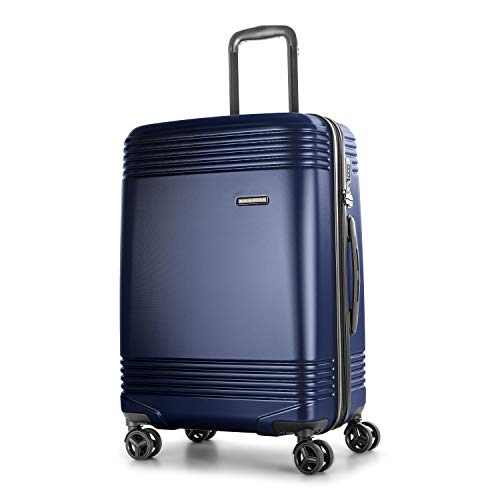
A hard shell built from recycled plastic water bottles, which is the harder engineering trick – bottle-derived material has to hold rigid structure under a loaded baggage cart rather than just look like fabric. It resists scratches and tears, and reinforced handles on the top and side plus side feet mean it survives being thrown around and stood up. At 24 inches it is sized for three to seven nights, the useful middle ground that a couple can share to check one bag instead of two. A zipper-release expansion adds 20% more space, the interior is lined and divided with pockets and tightening straps, and a built-in TSA combination lock saves carrying a key. The metallic exterior is genuinely practical: easy to spot on a carousel.
- Pros: Hard shell made from recycled water bottles – recycled content in the structural part; 20% expansion; TSA combination lock built in; reinforced top and side handles plus stabilizing side feet; double spinner wheels; two-position locking trolley handle; lined and divided interior; mid-range price.
- Cons: No warranty stated; recycled percentage not quantified, unlike the Ricardo’s explicit 100%; no published sales rank; 24 inches will be checked on most airlines.
Best for: short and mid-length trips where you want a recycled hard shell and a lock without paying premium money.
NINETYGO Carry On Luggage
The most interesting material story here, and it is not a gimmick: the shell combines Covestro polycarbonate with recycled coffee grounds, diverting a waste stream nobody else is competing for into a scratch-resistant, shock-absorbing case. The rest of the design is unusually thoughtful. A flat top-opening lid lets you lay the case down and reach every corner instead of excavating a clamshell on a hotel bed, a front compartment takes a laptop without opening the main bag, and a flip-down cup holder built into the shell is the kind of idea that sounds silly until you are holding coffee, a passport and a boarding pass. It is sized 22x14x9 including wheels for overhead bins, expands via a zip, and carries a 10-year warranty with 24/7 support.
- Pros: Recycled coffee grounds in a Covestro polycarbonate shell – genuinely novel recycled content in the structure; top-opening flat design for easy access; front compartment; built-in cup holder; 10-year warranty with 24/7 support; aluminum handle with under 15mm wobble; 4 silent double spinner wheels; airline-approved carry-on size.
- Cons: Priciest carry-on here; proportion of coffee content is not quantified; no published sales rank; a top-opening layout takes adjustment if you are used to a clamshell.
Best for: frequent flyers who live out of a carry-on and want the shell itself to be doing the recycling.
ANTLER Soft Stripe Medium 27″
Fully recycled polyester, 74 liters of capacity, and 5.29 pounds – that weight is the headline, because a medium checked case this light hands you five or six pounds of extra allowance against heavier rivals. Antler is a British heritage brand with a long history of building cases for people who travel constantly, and the lifetime warranty is the part that matters environmentally: a bag the maker expects to last forever is a bag that does not get replaced. The dimensions run 27.2 inches tall by 17.1 wide by 11 to 13 deep depending on expansion, which covers a week comfortably. A TSA-approved lock, a height-adjustable handle and four double spinner wheels complete it, and deep compartments with internal pockets keep a week’s packing sorted.
- Pros: Fully recycled polyester construction; exceptionally light at 5.29 lbs for a 27-inch case; 74L capacity; lifetime warranty across all suitcases; TSA-approved lock; height-adjustable handle; 4 double spinner wheels; expandable; heritage brand with a long track record.
- Cons: Premium price; soft shell gives less crush and water protection than the hard-shell picks; too large for a carry-on, so it goes in the hold; no published sales rank.
Best for: week-long trips where light weight and a bag that outlives the decade both matter.
Travelpro Maxlite Air V2 Checked Large 28″
Be clear about the claim: the recycled content here is the ECOFAB lining, made from 100% recycled bottles, while the polycarbonate shell is described in terms of toughness rather than recycled origin. That makes it the weakest environmental claim in this comparison – and simultaneously, perhaps, the most durable bag, which is not a contradiction so much as a different theory of sustainability. Travelpro builds for people who fly for a living: polycarbonate that flexes on impact instead of cracking, reinforced internal corner guards against denting, eight spinner wheels, and a PowerScope Lite handle. At 28 inches and 10.9 pounds it is the big one, expanding a further two inches, with two zippered divider panels. The limited lifetime warranty is backed by a promise covering airline damage repair for a year after registration.
- Pros: Limited lifetime warranty plus a year of airline-damage repair cover; polycarbonate flexes rather than cracks; reinforced corner guards; 8 spinner wheels for stability under a heavy load; PowerScope Lite handle; expands 2 inches; large 28-inch capacity with organized divider panels; full dimensions published.
- Cons: Recycled content is the lining only, not the shell – the least of any bag here; heaviest at 10.9 lbs; most expensive; no published sales rank; large checked size is overkill for short trips.
Best for: long trips and heavy packers who value a bag that survives baggage handlers over maximum recycled content.
The verdict
Best overall: Ricardo Beverly Hills Avalon Carry-On. It makes the clearest recycled claim in this group – 100% rPET, the bag itself rather than a lining – costs the least, and is the only one here with a real sales record behind it. Carry-on size also keeps it out of the hold, which is where suitcases go to die. If the goal is maximum recycled content per dollar, this is the straightforward answer.
Best value: bugatti Nashville 24-inch. A hard shell genuinely built from recycled water bottles, with a TSA lock, 20% expansion and reinforced handles, for mid-range money. Recycled hard shells are harder to make than recycled fabric, and few competitors offer one at this price.
Best premium: ANTLER Soft Stripe Medium. Fully recycled polyester, 5.29 pounds for a 74-liter case, and a lifetime warranty. That warranty is the real argument – the greenest suitcase is the one you never replace, and Antler is betting its own money that you will not have to.
Two more worth knowing. The NINETYGO puts recycled coffee grounds into the structural shell and backs it with ten years, with the best-thought-out carry-on layout here. The Travelpro is the toughest bag in the group, but its recycled content stops at the lining – choose it for durability, not for the eco label.
Frequently asked questions
Is recycled luggage as durable as regular luggage?
For fabric, yes – recycled polyester and rPET perform essentially like virgin polyester once spun into cloth, so a soft-shell bag gives up nothing. Hard shells are more demanding, since the material has to stay rigid under load, which is why recycled hard shells like the bugatti’s and NINETYGO’s are less common. The manufacturer’s warranty tells you more about durability than the material name does.
What does rPET actually mean?
Recycled polyethylene terephthalate: drink bottles collected, cleaned, shredded, melted and spun into new fiber. When Ricardo says 100% rPET, it means the suitcase fabric came from bottles rather than newly produced plastic. “Recycled polyester”, as ANTLER uses it, describes the same broad process.
Which is better, hard shell or soft shell?
Hard shells protect against crushing and water and cannot be cut open. Soft shells are lighter, squash into tight overhead bins, and offer outside pockets for things you want mid-journey. For recycled content specifically, soft-shell fabric technology is more mature, so whole-bag recycled claims are easier to find there.
How do I know a green claim is real?
Look for a named material and a percentage attached to a named part. “100% rPET construction” and “100% Recycled Bottles ECOFAB Lining” both tell you exactly what you are getting – and they are very different bags. A claim of “eco-friendly” with no component named is the one to be skeptical about.
Does buying a carry-on help the environment?
Modestly, and mostly by accident. Smaller bags use less material, and a case that stays in the cabin avoids the handling that shortens luggage life. The larger effect is still simply keeping whatever bag you buy for as long as you possibly can.
This article may contain affiliate links; see our Affiliate Disclosure.